Tuesday, 11 June 2019


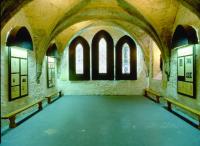
11‭ June 1534: The Revolt of Silken Thomas on this day. Lord Thomas Fitzgerald or ‘Silken Thomas’ as he was more popularly known, was a young man of just 21 years of age when he rode through the streets of Dublin with a large band of followers, and entered the Chapter House of St. Mary's Abbey [above] * where the King's Council were awaiting him.

Whereupon with his brilliant retinue of seven score horsemen he rode through the streets to St.‭ ‬Mary's Abbey‭; ‬and entering the chamber where the council sat,‭ ‬he openly renounced his allegiance,‭ ‬and proceeded to deliver up the sword and robes of state.
From A Concise History of Ireland by P.‭ ‬W. Joyce

His father was none other than Garret Óg,‭ ‬the Earl of Kildare,‭ ‬the most powerful man in Ireland. In his father’s absence in England to answer charges against his name Lord Thomas had been appointed the King’s Deputy in his place. But false rumours that Henry VIII had executed Garret Óg reached his ears. He concluded, without waiting to check the veracity of this information, that his father was indeed dead. He felt that no time could be lost in staking out his claim to lead the Catholics of Ireland in opposing Henry and his now openly Protestant Court. He that day renounced his stewardship of being the King’s Deputy in Ireland and declared himself no longer bound to King Henry VIII by word or deed.

Henry VIII treated his defiance of Royal Power as an act of open revolt and confined Garret Óg to the Tower of London,‭ ‬where Garret died two months later. After a bloody Revolt that lasted into 1535 Silken Thomas gave himself up when his forces were defeated and conveyed to London for Trial. He too was placed in the Tower and held in wretched conditions. He wrote home from that place of cold captivity a letter full of pathos:
I never had any money since I came into prison,‭ but a noble, nor I have had neither hosen, doublet, nor shoes, nor shirt but one; nor any other garment but a single frieze gown, for a velvet furred with budge [i.e. instead of a velvet furred with lambskin fur], and so I have gone wolward [shirtless] and barefoot and barelegged divers times (when it hath not been very warm); and so I should have done still, but that poor prisoners of their gentleness hath sometimes given me old hosen and shoes and shirts.‬
P.‭ ‬W.‭ ‬Joyce

The unfortunate Silken Thomas,‭ ‬born into a life of wealth and privilege, eventually was sent to the gallows. He was hanged alongside five of his captured uncles at Tyburn,‭ ‬London in February 1537. His epic Revolt marked the start of a series of Wars by the Irish against the growing power of a centralised Monarchy committed to enforcing English Royal Rule and the Protestant Religion in this Country.

* The entrance to the Meeting House is on Meeting House Lane off Marys Abbey in Dublin City Centre. It is all that remains of the great Medieval Monastery that stood on that site for centuries.


Monday, 10 June 2019


10 June 1688: James Francis Edward Stuart, aka ‘King James III of England and VII of Scotland’ was born on this day. He was born at St James Palace, London. He was the only legitimate son of James II by his wife Mary of Modena. His birth triggered a Constitutional Crises in these islands as he was baptised a Catholic and stood to inherit his fathers’ Realms in due course. Later that year occurred the ‘Glorious Revolution’ and the deposition and flight of James II to France. It was rumoured that the actual infant died at birth and a substitute was surreptitiously brought into the birth chamber inside a Warming Pan. While this is almost certainly a piece of propaganda spread by the enemies of his father such rumours undermined his status in England in particular when he reached maturity. His birth thus triggered a series of actions that led to the ‘War of the Two Kings’ that was fought upon the soil of Ireland between 1689 and 1691.

On the death of James II in 1701 he proclaimed himself King James III. He was recognised by the followers of the Stuart Cause as the legitimate successor to his father’s Kingdoms. He was also acknowledged as such by a number of Continental Powers incl France & Spain. He also had many secret adherents within England, Scotland and Ireland. As a young man he saw action in the War of the Spanish Succession and twice attempted to establish himself upon the Throne. In 1708 he was thwarted in a landing upon the coast of Scotland. His best chance came upon the death of Queen Anne in 1714 when the Crown was vacant and before George of Hanover (a Protestant) could arrive to take it. But delay proved fatal and James’s Scottish supporters only raised the banner of revolt in late 1715. Their attempt, though initially well backed proved a Fiasco. By the time James landed in December support was ebbing away and after a few weeks he was forced to depart for the Continent. He never saw the island of his birth again. 

Eventually he settled in Rome under the protection of the Papacy where he took up residence at the Palazzo Muti and held a Jacobite Court there with funds provided by the Vatican, the Spanish Monarchy and his supporters. He thereafter lived a long but frustrating life. He married Princess Maria Klementyna Sobieska of Poland in 1719 and had two sons by her. She however died in 1733 and he never remarried. He lived long enough to see his son ‘Bonnie Prince Charlie’ fail in his attempt to overthrow the Hanoverian Dynasty in 1745/46. He was known in his years of Exile as the ‘Old Pretender’ to his enemies or ‘The King over the Water’ to his friends and admirers in these islands. He died in Rome on 1 January [O.S.] 1766 and is buried in St Peters in Rome. 

In following such a record of broken hopes and unrelieved failure, the initial sense of disappointment yields gradually to a more temperate compassion. There is an indefinable pathos in the spectacle of this tragedy- king, parading his solemn travesty of sovereignty before an unromantic and imperturbable audience. When it is remembered that he lived to see no less than five sovereigns on the English throne, all of whom he had been taught to regard as usurpers, it may help towards understanding how deeply the iron must have entered into his soul.
Macaulay


Sunday, 9 June 2019


9 June 597 AD: The Death of Saint Columba (aka 'Colmcille' - Dove of the Church) on the island of Iona off the west coast of Scotland.

Columba was the son of Fedlimid and Eithne of the Cenél Conaill. He was probably born in Gartan, near Lough Gartan, in what is now County Donegal. The earliest surviving evidence – that from his Vita/Life by Adomnán, written about a century after his death – tells us simply that:
‘the holy Columba was born of noble parents having as his father Fedelmid, Fergus’s son, and his mother, Eithne by name, whose father may be called in Latin "son of a ship''

When sufficiently advanced in letters he entered the monastery of Moville under St. Finnian, then at Clonard, governed at that time by Finnian. Another preceptor of Columba was St. Mobhi, whose monastery was at Glasnevin near Dubhlinn [Dublin]. The pestilence that devastated Ireland in 544 AD caused the dispersion of Mobhi's disciples and Columba returned to the North. However his following years were marked by the foundation of several important monasteries at Kells in the north midlands and at Derry in the North. After political troubles at home for which he was found at fault Columba left Ireland and passed over to the island of Iona in 563 AD. Conall, king of Dál Riata gave him the island to use as his base and there he founded his famous Monastery.

The people of Scottish Dál Riata shared a language, culture and political life with the Dál Riata of Ireland, and with Ireland as a whole. It is virtually certain that they also shared the Christian faith. Colum Cille came, therefore, to a Scottish Dál Riata which had already accepted Christianity. We can assume that he came to a landscape already dotted with churches, where priests and even an occasional bishop already ministered to their people.

What Colum Cille brought to Scottish Dál Riata was not Christianity, therefore, but a monastic community of brothers who would live and work and pray together. It is in this light above all that Adomnán seeks to portray him: as the father of monks, founding, teaching and guiding a community. He also portrays him as a man of power – not the secular power of kings and warlords, which Colum Cille had abandoned in Ireland, but the power of the ascetic, the contemplative. He exercises the divine power that is given to those who have rejected wordly power.
Colmcille: Life in Scotland - St Columba Trail

After spending some years among the Scots of Dál Riata, who were related to the Gaels of north east Ulster, Columba began the great work of his life, the conversion of the Northern Picts. After this the remaining years of Columba's life were mainly spent in preaching the Christian Faith to the inhabitants of the glens and wooded areas of northern Scotland. Of course 'Scotland' as such did not exist then as a separate country and indeed the word Scotland comes from the Roman word for the Gaels of Ireland - Scotii.

Saint Columba was famous for his prophecies and on Iona he lived the life of an ascetic while also engaged in the business of the Church in Scotland. Adomnán portrays Colum Cille as actively engaged with the kings of Dál Riata in western Scotland– not only obtaining land from them and blessing particular candidates for kingship, but even inaugurating Áedán mac Gabráin as king in the monastery of Iona.

He also kept in contact with Ireland too and he returned home on occasion even though he was formally exiled.Adomnán says he went back to Ireland when he founded the monastery of Dair Mag (Durrow) between 585 and 597. He also got involved in the politics of the North once again . He returned to Ireland for a conference of kings at which were present Áed mac Ainmirech, king of the northern Uí Néill and eventually king of Tara, and Áedán mac Gabráin, king of Dál Riata. Legend has it that having been told never to put his feet on the soil of Ireland again and agreeing to that he returned wearing shoes of sods of turf in order to keep his promise! Adomnán describes Colmcille as using two separate buildings during his daily life - a writing hut and a hut where he slept and ‘where at night instead of straw he had bare rock and stone for a pillow’.

He is also credited with the initiation of a continuous record of Irish History as set down in the Annals- the Iona Chronicle - whose successor scribes recorded the History of Ireland on a year by year basis down to the 17th Century. His 'Life' - Vita Columbae was written by his distant successor the 9th Abbot of Iona, Saint Adomnán.Columba is said never to have spent an hour without study, prayer, or similar occupations. He is the greatest Saint to have come out of Ireland.


Saturday, 8 June 2019


8 June 1739: John Scott, Earl of Clonmell aka ‘Copper Faced Jack’ was born on this day. Scott was one of the most ambitious and successful men of 18th Century Ireland - and one of the most notorious. His family were of middle income but in early life he befriended one Hugh Carleton and his father helped to finance Scott’s studies at Trinity College Dublin in 1756 and subsequently in Law at the Middle Temple. Admitted to King's Inn in 1765, he was entitled to practice as a Barrister.
In 1769 he was himself elected M.P. for the borough of Mullingar. His ability and determination to rise attracted the attention of the lord chancellor, Lord Lifford, and, at his suggestion, Lord Townshend threw out to him the bait of office. The bait was swallowed with the cynical remark, ‘My lord, you have spoiled a good patriot.’

In December 1774 he became solicitor-general, and in November 1777 he was appointed  attorney-general and a privy councillor.  But his personal feelings did not influence his political opinions, and to his colleague in London he wrote: 

‘Send us two men, or one man of ability and spirit; send him with the promise of extension of commerce in his mouth as he enters the harbour, unconnected with this contemptible tail of English opposition, meaning well to the king, to his servants, and to the country, and he will rule us with ease; but if you procrastinate and send us a timid and popular trickster, this kingdom will cost you more than America; it will cost you your existence and ours’ 

He refused to be badgered into any premature expression of opinion as to the right of England to bind Ireland by acts of parliament, but astounded the house on 4 May 1782 by announcing ‘in the most unqualified, unlimited, and explicit manner … as a lawyer, a faithful servant to the crown, a well-wisher to both countries, and an honest Irishman,’ that Great Britain possessed no such right, and that if the parliament of that kingdom was determined to be the lords of Ireland, ‘he for his part was determined not to be their villain in contributing to it’
Scott, John (1739-1798)
by Robert Dunlop
https://en.wikisource.org/wiki/Scott,_John_(1739-1798)_(DNB00)

He was dismissed but on the fall of Portland’s government he was soon restored and was more careful to not offend those above him in a Country and an Age when Patronage was everything to advancement. Being very much a careerist his noted stance on a principal was something ‘out of character’ for a man noted to crave the finer things in Life like power, money and social status.
 He was promoted on 10 May 1784 to be Chief Justice of the King's Bench and at the same time raised to the peerage by the title of Baron Earlsfort of Lisson Earl.  The King's Bench was the principal court of criminal jurisdiction and civil jurisdiction, and its Chief Justice was the most senior judge in Ireland after the Lord Chancellor of Ireland. 

Probably his most notorious act though was his hounding the editor of the Dublin Evening Post, one John Magee who was being sued by an associate of Scott’s called Francis Higgins aka The Sham Squire. The chief justice, influenced by personal and political motives, caused a capias ad respondendum marked £4,000 to issue against Magee. It was a tyrannical act, but in the state of the law perfectly legal, and would, as Scott intended it should, have utterly ruined Magee had not the matter been brought before parliament by George Ponsonby. The discussion greatly damaged his judicial character.
(Dunlop)

In 1789, he was created 1st Viscount Clonmell, of Clonmel, Co. Tipperary and in 1793 he was created 1st Earl of Clonmell. By the 1790s he had an annual income of £20,000 - a Fortune in those days in Ireland. 

John Scott was a very able man but one who made a lot of enemies due to his arrogant and somewhat dictatorial manner. He was a man who took little care of his personal appearance and drank and ate to excess.  Though he does not appear to have been a womaniser. In his diary he made frequent resolutions to mend the manner of his ways but does not seem to have followed them through to any effect. He did not suffer fools gladly however and even thought little of his childhood friend Hugh Carleton. His nickname ‘Copper Face Jack’ came from his very ruddy appearance, especially when he had Drink taken - which was often. 

While he had reached the pinnacle of success in chosen career of Law it does not seem have brought him much happiness. In 1797, in the last conversation he would have with his wife's cousin, Valentine Lawless, 2nd Baron Cloncurry, he exclaimed:
 'My dear Val, I have been a fortunate man in life. I am a Chief Justice and an Earl; but, believe me, I would rather be beginning the world as a young (chimney) sweep.'
https://en.wikipedia.org/wiki/John_Scott,_1st_Earl_of_Clonmell

Although his tendency was to make his position subservient to government and his own advancement, he ‘never indulged in attacks on his country,’ and never sought ‘to raise himself by depressing her.’ His reluctance to support the arbitrary measures that marked the course of Earl Camden's administration caused him to lose favour at the castle, and as time went on his opinion was less consulted and considered.  He wrote, in his diary on 13 Feb. 1798, ‘‘I think my best game is to play the invalid and be silent; the government hate me, and are driving things to extremities; the country is disaffected and savage, the parliament corrupt and despised.’
(Dunlop)

He died on the day the Rising broke out 23 May 1798. His subsequent reputation suffered even more damage when his personal diary was published some years later. While not written for public consumption it nevertheless put a further blot on his name as within its pages he vilified even those whom he was considered close to both personally and in Law.
The Legal historian Elrington Ball wrote:
"an extraordinarily able man and an equally ambitious one. As he has revealed to us in his diary he had from the first no misgiving as to the object of his life being personal success, and although he wore out his mind and body in reaching his goal he made it against desperate odds."
Ball, The Judges in Ireland 1221–1921 London 1926 

He was married twice and left a son and a daughter by his second marriage. He lived at Clonmel House 17 Harcourt Street Dublin. Today that street houses one of Dublin’s most popular and notorious [?] nightclubs ‘Copper Faced Jacks’.!!!
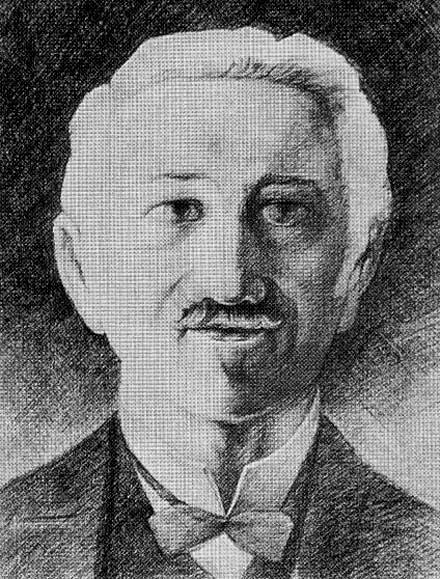
Portrait above: John Scott, 1st Earl of Clonmell by Gilbert Stuart


Friday, 7 June 2019


7‭ ‬June‭ ‬1925: The death of Matt Talbot on this day. He was a reformed alcoholic who turned from a life consumed by Drink to one of physical hardship and mortification devoted to religious worship. Matt was born into a large family in Dublin City in 1856. When he was just 12 years old he started to drink and became addicted. He tried numerous times to give it up but met with only temporary success. When he was 28 years old he took the Pledge and kept it until his death 41 years later. A Priest advised him to follow the ways of the early Monks & Holy Men of Ireland in avoiding the Temptations of the Flesh. He henceforth lived a Life of rigorous Work and Prayer.

He fasted constantly.‭ ‬His breakfast consisted of cocoa prepared the previous evening by his sister, which he often drank cold. With this he ate some dry bread. For his midday meal he had cocoa to which he would add a pinch of tea,‭ ‬and again drank cold.‭ ‬With this he took a slice of bread.‭ ‬His sister would bring him a small evening meal. If she brought fish he would insist that she take it home with her and would make do with bread soaked in the fish juice.

On Sundays he remained in the church for every Mass.‭ ‬Only on returning to his room at about 2 p.m. would he break his fast for the first time since 6.30 p.m. the previous day. The remainder of the day was spent in prayer, reading the Scriptures and the lives of the saints. He gave all his money to neighbours in need and to the missions.

‭ ‬Matt Talbot mortified himself rigorously. He slept on a plank bed with a piece of timber for a pillow. This left his face numb in later years. He slept in chains, which he wore for 14 years before his death, round his leg and on his body.
Reality‭ (‬July/August 1999), a Redemptorist Publication

He collapsed and died on his way to Mass on Trinity Sunday,‭ ‬7 June‭ ‬1925 at Granby Row in Dublin’s Inner City.  On 6 November 1931, Archbishop Byrne of Dublin opened a sworn inquiry into the alleged claims to holiness of the former dock worker. The Apostolic Process, the official sworn inquiry at the Vatican, began in 1947.

On 3 October 1975 Pope Paul VI declared him to be Venerable Matt Talbot, which is a step on the road to his canonisation, a process which needs evidence of a physical miracle in order to be successful. His story soon became known to the large Irish émigré communities. Countless addiction clinics, youth hostels, statues and more have been named after him throughout the world from Nebraska to Warsaw to Sydney. One of Dublin's main bridges is also named after him. Pope John Paul II, as a young man, wrote a paper on him.

Talbot's remains were removed from Glasnevin Cemetery to Our Lady of Lourdes church on Seán McDermott Street, Dublin, in 1972. The tomb has a glass panel through which the coffin may be seen. On his coffin is inscribed the following words:
'The Servant of God, Matthew Talbot.'

There is a small plaque in Granby Lane at the site of Matt Talbot's death.


Thursday, 6 June 2019


6 June 1333: The death by murder of William Burke 'the Brown Earl' of Ulster and the Lord of Connacht near Belfast while on his way to Carrickfergus.
The young Earl was only 21 years old. Far from being a callow youth he was already a very able and ruthless man. In November 1332, at Greencastle, near the mouth of Lough Foyle, he had his cousin Sir Walter Liath de Burgh starved to death. In revenge, Sir Walter's sister, Gylle de Burgh, wife of Sir Richard de Mandeville, planned his assassination.
William had feared that his cousin Walter would be a threat to him after his defeat of the O'Connor's in 1330. Clearly a man of some ambition his foul murder of his relation was a bit too much even for that ruthless age.

William Burke, Earl of Ulster, was killed by the English of Ulster. The Englishmen who committed this deed were put to death, in divers ways, by the people of the King of England; some were hanged, others killed, and others torn asunder, in revenge of his death.
Annals of the Four Masters

With his death the whole Anglo-Norman rule in the North began to unravel as the DeBurgo 'clan' fought amongst themselves over the division of the dead Earl's vast holdings. With the collapse of their power the first phase of the Conquest began in 1169 came to an end. From then on until the Reformation the Colony was to be basically on the defensive rather than on the attack against the Gaels of Ireland.

No such blow had yet befallen the Anglo-Irish Colony. The whole De Burgo Lordship, which had reduced the proudest of the Irish to vassalage and had been the shield and rampart of the English interest in the north and the west, fell at one stroke. Released from a yoke which they alone could never have broken, the O'Neills and the O'Donnells were able to subject eastern and southern Ulster on the one hand, and DeBurgo's lordship of Sligo on the other. Within fifty years practically the whole province went back to the Irish order.
A History of Medieval Ireland
Edmund Curtis


Wednesday, 5 June 2019

Image result for battle of benburb


5 June 1646: The Battle of Benburb/ Cath Beann Borb was fought on this day. General Owen Roe O’Neill met and defeated a superior enemy force at Benburb. The battle was fought near the river Blackwater on the border between the counties Tyrone and Armagh. He had deliberately chosen a defensive position on which to meet the British Army under Major-General Robert Monroe. The British men had marched many miles in the days preceding the battle, fighting a series of tiring skirmishes against the Irish on the way. On the day of the battle itself his men had marched some 15 miles before they came up upon the Irish positions. O'Neill's men on the other hand were well rested and some were in concealed positions so the British did not know they were up against O'Neill's Main Force until the battle was joined.

O'Neill and Monroe were both experienced commanders, O'Neill had fought in the Spanish Army in the Low Countries and had conducted a brilliant defense of the town of Arras in 1640 for weeks against overwhelming odds before been forced to surrender. Monroe was a veteran of the 30 Years War in Flanders and Germany.

O'Neill was determined to bring his opponent to battle on his own terms by taking up a position that would convince the enemy to attack at a disadvantage. Described 'as a man of few words, cautious and phlegmatic in his operations' 'this great adept in concealing his feelings' as the Papal envoy Rinuccini called him.

O'Neill kept his plan to himself but its possible he sent a 'deserter' across the lines to point Monroe in the right direction for the battle to be sprung. The British army had crossed the river Blackwater after advancing from Armagh was advancing from the south west upon the Irish with the river on their right flank. The battle took place just over three miles south-east of Charlemont Fort in what is now County Tyrone.

The Scottish commander had over 6,000 men, made up of six Scottish and four English regiments of foot and around 600 horse. Monroe's infantry was two-thirds musketeers and one-third pikemen. Monroe also had six light cannon with him. O’Neill’s Army consisted of about 5,000 foot, half of whom were pikemen and half musketeers, and 500 horse, many of whom were lancers. He drew up his men with four brigades in the first line and three in the second. The Irish had no artillery available at all.Before the clash of arms, Father Boetius Mac Egan, Chaplain General of the Army, gave general absolution to the O'Neill's men.

O'Neill delayed the advance of Monroe's Army with lines of skirmishers, falling back step by step. The battle proper then did not begin until late in the day. When the British, confident of victory, finally attacked the Irish lines they were beaten off. Once this attack had been checked O’Neill gave the order to advance with his famous exhortation to his men:

Let your manhood be seen by the push of your pike
- your word is 'Sancta Maria'
- and so in the name of the Father, the Son and the Holy Ghost
Advance!
- and give not fire till you are within pike-length. 

With that the Irish lines went forward to break the enemy's lines. By this stage the sun and wind were behind the Irish lines giving them a distinct tactical advantage. After about an hours' heavy fighting late in the evening the British lines began to buckle. Eventually most Monroe's troops broke and ran. Monroe was lucky to escape with his life and he lost probably half of his men in this rout, some 3,000 or so. Only Sir James Montgomery's Regiment getting away in good order. Much of his baggage and all of his artillery was taken. Irish casualties were in the low hundreds and they were left masters of the field as the sun went down. It was the greatest Irish Victory of the War of the Confederation.