Sunday, 8 April 2018

Image result for gladstone

8‭ ‬April‭ 1886: British Prime Minister William Gladstone introduced the 1st Home Rule Bill in the House of Commons on this day. He did so with the intent of giving Ireland a limited control of her own internal affairs. His intention was to prove to the House that since the Act of Union in 1800 all efforts to govern Ireland through the Parliament at Westminster had failed, and to propose for that reason a system of governing her through a legislative body sitting in Dublin.

In a long and winding speech he outlined the historical background to Ireland’s grievances and the attempts by the Crown to suppress Discontent.‭ ‬All concessions had failed to satisfy the Irish and the reason was that they wished to govern their own affairs. He proposed a limited form of self Government or ‘Home Rule’ to resolve the issue.

Law is discredited in Ireland,‭ and discredited in Ireland upon this ground especially—that it comes to the people of that country with a foreign accent, and in a foreign garb….
These Coercion Bills of ours…are stiffly resisted by the Members who represent Ireland in Parliament.
The case of Ireland,‭ ‬though she is represented here not less fully than England and Scotland, is not the same as that of England and Scotland….The consequence is that the mainspring of law in England is felt by the people to be English; the mainspring of law in Scotland is felt by the people to be Scotch; but the mainspring of law in Ireland is not felt by the people to be Irish.

Gladstone however was determined that any devolution of political power to an Irish Legislature:

‭ ‬Everything that relates to the Crown—Succession, Prerogatives, and the mode of administering powers during incapacity, Regency, and, in fact, all that belongs to the Crown. The next would be all that belongs to defence--the Army, the Navy, the entire organisations of armed force. I do not say the Police Force, which I will touch upon by-and-by, but everything belonging to defence. And the third would be the entire subject of Foreign and Colonial relations. Those are the subjects most properly Imperial, and I will say belonging, as a principle, to the Legislature established under the Act of Union and sitting at Westminster.

While he ruled out a separate Parliament for the North he stated that:

We propose to provide that the Legislative Body should not be competent to pass a law for the establishment or the endowment of any particular religion.

He concluded with the lofty words:

The best and surest foundation we can find to build upon is the foundation afforded by the affections,‭ ‬the convictions,‭ and the will of the nation; and it is thus, by the decree of the Almighty, that we may be enabled to secure at once the social peace, the fame, the power, and the permanence of the Empire.

But for all Gladstone’s fine words his attempt to accommodate Ireland’s claim to legislate for her own affairs was to result in a political fiasco and the downfall of his own Government.‭ ‬Two months later to the day the Home Rule Bill was defeated in the Commons by‭ ‬341 votes to 311.  The Parliament was quickly dissolved, and elections were held in early July. Gladstone’s hopes were dashed—the Liberals won 191 seats, the Home Rulers won 85 but the Tories and Liberal Unionists won 317. With his very comfortable majority, Lord Salisbury formed a government, which remained in power until 1892.

Saturday, 7 April 2018

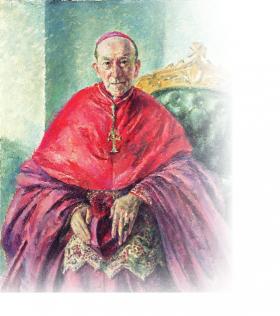
Image result for charles mcquaid
7 April: 1973 - John Charles McQuaid [above], the old Archbishop of Dublin, died on this day . He was head of the Dublin Diocese from 1940 to 1972 and a man who ruled his fiefdom with an Iron Hand.

He was born in Cootehill, Co. Cavan, on 28 July 1895, to Dr. Eugene McQuaid and Jennie Corry. His mother died a week later and his father, a doctor, signed her death certificate. A little over a year later he married a woman named Agnes, who raised John and his sister Helen as her own. In his teens John learned that Agnes was not his real mother. Further children were born to Eugene and Agnes McQuaid.

Educated at Blackrock College and Clongowes, two of the top private Catholic schools in the Country, he went on to complete his University Education at UCD where he mastered on the Life of the Roman pagan philosopher Seneca. He then took up his studies for the priesthood and was ordained at Kimmage in Dublin in 1924.

After a brief stay in Rome he returned to Ireland and was appointed to the staff of Blackrock College in 1925. He served as Dean of Studies from 1925–1931 and President of the College from 1931–1939. In this time he ran the school with a strict hand and encouraged the boys in Sport, Rugby in particular and also in classical studies.

However it was in his role as advisor to the President Eamon De Valera that he is best known for ensuring that a strong Catholic ethos was written into the new Irish Constitution of 1937, where the ‘Special Position’ of the Church was specifically recognised. Though recent commentators have pointed out that this had no actual legal meaning as such. It was removed from the Constitution in 1972 in a Referendum.

In 1940 McQuaid was appointed Archbishop of Dublin and from the start he had some overriding concerns. He wanted to ensure that the Church remained dominant in Irish Society and that a Catholic education was given to the children of the Diocese He also had great concerns about the widespread poverty in the city and encouraged acts of Charity towards the poor.

He was basically a typical Irish Archbishop in religiosity but with a lot more intelligence, drive and determination than most. His most controversial moment came in 1951 when he became embroiled in the legislation for a Bill that was before the Irish Parliament (the Dail) that was known as the Mother & Child Scheme. McQuaid opposed it as giving more power to the State as against the Church. He was not the only one and the Irish Medical Organisation also rowed in against it for reasons of their own. The popular Minister of Health, Noel Browne, was forced to resign. But it proved a Pyrrhic Victory for the Church and for McQuaid in particular as public opinion slowly moved away from accepting the Church as the primary source of moral authority.

Further controversy dogged him in 1955 when he voiced opposition to the visit of the Communist soccer team from Yugoslavia (where in fairness Catholics were given a hard time) to Dublin yet over 20,000 people turned up to see them!

But Ireland was changing and even more so after 1960 when increased social prosperity brought into being new ways of thinking. The arrival of Television and foreign travel meant that people had a broader view of the World and its many and varied ways than heretofore.

It was though the opening of the Second Vatican Council in Rome in 1962 that put the cat amongst the pidgins as many of the Faithful saw hope for fundamental change in the strict and outdated modes of operation of the Church. McQuaid was deeply suspicious of change and made it pretty clear where he stood on the issue. He will always be remembered for his attempt to reassure his flock at the end of the Council that "No change will worry the tranquillity of your Christian lives".

His eminent position in the decision making process of the Irish State became an increasing anachronism as the 1960's wore on. Politicians offering him public deference became a source of embarrassment and indeed anger to many voters, particularly in the upwardly mobile classes in South Dublin, where McQuaid lived himself.

He was a shy and reserved man who lived frugally and alone. He visited the sick in hospitals nearly every night and ensured that the Church’s works of Charity continued unabated. But these are now almost forgotten and his errors of judgement remembered.

Dr. McQuaid formally relinquished the government of the Archdiocese of Dublin when his successor was ordained Archbishop in February 1972.

‘On Saturday 7 April 1973 McQuaid was too ill to get up at his usual time of 6.30am to say Mass at his private residence in Killiney Co. Dublin. He was taken to Loughlinstown Hospital where he died within an hour. Shortly before his death he asked nurse Margaret O'Dowd if he had any chance of reaching heaven. She told him that if he as Archbishop could not get to heaven, few would. This answer appeared to satisfy him and he lay back on the pillow to await death. He died at about 11am. He is buried in St. Mary's Pro-Cathedral in Dublin, the seat of the Roman Catholic Archdiocese.’
http://en.wikipedia.org/wiki/John_Charles_McQuaid#Death


Thursday, 5 April 2018

Image result for cadogan hotel

5‭ ‬April‭ ‬1895:‭  ‬Oscar Wilde was arrested at the Cadogan Hotel,‭ ‬London, for homosexual offences with Lord Alfred Douglas, son of the‭ ‬8th Marquis of Queensbury.‭ ‬In Room 118‭ ‬he was arrested after spending time with his lover, Lord Alfred Douglas, affectionately known as 'Bosie'. Lord Alfred's father, the Marquess of Queensberry, had suspected Wilde and his own son to be in an illicit relationship, and he challenged Wilde with a scribbled accusation of 'Somdomy' (sic). Oscar‭ Wilde knew that the arrest was coming, ‬and ignored friends' pleas for him to flee the country.

The Poet Laureate John Betjeman took up the tragic tale in his poem‭ "‬The Arrest of Oscar Wilde at The Cadogan Hotel": 

'A thump,‭ ‬and a murmur of voices
(Oh,‭ why must they make such a din?)
As the door of the bedroom swung open
And TWO PLAINCLOTHES POLICEMEN came in:
"Mr.‭ Woilde, we 'ave come for tew take yew‬nsurgent
Where felons and criminals dwell:
We must ask yew tew leave with us quietly
For this is the Cadogan Hotel.'

The Hotel is still a going concern and is situated‭ ‬on Sloane Street, the famous Belgravia thoroughfare connecting the well-heeled districts of Chelsea and Knightsbridge in the City of London.
Wilde was convicted of Gross Indecency with Men (Homosexuality) and sentenced to two years Hard Labour.

Wilde entered prison on 25 May 1895. He served his sentence in Newgate, Pentonville and Wandsworth jails before being moved to Reading Jail to complete his term of imprisonment. While incarcerated he completed a self analysis of his Life - De Profundis - and started a long poem on the prison experience The Ballad of Reading Jail , which rank amongst his finest works.

He was released from prison on 18 May 1897 and sailed immediately for France. He would never return to Britain or to Ireland. He died a broken man in Paris on 30 November 1900. He was eventually interred in the famous La Père Lachaise Cemetery in that City and his final resting place is today the most visited in that vast necropolis.


Wednesday, 4 April 2018


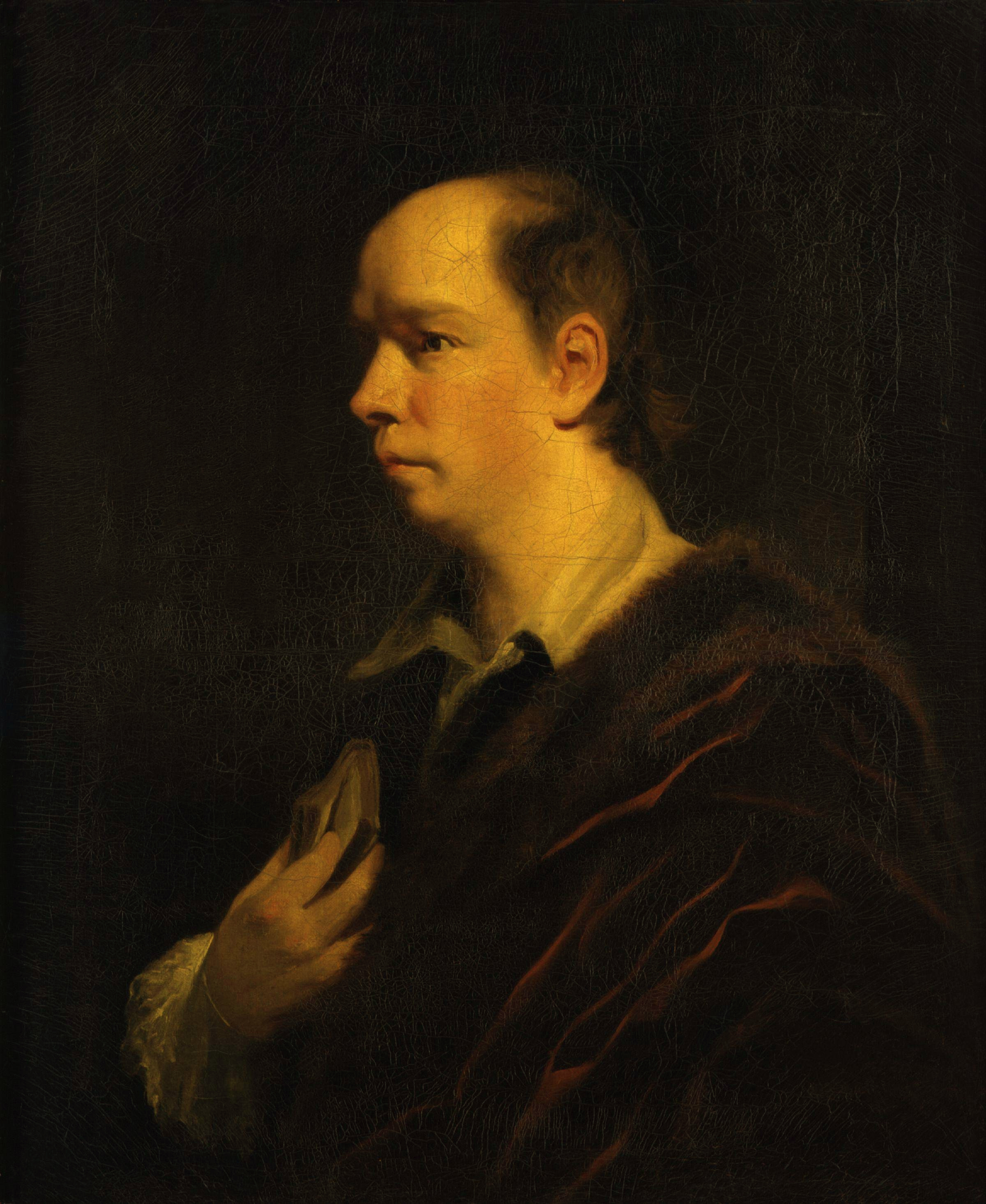
4 April‭ ‬ 1774: Oliver Goldsmith [above]*, Irish novelist, playwright and poet, died in London on this day. He was born in the Irish Midlands in about 1730 the son of an Anglican clergyman. At the age of eight he had a severe attack of smallpox which disfigured him for life. He studied Theology and Law at Trinity College in Dublin during the 1740s and eventually graduated from there as a Bachelor of Arts in 1749. While a student he picked up a taste for the good life of drinking, singing and playing cards. He spent some time studying Medicine in Edinburgh and in Leiden in the Austrian Netherlands but gave it up. He then drifted about and wandered on foot across Flanders, France, Switzerland and Northern Italy. He survived on his wits and ‘busked’ for a living when he could.

He settled in London in‭ ‬1756‭ ‬and started to earn an income by the pen.‭ ‬Necessity being the mother of invention he produced much low grade material but some gems too as he honed his art.‭ ‬His fortunate inclusion in‭ ‘‬the Club‭’ ‬of Samuel Johnson gave him an introduction to many of the City’s literati.‭ ‬

Though Boswell depicted him as a ridiculous,‭ ‬blundering, but tender hearted and generous creature.
His most famous works are his novel‭ ‬The Vicar of Wakefield (1766) a  humorous melodrama and his short and ironic poem An Elegy on the Death of a Mad Dog of the same year ; his poem The Deserted Village (1770) a lament on a fictional Irish village in the Midlands and his play She Stoops to Conquer (1773) a comedy of manners, all made his name. He also turned out many works of lesser importance including Histories and works on Philosophy which helped give him a lucrative income.

He was known as a very generous man but with extravagant tastes and when he died he owed‭ £2,000 – a small fortune in those days. He had a close relationship with Mary Horneck, with whom he fell in love in 1769 but they never married. He died after a short illness in 1774 and was buried in the Church of St Mary or ‘The Temple’. His Latin Epitaph by Johnson was praise indeed:

Oliver Goldsmith:‭ A Poet, Naturalist, and Historian, who left scarcely any style of writing untouched, and touched nothing that he did not adorn. ‬Of all the passions,‭ ‬whether smiles were to move or tears, a powerful yet gentle master. In genius,‭ ‬vivid,‭ ‬versatile,‭ ‬sublime.‭ ‬In style,‭ ‬clear,‭ ‬elevated,‭ ‬elegant.

A statue of him stands outside the front doors of his old Alma Mater, Trinity College Dublin.‭

* Oliver Goldsmith by Sir Joshua Reynolds

Tuesday, 3 April 2018

Image result for polini atha cliath

3‭ ‬April‭ ‬1925: The amalgamation of the Dublin Metropolitan Police (DMP) with An Garda Síochána  took place on this day.

The Capital’s own Police Force had been established under an Act of the British Parliament in‭ ‬1836 and the force had become operational in January 1838. It was closely modelled on the London Metropolitan Police founded by Sir John Peel. While never a greatly popular force with Dubliners the DMP had nevertheless proved to be a magnet to men (mostly countrymen) in search of secure employment in the city with a guaranteed pension at the end of their service. Its members were unarmed unless on specific duties and the individual members relied on their formidable physical strength to settle affairs on the street when necessary. Among the generally undersized citizenry of Dublin they certainly stood out as men not to be trifled with.

Things started to turn sour for the DMP in‭ ‬1913‭ ‬when there was serious labour unrest in Dublin.‭ ‬In a fight for Trade Union recognition the employers resorted to locking out the workers till they dropped their demand for the right to belong to one.‭ ‬The DMP as a result found itself involved in upholding the interests of the employers at the expense of the workers rights. Vicious street battles developed with the police involved in sometimes fatal baton charges, which lost them a lot of credibility and respect with the public. Of course the DMP men suffered too! Then the events of 1914, when the DMP and the British Army tried unsuccessfully to block the distribution of the weapons landed at Howth, further weakened their morale and general standing. Indeed as a result of this incident the Assistant Commissioner had to resign.

The outbreak of the Great War saw a considerable number of the men volunteer for war service from which,‭ ‬no doubt, a high proportion never returned. The Easter Rising of 1916 was yet another shock to its morale. By the time the War of Independence started in 1919 the force was at a low ebb, which the events of the next two and a half years did nothing to alleviate. By and large they escaped the deadly fate of so many of their counterparts in the RIC simply because of their unarmed status. So long as they turned a blind eye to the activities of the IRA then they were allowed to proceed with the enforcement of the civil law. Not so the men of the ‘ G ’ Division. They were armed and were tasked by the British with hunting down Republicans in the city. Michael Collins had his own answer to them: the men of  ‘ the Squad ‘, a select group of gunmen who were given the job of eliminating especially dangerous opponents of the Republic in Dublin. In this they succeeded brilliantly, and effectively put a stop to the flow of intelligence to the British administration in Dublin Castle.

By the Summer of‭ ‬1921 Irish recruitment to the DMP was at a standstill and the ranks had to be filled by taking on men from across the water, many of them British ex-servicemen. With the Truce of July 1921 the DMP was left hanging in the air, not knowing whether they would be kept on or swept aside in the impending change of government.‭ When the new Government took over they decided to retain the DMP at least temporarily as the only fully trained Police Force in the State.‭ ‬In Irish the Force was known as Políní Átha Cliath and cap badges were issued to reflect this.

In‭ 1923 Major General W.R.E. Murphy DSO, MC was appointed to command as Chief Commissioner and he was able to instil a sense of purpose back into the Force. ‬He had numerous difficulties to contend with both internal and external.‭ ‬Many of the men wished to retire and Jim Larkin had returned from America and organised a series of Strikes across the City. On the other hand Murphy was instrumental in ensuring that Frank Duff’s efforts to shut down the notorious Red Light district known as the Monto succeeded. In sport the DMP continued to enjoy great success their crowning glory being winning the World Tug of War Championship in London in 1924.

However Kevin O’Higgins had decided that two police forces in one State was one too many and in‭ ‬1925 the DMP was amalgamated into An Garda Síochána. Murphy became a Deputy Commissioner of the Garda under General O’Duffy with whom he had served in the Irish Civil war. Thus after a run of 87 years Dublin’s own Police Force and its formidable Constables came to be seen no more on the streets of the Fair City.

Monday, 2 April 2018


2‭ ‬April‭ ‬1878: The assassination of Lord Leitrim on this day.‭ ‬William Sydney Clements,‭ ‬3rd Earl of Leitrim was born in Dublin 1806.‭ ‬He had a successful career as an Officer in the British Army.‭  ‬On his father's death in 1854, Clements succeeded him as 3rd Earl  and he retired from the Military in 1855.  Over the next two decades, his overbearing behaviour as a landlord brought him much hatred from his tenants. He personally took on many of the legal cases of Eviction against his tenants and was a very hard taskmaster. His oppression of his tenants and his rumoured seduction of some of the local girls made him a marked man in the eyes of many of the local people. He had already survived a number of attempts on his life before his luck ran out.

He was finally shot dead in an ambush at Cratlagh Wood while making his way to Manorhamilton,‭ ‬County Leitrim. His clerk and driver were killed along with him so there would be no witnesses.

It was reported that there was:

an open encounter,‭ ‬in which the assassins closed with their victims and deliberately put them to death. That there was a struggle the appearance of the ground seems to establish. Besides, Lord Leitrim's head has been shockingly battered, both his arms are broken, and the shattered stock of a gun was found close to his body. We are also told that one of his two attendants was shot through the mouth.
Manchester Guardian,‭ ‬April 4 1878

His assassins,‭ ‬Michael Hegarty, Michael McElwee and Neil Shields all escaped detection by the British. The Earl’s remains were conveyed to Dublin for burial in the family vault of St Michan’s Church where they can be viewed to this day [above].

Leitrim’s death was a prelude to the Land war,‭ ‬which broke out one year later.‭ 


Sunday, 1 April 2018


1‭ April 1129 AD: The death of Cellach mac Aeda on this day. This famed and holy man was the Bishop of Armagh. His status as head of the Irish Church had been recognised at the Synod of Rathbressail/Ráth Breasail  in the year 1111. It marked an important step in the transition of the Irish Church from a monastic to a diocesan and parish based church. Many Irish present day dioceses trace their boundaries to decisions made at the synod. Cellach was born in the year 1080 and was an advocate of reform in the Irish Church to put it on a more formal footing and along set lines that matched similar moves on the Continent.

While on a visit to Munster‭ (‬Mumu) he took ill and died at the religious settlement of Ard Patrick near Limerick. He was buried at his own request at Lismore. Shortly before he died he designated the future Saint Malachy as his successor. However his protégé was to be frustrated in his attempts to secure the see of Armagh by Muirchertach mac Domnall who installed himself at Armagh before Malachy could get there. The situation was only resolved in 1134 after much political and ecclesiastical power politics had been played out.

We see in his ‘Obituary’ in the Annals of Ulster [sample above] an eulogy that sets out the kind of person a great ecclesiastic was expected to be:

Cellach,‭ ‬successor of Patrick,‭ ‬a virgin and the chief bishop of western Europe,‭ ‬and the only head whom Irish and foreigners, lay and clergy, obeyed, having ordained bishops and priests and all kinds of cleric also, and having consecrated many churches and churchyards, having bestowed goods and valuables, having exhorted all, both laity and clergy, to uprightness and good conduct, after a life of saying the hours, saying mass, fasting, prayer, after being anointed and having made excellent repentance, sent forth his soul to the bosom of angels and archangels in Ard Pátraic in Mumu on Monday, the Kalends 1st of April, the twenty-fourth year of his abbacy and the fiftieth year of his age. 

His body was brought on the third of the Nones‭ 3rd of April to Lis Mór of Mo-Chutu in accordance with his own testament, and was waked with psalms and hymns and canticles, and buried with honour in the burial-ground of the bishops, on the day before the nones 4th of April, that is, Thursday. Muirchertach son of Domnall was appointed to the successorship of Patrick on the Nones 5th of April.
Annals of Ulster‭