Saturday, 16 May 2020

OTD in 1945 – Éamon de Valera responds to Winston Churchill's ...

16 May 1945: An Taoiseach Eamon DeValera made his famous reply on Radio Éireann to the speech of British Prime Minister Sir Winston Churchill  a few days earlier in which he disparaged the role of the Irish Free State in the Second World War which had just ended.

In that speech Churchill had cast a cold eye on Mr Eamon De Valera’s role in denying to Britain the naval facilities known as the ‘Treaty Ports’ in the South that he felt they had a right to in time of war & compared it with the Loyalty of the North in the recent Conflict. In his Victory speech he called out the Irish Government:

...the approaches which the southern Irish ports and airfields could so easily have guarded were closed by the hostile aircraft and U-boats. This indeed was a deadly moment in our life, and if it had not been for the loyalty and friendship of Northern Ireland, we should have been forced to come to close quarters with Mr. de Valera, or perish from the earth. However, with a restraint and poise to which, I venture to say, history will find few parallels, His Majesty’s Government never laid a violent hand upon them, though at times it would have been quite easy and quite natural, and we left the de Valera Government to frolic with the German and later with the Japanese representatives to their heart’s content."

This was a jibe that DeValera felt he could not let go unanswered and he took to the airwaves to counter the accusation that Ireland should have actively taken part on Britain’s side in the World War just ended. Some days previous he had called upon the German Legation and commiserated with the German representative here Dr Hempel on the death of the German Chancellor Adolf Hitler. To say this had not gone down well in certain quarters would be something of an understatement! However Churchill had then blundered in seeking to portray Irish Neutrality as something that Britain had the Right to override if it so wanted to do so. To this DeValera replied:

"Allowances can be made for Mr. Churchill’s statement, however unworthy, in the first flush of victory. No such excuse could be found for me in this quieter atmosphere. There are, however, some things it is essential to say. I shall try to say them as dispassionately as I can. Mr. Churchill makes it clear that, in certain circumstances, he would have violated our neutrality and that he would justify his actions by Britain’s necessity. It seems strange to me that Mr. Churchill does not see that this, if accepted, would mean that Britain's necessity would become a moral code and that when this necessity became sufficiently great, other people’s rights were not to count... Surely Mr. Churchill must see that if his contention be admitted in our regard, a like justification can be framed for similar acts of aggression elsewhere and no small nation adjoining a great Power could ever hope to be permitted to go its own way in peace...
Mr. Churchill is proud of Britain’s stand alone, after France had fallen and before America entered the war. Could he not find in his heart the generosity to acknowledge that there is a small nation that stood alone not for one year or two, but for several hundred years against aggression; that endured spoliations, famine, massacres, in endless succession; that was clubbed many times into insensibility, but each time on returning to consciousness took up the fight anew; a small nation that could never be got to accept defeat and has never surrendered her soul?"

His speech had an electrifying effect on Irish public opinion and was seen as a dignified response to Churchill’s ill considered remarks about Ireland. It appears that on mature reflection the British Prime Minister realised he had gone too far and the matter was let drop. Anyway he heavily lost the British General Election in June that year and did not return to Office until 1951 - by which time the Irish Free State had declared itself a Republic and was not even nominally part of the British Empire  - an event that Mr DeValera had nothing at all to do with it!

https://www.rte.ie/archives/exhibitions/eamon-de-valera/719137-de-valera-response-to-churchill/


Friday, 15 May 2020


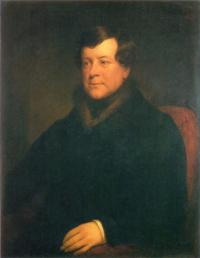
15‭ May 1847: The death of Daniel O’Connell  ‘The Liberator’ at Genoa in Italy while making his way to the Holy City of Rome on this day. He died at 9.35 p.m. in the evening. His heart was taken on to Rome (now lost) and his body was returned to Dublin for internment in Dublin’s Glasnevin Cemetery. He tomb was eventually capped by a replica Irish Round Tower that is the centrepoint of the necropolis and is still visited by thousands of people every year.

On May‭ 15, 1847, Father Miley, O'Connell's companion on his last journey, wrote from Genoa: “The Liberator is not better. He is worse – ill as ill can be. At two o'clock this morning I found it necessary to send for the Viaticum and the holy oil. Though it was the dead of night, the cardinal archbishop (he is eighty-eight years old), attended by his clerics and several of the faithful, carried the Viaticum with the solemnities customary in Catholic countries, and reposed it in the tabernacle which we had prepared in the chamber of the illustrious sufferer. Though prostrate to the last degree, he was perfectly in possession of his mind whilst receiving the last rites. The adorable name of Jesus, which he had been in the habit of invoking was constantly on his lips with trembling fervour, His thoughts have been entirely absorbed by religion since his illness commenced. For the last forty hours he will not open his lips to speak of anything else. The doctors still say they have hope. I have none. All Genoa is praying for him. I have written to Rome. Be not surprised if I am totally silent as to our own feelings. It is poor Daniel who is to be pitied more than all.”
Henry Peel OP - St Martin de Porres Magazine,‭ a publication of the Irish Dominicans.

He was the greatest Irish political figure of the 19th century but curiously not the most revered. A great orator and a man of impressive appearance and political acumen he was considered too cute by half by both allies and opponents. However he rose a People off their knees and showed that it was possible to build a mass political movement in Ireland that could only be defeated when faced by Force of Arms and not the Force of Argument.

Thursday, 14 May 2020


14 May 1977: The strange death and disappearance of Captain Robert Nairac on this day. In one of the most bizarre and deadly incidents of the Conflict in the North in the 1970s this British Officer (in Mufti at the time  & he was armed with a 9mm Browning pistol )  was set upon  in the carpark of The Three Steps pub in Dromintee, South Armagh. He is said to have told regulars of the pub that he was Danny McErlaine, a motor mechanic and member of the Official IRA.

At around 11.45 p.m., he was abducted following a struggle in the and taken across the border into the Republic near Ravensdale Wood in Co Louth. Here he was set upon and brutally interrogated but would admit to nothing. When he knew the game was up and he going to be executed his last words were ‘Bless me Father for I have sinned’.

Nairac was an experienced Intelligence Officer who began his military career with the Grenadier Guards before switching to Intelligence duties. He was used to taking chances - indeed he was known for taking exceptional risks to gather information on the IRA.

 Had he been an SAS member, he would not have been allowed to operate in the way he did. Before his death we had been very concerned at the lack of checks on his activities. No one seemed to know who his boss was, and he appeared to have been allowed to get out of control, deciding himself what tasks he would do.
Ghost Force by Former SAS Warrant Officer Ken Connor

His disappearance trigged a huge manhunt North and South of the Border when news of his abduction broke. But despite the best efforts of the Crown Forces and An Garda Siochana his remains were never located. 

Was there a darker side to Captain Robert Nairac? He has been linked to some of the more murkier operations that happened at that time along the Border and it was known he was prepared to countenance taking on the IRA ‘at their own game’. But nothing has ever been substantiated and with the passage of time probably never will.

He was posthumously awarded the George Cross in 1978. In part the Citation reads as follows:
Captain Nairac's exceptional courage and acts of the greatest heroism in circumstances of extreme peril showed devotion to duty and personal courage second to none.

To this day he is counted amongst the Disappeared whose bodies have never been found.


Tuesday, 12 May 2020


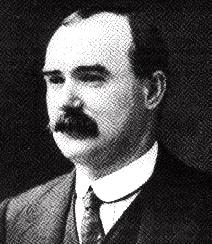
12 May 1916: Seán MacDiarmada and James Connolly were executed on this day. They were the last of the Leaders of the Easter Rising to be executed in Ireland. By this stage public revulsion at the continuing executions was boiling over. When the British Prime Minister Herbert Asquith arrived in Dublin that day he immediately ordered that no more executions were to take place here. But it was a damage limitation exercise as the men shot became modern day heroes in the eyes of many of the Irish People. And they still are.

Seán MacDiarmada: Born in 1884 in Leitrim, MacDiarmada emigrated to Glasgow in 1900, and from there to Belfast in 1902. A member of the Gaelic League, he was acquainted with Bulmer Hobson. He joined the Irish Republican Brotherhood in 1906 while still in Belfast, later transferring to Dublin in 1908 where he assumed managerial responsibility for the I. R. B. newspaper Irish Freedom in 1910. Although MacDiarmada was afflicted with polio in 1912, he was appointed as a member of the provisional committee of Irish Volunteers from 1913, and was subsequently drafted onto the military committee of the I. R. B. in 1915. During the Rising MacDiarmada served in the G. P. O. He was executed on 12 May 1916.

James Connolly (1868-1916): Born in Edinburgh in 1868, Connolly was first introduced to Ireland as a member of the British Army. Despite returning to Scotland, the strong Irish presence in Edinburgh stimulated Connolly’s growing interest in Irish politics in the mid 1890s, leading to his emigration to Dublin in 1896 where he founded the Irish Socialist Republican Party. He spent much of the first decade of the twentieth century in America, he returned to Ireland to campaign for worker’s rights with James Larkin. A firm believer in the perils of sectarian division, Connolly campaigned tirelessly against religious bigotry. In 1913, Connolly was one of the founders of the Irish Citizen Army.
During the Easter Rising he was appointed Commandant-General of the Dublin forces, leading the group that occupied the General Post Office. Unable to stand to during his execution due to wounds received during the Rising, Connolly was executed while sitting down on 12 May 1916. He was the last of the leaders to be executed.
- See more at: http://www.taoiseach.gov.

Monday, 11 May 2020


11 May 1745: The battle of Fontenoy was fought on this day. It occurred in what was then part of the Austrian Netherlands but is now in present day Belgium. The French under Marshal De Saxe defeated the British - Dutch Army under the Duke of Cumberland.

The Allied Army was on the advance to relieve the siege of Tournai when they encountered the French under Marshal De Saxe drawn up in prepared positions. In all the French army numbered 93 battalions, 146 squadrons and 80 cannon, some 70,000 troops, of which 27 battalions and 17 squadrons were left to cover Tournai. In support of this position was a reserve of picked infantry and cavalry regiments, including the Irish Brigade, the “Wild Geese’’.

Cumberland reconnoitred the French position on 10th May and decided to pin down the French right wing by attacking with the Austrian and Dutch contingents between Antoing and Fontenoy. While these attacks were being made the British and Hanoverians would advance between Fontenoy and the Bois de Bary across what appeared to be open ground. His so called ‘Pragmatic Army’ comprised 56 battalions of infantry and 87 squadrons of cavalry supported by 80 cannon, in all around 53,000 men.

The French Army however put up a formidable defence and the Allies found the advance heavy going, taking many casualties as they attempted to break their opponents line. But Cumberland pressed on and eventually forced his way into the centre of the French position. The troops opposing him began to buckle. It was the critical moment of the battle. 

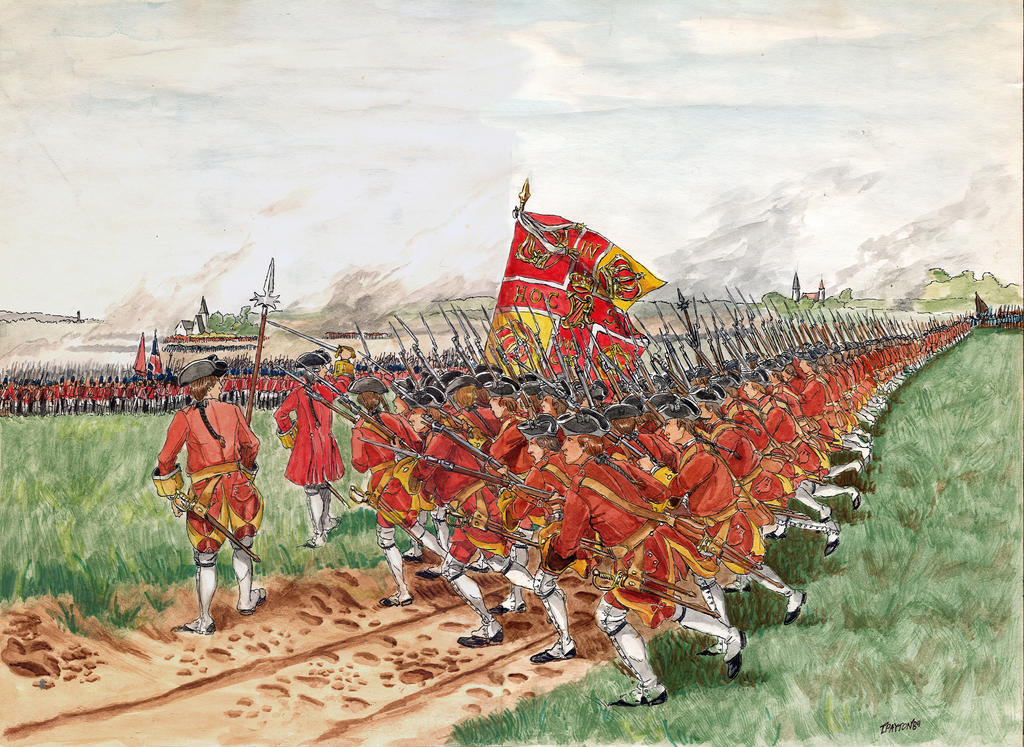
It was at this point that Marshal De Saxe unleashed his reserve who enveloped the flanks of the British Column. The Irish Brigade (approx. 4,000 men) and dressed in Redcoats was in the thick of it, the men fired up by thought of revenge against their Country’s Oppressor. The Irish Regiments advanced upon the British lines to the cry: 'Cuimhnigidh ar Liumneac, agus ar fheile na Sacsanach’ – ‘Remember Limerick and British faith!’

It consisted that day of the regiments of Clare, Lally, Dillon, Berwick, Roth, and Buckley, with Fitzjames' horse. O'Brien, Lord Clare, was in command. Aided by the French regiments of Normandy and Vaisseany, they were ordered to charge upon the flank of the English with fixed bayonets without firing…
The fortune of the field was no longer doubtful. The English were weary with a long day's fighting, cut up by cannon, charge, and musketry, and dispirited by the appearance of the Brigade. Still they gave their fire well and fatally; but they were literally stunned by the shout, and shattered by the Irish charge. They broke before the Irish bayonets, and tumbled down the far side of the hill disorganized, hopeless, and falling by hundreds. The victory was bloody and complete. Louis is said to have ridden down to the Irish bivouac, and personally thanked them…
George the Second, on hearing it, uttered that memorable imprecation on the penal code, 'Cursed be the laws which deprive me of such subjects.' The one English volley and the short struggle on the crest of the hill cost the Irish dear. One-fourth of the officers, including Colonel Dillon, were killed, and one-third of the men. The capture of Ghent, Bruges, Ostend, and Oudenard, followed the victory of Fontenoy."

STORY OF IRELAND
By A. M. Sullivan

It was the Irish Brigade’s most famous Victory - though it came at a high cost, with hundreds of men dead and wounded. The Pragmatic Army lost almost 10,000 men, while the French suffered between 6,000-7,000 casualties.

Painting: https://orloprat.deviantart.com/art/Fontenoy-1745-409044521


Sunday, 10 May 2020


10‭ May 1318: The Battle of Dysert O'Dea was fought on this day. It took place near near Corofin, Co Clare. The battle occurred during the Bruce Invasion of Ireland.

The Anglo Norman Lord Richard De Clare‭ ( ‬a descendant of Strongbow) attacked the Irish chieftain Conor O’Dea, chief of the Cineal Fearmaic people and the ally of  King Muircheartach O’Brien of Thomond. [North Munster]

De Clare made the mistake of dividing his army in three in the face of the enemy and he led the van towards Castle Dysert O’Dea‭ – the home of the Irish Chieftain. O’Dea held them at the ford of Fergus and sent messengers out to bring up reinforcements as De Clare charged at his opponents only to be surrounded and cut down by the axe of Conor O’Dea himself. 

As the rest of the Anglo Norman force came up they waded into the Irish and were on the point of extracting a bloody revenge when‭ Felim O'Connor's troops charged down the hill of Scamhall (Scool) and cut a path through the English to join the battle. De Clare's son then arrived on the scene and was cut down and killed by Felim O'Connor.

As the two forces were locked in this deadly struggle both expected reinforcements to arrive and as King Muircheartach O'Brien’s men galloped onto the scene Conor O’Dea almost lost heart not knowing who they were until he heard the Irish war cries and knew the victory was won.‭  Soon Lochlann O'Hehir and the MacNamaras joined the fight and it was all over for the Anglo Normans who sold their lives dearly and went down fighting.

The power of one of the great Anglo Norman families - the De Clares - was shattered forever.‭ In the wake of this victory King Muircheartach O'Brien advanced upon the environs of Bunratty Castle, home of the De Clare Family to find much of the surrounding dwellings burnt by De Clare’s widow who promptly fled to England. The Castle though held out for a couple of weeks and the Irish completely destroyed it in 1322. The De Clare’s never returned and Thomond west of the Shannon remained under Irish rule until the early 17th Century. It was the greatest Gaelic victory of the Bruce War.


Saturday, 9 May 2020


9 May 1916: Thomas Kent/ Tomás Ceannt was executed in Cork Detention Barracks on this day: Born in 1865, Kent was arrested at his home in Castlelyons, Co. Cork following a raid by the Royal Irish Constabulary during which his brother Richard was fatally wounded. It had been his intention to travel to Dublin to participate in the Rising, but when the mobilisation order for the Irish Volunteers was cancelled on Easter Sunday he assumed that the Rising had been postponed, leading him to stay at home.  In 1966 the railway station in Cork was renamed Ceannt Station in his honour.
- See more at: http://www.taoiseach.gov.

When the Kent residence was raided they were met with resistance from Thomas and his brothers Richard, David and William. A gunfight lasted for four hours, in which an RIC officer, Head Constable William Rowe, was killed and David Kent was seriously wounded. Eventually the Kents were forced to surrender, although Richard made a last minute dash for freedom and was fatally wounded. 

Along with Roger Casement he was the only other person to be executed outside of Dublin for their part in the Easter Rising.

In September 2015 he was given a State funeral  after his remains were identified via DNA genetic testing thanks to samples supplied by Kent family descendants still living in the Castlelyons and Fermoy areas of north Cork. Following the requiem mass, Thomas Kent, who was 50 when he was executed, was buried in his family's crypt alongside the remains of his brothers William, Richard and David.