Saturday, 5 March 2022


5 March 1890: William Richard Murphy was born in County Wexford OTD. He was orphaned at an early age and brought up in Belfast by an elder cousin. He graduated in education in Dublin and returned to Belfast to teach on the Falls Road. 

When WW1 broke out he joined the British Army & was posted to the 1st battalion South Staffordshire regiment. He saw action at the Battle of Loos in October 1915 & on the 1st day of the Somme [1 July 1916]. In the assault Murphy was given the task of leading the bombing company to clear the fortified houses in the village of Mametz. Of the battalion’s 21 officers who had gone over the top that morning, by the end of the day six were dead and a further five were wounded, though Murphy survived unscathed.

Murphy was to see many more battles on the Western Front in 1916, such as High Wood and Delville Wood (a particularly hideous affair) in late August, then later in the year on the Douve River and at Beaumont Hamel. In 1917 he was promoted to captain and was awarded the Military Cross for service in the Somme battles. During 1917 he was again in action at Bullcourt in April and then at the third battle of Ypres, another bloody fiasco in which the battalion took heavy casualties. The year 1918 saw Murphy serving in Italy with his battalion, and in June he was promoted from major to lieutenant colonel to become the commanding officer of the 1st battalion South Staffordshire regiment. This was a singular honour for a young Catholic Irishman to be given: the command of a battalion of mostly English soldiers. He led the 1SSR in their final offensive of the War across the Piave River and captured 4,500 of the enemy before the Armistice was signed.

On returning from the War he took up the role of a Schools Inspector  but when the Irish Civil War began Michael Collins ‘headhunted’ him to take up a role in the new Free State Army. He was given command of troops under the overall direction of Eoin O’Duffy and organised the attacks on Republican positions in and around Bruree and Kilmallock, Co. Limerick, during September 1922. After the withdrawal of the Republican forces from there and following the landings in Kerry, he was dispatched to Tralee as the commanding officer of the Free State Army in County Kerry, a position he held from late September until early January 1923. A difficult post, he did the best he could to restore order without being too harsh. He spared the lives of four IRA men sentenced to death just before he left Kerry for the last time. He was then transferred to Dublin to the operations section, but when his orders were not carried out he expressed a wish to resign. To avoid controversy he was instead put in charge of writing training manuals, which was obviously a dead-end position.

However, with the ending of the civil war another opportunity came his way, as Kevin O’Higgins wanted someone reliable to take over the Dublin Metropolitan Police. Murphy was appointed chief commissioner in May 1923 and led the force until it was amalgamated with the Garda Síochána in 1925. The DMP were totally demoralised and he built up their confidence again under very difficult circumstances. He was also involved, with others, in the transformation of the various semi-secret police agencies then in existence into what was eventually to become the Special Branch of the Garda Síochána. This followed his suggestion to O’Higgins in 1924 for the establishment of a ‘Special Branch to deal with Bolshevik, Anarchist and Communist crime masquerading under political disguise’. His proudest moment, however, was in the closing months of his commissionership of the DMP, when he helped Frank Duff of the Legion of Mary to close down the last brothels in the notorious ‘Monto’ red light district of Dublin. Duff appealed directly to Murphy to ensure that the police ended this civic embarrassment once and for all. 

In 1925 Murphy was appointed a deputy commissioner of the Garda Síochána under his old military comrade Eoin O’Duffy. Over the years that followed Murphy was to hold many of the key positions within the police, but owing to the bitter legacy of the civil war he was never awarded the position of commissioner. However, during the Second World War de Valera asked him to organise an auxiliary force to back up the army and Garda. This force soon numbered over 65,000 men but in late 1940 it was split in two, with one section becoming the Local Defence Force (LDF), under army control, and the other the Local Security Force (LSF), remaining under Murphy’s command. However, the LSF was always the poor relation of the state’s security services and was disbanded at the war’s end without ceremony.

After the war Murphy was put in charge of ‘C’ (Crime) Branch and he published his Manual of criminal investigation, which remained in use for many years. He ended his police career back in charge of the Dublin Metropolitan Area. Throughout his career Murphy was known to all ranks as ‘the general’, though when he retired in 1955 he still held the same rank as the day he joined the force 30 years before!

Murphy was an active organiser of amateur boxing at both national and international level. He helped many aspiring boxers in the ranks of the Garda to pursue their interest in the sport, such as ‘Lugs’ Branigan, and he was, along with his wife and others, instrumental in having the National Stadium built.

He died in 1975 and was given a state funeral. He is buried in St Peter’s cemetery, Little Bray, Co. Dublin.





Friday, 4 March 2022


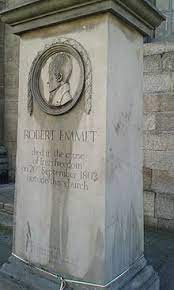
4 March 1778: Robert Emmet was born in Dublin on this day. He was the youngest son of Dr Robert Emmet and Elizabeth (Mason). His father was a well to do Physician in the City with a house on St Stephens Green and another one down the Country. His elder brother Thomas Addis Emmet was a personal friend of Wolfe Tone who visited the family home on many occasions. He entered Trinity College in 1793 and joined the College Historical Society, a debating society. He became secretary to the United Irish Society in the college, but had abandon his studies in April 1798 when he and a number of students were expelled for their Republican sympathies. In 1799 he travelled to France to escape arrest and to secure support for another Rising in Ireland.

He returned home in late 1802 after the Peace of Amiens and began to lay plans to seize Dublin from the British. Unfortunately his plans were laid open by a premature explosion of his arsenal in July of the following year. He then banked all his hopes on an immediate eruption on 23 July 1803 but his venture quickly fell apart and he want into hiding. A few weeks later he was captured, tried for ‘Treason’ and gave the speech of his Life before the Court that quickly became a sensation and secured his reputation as a Patriot.

My country was my idol. To it I sacrificed every selfish, every endearing sentiment, and for it I now offer up myself … I acted as an Irishman, determined on delivering my country from the yoke of a foreign and unrelenting tyranny and the more galling yoke of a domestic faction, which is its joint partner and perpetrator in the patricide…

He was sentenced to be hung, drawn and quartered. This was duly carried out on 20 September before a large crowd in Thomas Street Dublin. The whereabouts of his body today remains a mystery.


Thursday, 3 March 2022


3 March 1577: The town of Naas, Co Kildare was torched by Rory Og O’More and Cormac MacCormac O’Connor on this day. These two Gaelic Chieftains with a select force of 140 men and boys ran through Naas like the ‘haggs and furies of hell, with flakes of fire fastened on poles’, and burned between 700 & 800 of the thatched houses belonging to the local townsfolk - who were still recovering from celebrating St David’s Day [1 March].

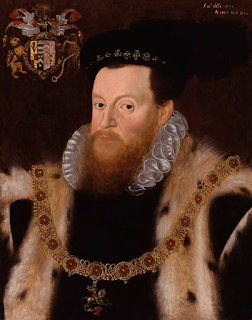
The English Lord Deputy Sydney [above] was furious that Irish ‘rebels’ from the bogs of Laois were able to make such a surprise attack upon one of the chief towns of the Pale, cause such destruction in such a short space of time and then get clean away. He wrote that:

They had not one horseman, nor one shot with theim; they ran through the town, beinge open, like haggs and furies of hell, with flakes of fier fastened on pooles ends, and so fiered the low thatched howsies; and being a great windie night, one howse took fiere of another in a moment; they tarried not half an houre in the town, neither stoode they upon killinge or spoylinge of any.

There was above fyve hundred mennes boddies in the towne manlyke enough in appearance, but neither manfull, nor wakeful as it seamed; for they confesse they were all aslepe in their bedde, after they had filled themselves and surfeyted upon their patrone day; which day is celebrated, for the most part, of the people of this country birthe, with gluttonye and idollatrye as farre as they dare.

But Sydney was a cold and ruthless man. An insult to his authority like this could not be passed over. He was determined to bring in Rory O’More dead or alive. All that year and well into the next he harried his elusive opponent. He killed any of O’More’s soldiers he could engage in battle and also members of the O’More family - including Rory’s wife Margaret (O’Byrne). Finally in June 1578 O’More was killed in a skirmish, his head cut off and brought to the Lord Deputy who had it stuck on a pole on the walls of Dublin Castle.

Rury Oge, the son of Rury Caech, son of Connell O'More, fell by the hand of Brian Oge, son of Brian Mac Gillapatrick. This Rury was the head of the plunderers and insurgents of the men of Ireland in his time; and for a long time after his death no one was desirous to discharge one shot against the soldiers of the Crown.

Annals of the Four Masters


Wednesday, 2 March 2022


2 March 1869: The death of General Sir Hugh Gough OTD. He fought in the wars against Napoleon as a junior officer but is most famous for his Generalship in the 1st China War and the 1st & 2nd Sikh Wars.

He was born 3 November 1779 at Woodstown, Co. Limerick and started his military career in 1793. He campaigned in the West Indies and was present at the attack on Porto Rico and the capture of Trinidad (1797). He was at the capture of the Cape of Good Hope in September 1795 and also in the expedition to Dutch Guiana in 1799.

He went to Spain in January 1809 and commanded the 2nd Battalion of his regiment  [the 87th Royal Irish Fusiliers] at the Battle of Talavera, during which he was wounded in July 1809. He also fought at the Battle of Barrosa, where his regiment  captured a French Imperial Eagle in March 1811. This battle had the most influence on his tactical thinking as he believed that immediate attack was the best method of breaking an enemy force. When Marshal Laval attacked Tarifa at the southern tip of Spain (October 1811), Gough and his men prevented the French exploiting a breach in the town's defences. 

He saw action at the Battle of Vitoria in June 1813 and the Battle of Nivelle, during which he was again badly wounded in November 1813. His wounds there precluded any further active service in the theatre of War. Knighted in June 1815, he was later given the freedom of the city of Dublin and presented with a commemorative sword.

In the 1820s he was back in Co. Tipperary where he led military forces in suppressing the ‘Whiteboy’ agrarian disturbances and was also a local magistrate. After many years at home in 1837 he decided to take up an offer to run the Mysore division of the Madras Army in India. It was a big move to make as he was already 58 years old and married with a family but he knew that his only chance of further advancement lay in active service. This he experienced in plenty in the years to come.

At the outset of the First Opium War in March 1839 he was appointed commander-in-chief of the British forces in China. He led the assault at the Battle of Canton in May 1841, he also led the assault at the Battle of Amoy in August 1841. He commanded the British forces at the Battle of Chapu in May 1842 and at the Battle of Chinkiang in July 1842. After the Treaty of Nanking, the British forces were withdrawn and he returned to India. The 1st China or Opium War was probably one of the most controversial campaigns ever undertaken by a British Force but the politics of it were beyond Gough’s remit and it really was a classic case of a General ‘only obeying orders’ and in fact the Chinese resistance was tepid with the local peasants showing more spirit than most of the troops sent to fight the British.

In August 1843 Gough became Commander-in-Chief, India, and in December 1843 he led the British forces in action against the Mahrattas defeating them decisively at the conclusion of the Gwalior Campaign at the battle of Maharajpore.

In the 1st Sikh War he commanded the troops at the Battle of Mudki in December 1845, at the Battle of Ferozeshah also in December 1845 and at the Battle of Sobraon in February 1846 during the First Anglo-Sikh War. In all these battles he defeated the Sikhs after a series of bloody encounters. Gough was loyally supported by Lord Hardinge, the governor-general, who served under him during these actions.

The Second Anglo-Sikh War started in 1848, and again Gough took to the field commanding in person at the Battle of Ramnagar in November 1848 and at the Battle of Chillianwala in January 1849 which at best could be called a bloody stalemate. He was criticised for relying on frontal assault by infantry rather than using artillery and was replaced as commander-in-chief by Sir Charles Napier but, before news of his replacement had arrived, Gough achieved a decisive victory over the Sikhs in the Battle of Gujarat in February 1849. 

However the losses he suffered in fighting the Sikhs were very high and he was criticsized both within the Army and in the Indian Press for it. When news had filtered back to London it was decided to replace him but his Victory at Gujarat had concluded the campaign and he returned to Britain a Hero. And there was no doubt that he was one as he had shown amazing bravery leading from the front in battle and was a shining example to the men under his command. He never asked of his men on the field of battle what he would not do himself.

Gough returned to England in May 1849 and was created viscount in June and awarded a pension of £2,000 a year. Numerous other honours were showered on him, including an East India Company pension and the freedom of the city of London.

Gough also served as colonel of the 99th Regiment of Foot, as colonel of the 87th (Royal Irish Fusiliers) Regiment of Foot and later as colonel of the Royal Horse Guards. In Dublin, he was a member of the Kildare Street Club. He was promoted to field marshal on 9 November 1862. He died at St. Helen's, his home in Booterstown, [now a Hotel] on 2 March 1869 and was buried in Stillorgan cemetery where his grave can still be seen.

An equestrian statue of Gough by John Foley was ultimately erected outside the city, in Dublin's Phoenix Park in 1880 but, after being repeatedly vandalised in the 1940s and 1950s, it was moved to Chillingham Castle in Northumberland in 1990. 

The inscription reads:

In honour of Field Marshal Hugh Viscount Gough, K.P., G.C.B., G.C.S.I., an illustrious Irishman, whose achievements in the Peninsular War, in China, and in India, have added lustre to the military glory of his country, which he faithfully served for seventy five years. This statue [cast from cannon taken by troops under his command and granted by Parliament for the purpose] is erected by friends and comrades.

https://en.wikipedia.org/wiki/Hugh_Gough,_1st_Viscount_Gough


https://www.dib.ie/biography/gough-sir-hugh-a3548


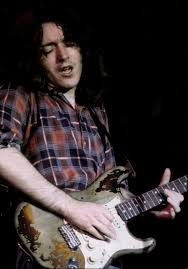
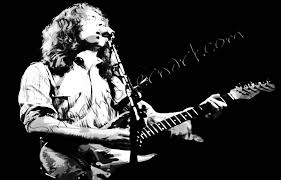
2 March 1948: Rory Gallagher was born on this day in Ballyshannon Co Donegal. Rory was a pioneer for Irish Rock in the late 1960s,1970s & 1980s who toured all over the World with his own unique take of Rock songs and ballads. He built up a dedicated group of admiring fans who were stunned by his brilliant riffs and his stage presence. Compared to the Super Groups that were around even then he kept it tight with just himself on vocals and lead guitar & Gerry McAvoy on bass guitar; they had a succession of drummers such as Rod De’Ath. Wilgar Campbell, Ted McKenna and Brendan O’Neill, along with the late Lou Martin on keyboards.

His love of music dated back to the early days of his childhood in Cork City. He purchased his trademark Fender Stratocaster Sunburst model in 1963, from Michael Crowley of Crowleys Music Store at the age of fifteen. Heavily influenced by US Rock n’ Roll, Blues and Soul as well as folk ballads it was a style he kept with him throughout his career. He cut his teeth with the Irish Showbands of the 1960s and got used to touring and life on the road. But he was not made to stop there and in 1968 he put together his own Band - ‘Taste’ - that made a name for himself and gave Irish Rock a much bigger profile. However it was a short lived affair and after a stunning performance at the Isle of White in 1970 they split up.

He formed his own band the following year and went on the road. He never really stopped after that. In 1972, Rory Gallagher topped the Melody Maker Guitarist of the Year Poll, ahead of contemporaries such as Eric Clapton, Jimmy Page etc.

Gallaghers’ dexterity on a wide variety of instruments and his prowess as a unique electric and acoustic guitarist is defined by his considerable recorded output, and the critical acclaim his work has received over the decades both prior to and since his demise....His outstanding performances were best captured on film specifically by acclaimed film maker Tony Palmer in Irish Tour 1974, capturing Rory and the band in full flight, in what many of his fans considered to be his golden era .

Marcus Connaughton

https://www.rte.ie/culture/2018/0302/944564-rory-gallagher-rocks-celebrating-his-life-and-legacy/

Rory always kept true to his own take on what Rock Music was and where you could take it - he eschewed any attempt to be ‘popular’ just for the sake of it. He demanded the best from himself and those around him and was really at a loss when not touring or recording. He never really could adjust to ‘normal’ life. It was a two edged sword though as constant touring took its toll on him and he developed addictions that meant his health was up and down over the years.

By the time he died in a London Hospital in 1995 at the age of 47 due to post operative complications from a liver transplant he had sold over 30 million albums and was a firmly established icon in not just Irish circles but on the International circuit too. Curiously though he has never been inducted into the Rock and Roll Hall of Fame - a glaring error if ever there was one!


Tuesday, 1 March 2022


1 March 560 AD: Feast Day of St. Senan OTD. Bishop and confessor. He was born at Magh Lacha, near Kilrush, Co. circa 488 AD. His parents were called Erean and Comgella.

St Senan is considered one of the ‘Twelve Apostles of Ireland’ part of an elite group of Holy Scholars who studied under the guidance of St Finnian at his Monastery at Clonard, Co Meath. He commenced his missionary career by founding a church near Enniscorthy, in around 510 and the parish is still known as Templeshannon/Tempeal Senan. He then visited Menevia, Rome and Tours before returning to Ireland.

He founded a number of Monasteries but his most famous was on an island not far from the place of his Birth. This was on Iniscathaigh, today know as Scattery Island in the Estuary of the River Shannon. Here many Holy men and devotees came to visit him but no women – for the Saint made a strict point that no member of the fairer sex could set foot on the island. It is reputed that even his own sister, herself a saintly woman, was allowed to disembark there. To honour her dying wish to be buried near her beloved brother St Senan on her death had her body brought out on a boat near the island. When the tide was low he had her mortal remains buried beneath the tidal mud so that the spirit if not the letter of her last earthly desire was met.

St Senan though was not against womanhood but believed in the rule of celibacy being strictly followed. He was patron to nunneries as well which he visited. It was while returning from one such visit on 1 March 560 AD that he suddenly took ill in a field outside the nuns church. Knowing his end was near, he raised his hands in thanksgiving to God, and telling his companions that his hour had come to depart from them, he bade them on his death to convey his body to Iniscathaigh.


1 March 1965: Roger Casement's body was re-interred in Glasnevin Cemetery on this day. The Taoiseach Sean Lemass only announced this surprise move some days previously when he stated in Leinster House that:

I am very glad to announce to the Dáil that I have been informed by the British Prime Minister that his Government have recently decided to meet our request for the repatriation of the remains of Roger Casement.

As Deputies are aware, it was Casement's express wish that he should have his final resting place in Ireland, and it has long been the desire of the people of Ireland, shared by successive Irish Governments, that this wish be fulfilled.

A State funeral was immediately organised. Thus on a cold and sleety day Casement’s remains were brought out to Glasnevin for burial. President Eamon De Valera, against Doctors orders, took the stand to deliver a televised address to the Nation. He said that:

It required courage to do what Casement did, and his name would be honoured, not merely here, but by oppressed peoples everywhere, even if he had done nothing for the freedom of our own country.

He spoke that those assembled were privileged to be there and we were glad that Casement was back amongst us and that in future his grave would be a place of pilgrimage.

While this was something of a coup to get the British to release Casement’s body his dying wish was actually that he should be laid to rest in his beloved County Antrim and not in Dublin City. But the British Government had only released his remains on condition that they were re interred in Dublin and not in the North of Ireland. One day perhaps his favourite county in Ireland will indeed become his final resting place...

Picture:

RTÉ Archives | Politics | De Valera Speech at Casement's Grave (rte.ie)