Friday, 21 June 2024


21 June 1798: The Battle of Vinegar Hill/Cath Chnoc Fhíodh na gCaor was fought on this day. The engagement was fought near the town of Enniscorthy in County Wexford. While not the last battle of the Rising of that year it was the most decisive - for after that date there was no real hope that the Insurrection could succeed without Foreign Intervention.

After the outbreak of the Rising in May under the United Irishmen forces were organised to try and break out of County Wexford and spread the Revolt. These attempts though were repulsed and eventually the Insurgents main force fell back on Vinegar Hill for a final stand.

 Here perhaps 20,000 men women and children had gathered in a huge makeshift camp to escape the depredations of the Military. They were in a blood lust against those who they considered to be ‘rebels’. Massacres and atrocities had been committed by people on both sides but the general consensus is that the Yeomanry and Militia were the worst and the hapless peasants of the Countryside the chief victims.*

 A number of columns of the British Army under General Lake advanced upon Enniscorthy from various points on the compass. His intention was to completely surround the town and hill and force a capitulation. Lake divided his force into four columns to accomplish this; three columns, under Generals Dundas, Duff and Needham were to assault Vinegar Hill, while the fourth column, under General Johnson, was to storm Enniscorthy and its bridge.

 The insurgents had done little or nothing to prepare their defenses even though a number of weeks had elapsed since they occupied the position.

Miles Byrne was:

  surprised to find that scarcely anything had been done to make formidable against the enemy; that vast fences and ditches that surround it on three sides and which should have been levelled to the ground for at least a cannon shot, or half a mile of distance, were all left untouched. The English forces availing themselves of these defences advanced from field to field, bringing with  them their cannon which they placed to great advantage behind and under cover of the hedges and fences, whilst our men were exposed to a terrible fire from their artillery and small arms without being able to drive them back from their strongholds in those fields.

 The battle began at dawn with an artillery bombardment by the British. This had a devastating impact on the masses of people gathered on the hill and it can only be expected that many took any opportunity they had to flee to safety. Sometime after 7 am the Infantry commenced their Advance. As the day wore on the net tightened and despite two charges by the pikemen it was hopeless against such a well armed force. Eventually those that could made a break for it as General Needham was unable to close in on his assigned position in time and a gap was open to which to escape. Through it flowed a mixture of fighters and peasants who had the incentive to get out while the going was good.

 But many others were either too tired, shocked or plain terrified to risk it and remained to await their fate. It was not to be a good one. When the hill fell many were put to the sword or shot out of hand. Recent archaeological scanning of the site indicates large pits on the north side of the hill that are believed to be mass graves of those who were captured on that day. Though the graves have not yet been excavated perhaps the remains of 1,000 to 2,000 unfortunates are believed to be buried under the soil of Vinegar Hill.

 Thomas Cloney [an envoy from Wexford]  came within a mile of Enniscorthy in the aftermath of the Battle and saw:

 The dead and dying were scattered promiscuously in the fields, in dykes, on the roads, or wherever chance had directed their last steps. ... In one place we beheld some men with arms and some with legs off, and others cruelly mutilated in various ways; horses with their necks broken, and their cars with women and children under them, either dead or dying in the road and ditches, where in their precipitate flight they had been upset.

 In the town of Enniscorthy there had also been fierce fighting and much of the town burnt,

 Edward Hay saw:

 the house which had been used as an hospital by the insurgents, and which was set on fire with all the patients in it, continued burning until next morning, when I saw a part of a corpse still hissing in the embers.

 * The accounts you see of the numbers of enemy destroyed  in every action are, I conclude greatly exaggerated. From my own knowledge of military affairs I am sure a very small proportion of them only could be killed in battle and I am much afraid that any man in a brown coat who is found within several miles of the field of action, is butchered without discrimination.

 Marquis Cornwallis to the Duke of Portland 28 June 1798.

 Quotes from Charles Dixon: The Wexford Rising in 1798: Its causes and its course.


Tuesday, 18 June 2024


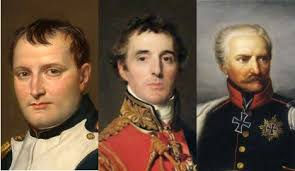
18 June 1815: The Battle of Waterloo on this day. This great battle was fought out some 10 kilometres south of the Belgic city of Brussels, along the Ridge of Mont St Jean and on the fields to the south & east of it. The French Emperor Napoleon Bonaparte was defeated by the combined armies of the Duke of Wellington  of the British & Allied Armies and Marshal Blucher leading the forces of Prussia. It was a battle in which men of many nations participated. Soldiers from England, Scotland, Wales, Ireland, the United Provinces (Holland + Belgium), Hanover, Wurtembourg, Prussia and other minor German states fought the forces of France to decide the fate of Europe.

  At least three infantry or cavalry brigades were led by Anglo Irish generals.

 Major General Sir William Ponsonby (KIA)  2nd British (Union) Cavalry Brigade

 Major General Sir John Ormsby Vandeleur 4th British Cavalry Brigade.

 Major General Sir Denis Pack 9th British Infantry Brigade

 There were also a number of regimental commanders with Irish connections who saw action on the field of Waterloo

 Lt. Col.Frederick Cavendish Ponsonby [WIA] 12th Light Dragoons 

 Lt. Col. Patrick Doherty 13th Light Dragoons

 Lt. Col. Henry Murray 18th Hussars

 Lt. Col. John Dawson [AWOL] 23 Light Dragoons but fought with the 18th Hussars later on

 Lt. Col. John Millet Hammerton [WIA] 44th foot - succeded by Major George O’Malley

 Lt. Col. Sir Andrew Barnard 1st battalion Royal Green Jackets

 Major Dawson Kelly  - led the 73rd foot after all Officers were killed or wounded.

 Major Arthur Rowley Heyland [KIA] 1st battalion 40th foot

 While the British Army had 10 infantry regiments and 4 cavalry ones with ‘Irish’ in their description only three actually saw service in this campaign:

 18th (King's Irish) Hussars - 12 dead  73 wounded officers & men

 6th (Inniskilling) Dragoons - 86 dead 107 wounded officers & men

 1st Battalion, 27th (Inniskilling) Foot - 105 dead 373 wounded officers & men

 History of the Waterloo Campaign - Major General H.T. Siborne

 The Inniskillings ‘the Skins’ took some of the heaviest losses of any Regiment on the day.

 ‘By that evening, the 27th Regiment's casualties were apparently considerable for all to see and an officer of the 95th Rifles later wrote that, 'the twenty-seventh regiment were literally lying dead, in square, a few yards behind us'. When Wellington ordered the general advance around 2000 hours, there were, despite such descriptions, sufficient survivors to enable the Inniskillings to move forward to La Haye Sainte. Perhaps it was there that a captured French General was first reported as saying, 'I have seen Russian, Prussian and French bravery, but anything to equal the stubborn bravery of the regiment with castles I never before witnessed'.

 The 27th (Inniskilling) Regiment of Foot's killed and wounded amounted to almost 500 out of a total of 747 - amongst the highest casualties of British regiments. In this number were sixteen out of the nineteen officers and twenty-three of the thirty-four Colour Sergeants and Sergeants, all killed or wounded.’

 https://www.royal-irish.com/events/battle-honour-waterloo

 The British Army who fought that day fielded about 24,000 men drawn from England & Wales, Scotland and Ireland. At that time the Irish (Catholic, Protestant & Dissenter) comprised some 30% of the population of these islands. That ratio was well reflected in the ranks of the military force present at Waterloo with the Irish having a strong presence pretty well across the board in all arms Cavalry, Infantry and Artillery. Outside of the Officer Class most of these were poor men, labourers and weavers in the main who found in the Army a relatively secure measure of employment along with shelter & comradeship.

 By all accounts the Irish were good fighters but rightly or wrongly were seen as undisciplined off the battlefield. Many were from Catholic households but the Protestant population was represented as best we can judge in numbers that matched their proportion of their Country’s population. The rank and file were seen as emanating from the ‘scum of the earth’ by Wellington and probably by most of the Officer Class too. In some respects he was right as many were there because they were outcasts and misfits from civil society or rough men who sought a fighting career. But they could fight and fight well - and that's what they were there to do.

 When the battle ended that evening some 6,000 men of the British Army laid dead, dying or severely wounded on the battlefield - some 25% of the force engaged. On a per capita basis that would be around 2,000 or so men from Ireland who fell that day - a heavy enough toll. On the other hand the population of the island was some Six Million souls in 1815 so while a severe loss to those that had family in the Military it would not have been seen as a National Calamity. Indeed many might well have wished for a French Victory that day - Daniel O’Connell being one of them.

 There are a number of roads and landmarks in Ireland still that celebrate the battle that day. The most imposing being the Wellington Monument in the Phoenix Park in Dublin that commemorates the Duke of Wellington’s Victories. The halfpenny footbridge over the Liffey in the City Centre is officially ‘Wellington’ bridge and in the suburbs south of the city there are the Wellington and Waterloo roads. North of the river Liffey off the North Strand there is a Waterloo Avenue. In Trim Co Meath where his family hailed from there is also a monument to honour him.

 But while still a Hero in Britain his legacy at home is less sure given his vehement opposition to Catholic emancipation and his eventual sour acceptance of its political necessity. If Waterloo is remembered at all here its for it marking the end of Napoleon Bonaparte’s career rather than any part that Ireland played in his Downfall.

 Next to the formidable Duke the Irishman who is most worthy of mention was Sergeant James Graham [above] 2nd Battalion Coldstream Guards from Clones Co Monaghan. He helped in closing the gates of the Hougoumont Farmhouse which was a vital strategic point on the battlefield, positioned out in front of the right of the allied line. It was attacked throughout the day by thousands of French infantrymen, but held out to the end. The Duke nominated him as 'the bravest of the Brave' and mentioned in him in his Supplementary Dispatches on the Battle:

 He assisted Lieutenant-colonel Macdonnell* in closing the gates, which had been left open for the purpose of communication, and which the enemy were in the act of forcing. His brother, a corporal in the regiment, was lying wounded in a barn, which was on fire, and Graham removed him so as to be secure from the fire, and then returned to his duty.

 * Coldstream Guards and the senior British Officer at Hougoumont.

 Sergeant Graham lived on until 1845 and died in the Royal Hospital Kilmainham Dublin. He is buried in the Old Soldiers plot in the grounds of that Institution.


Monday, 17 June 2024


17 June 1959: Éamon de Valera was elected President of Ireland on this day. The contest for the highest Office in the Republic was between him and General Sean Mc Eoin from the Fine Gael Party, who had previously ran for the Office in 1945 and had been defeated. He like Dev had been active in the War of Independence but they had taken opposite sides in the Civil War of 1922 -23. The number of people eligible to vote was 1,678,450, of which 979,628 chose to exercise their Franchise. This represented a turnout of 58.4 %. Of the total numbers of votes cast 538,003 voted in favour of De Valera and 417,536 voted for Mc Eoin.

 ‘De Valera won a majority of the vote in every constituency bar the northern Dublin city constituencies, Longford-Westmeath, which Mac Eoin had represented for over ten years, and Cork West, a strong Fine Gael area. As in the previous election, Mac Eoin's best results were in the Longford and surrounding areas, with strong results also where de Valera didn't win majorities in Dublin. De Valera's vote was strongest in Clare, Galway and Donegal - his share reaching 69% in parts of the latter two counties.'

http://irishpoliticalmaps.blogspot.ie/2011/10/irish-presidential-election-1959.html

 On the same day was also held a Referendum to abolish Proportional Representation - but here the tide of public opinion swung against Dev and it went down to defeat.

 The following summary of the principal proposals in the Third Amendment of the Constitution Bill, 1958, was circulated for the information of voters:

 At present, members of Dáil Éireann are elected on a system of proportional representation for constituencies returning at least three members, each voter having a single transferable vote.

It is proposed in the Bill to abolish the system of proportional representation and to adopt, instead, a system of single-member constituencies, each voter having a single non- transferable vote. It is also proposed in the Bill to set up a Commission for the determination and revision of the constituencies, instead of having this done by the Oireachtas, as at present.

 The total number of votes recorded in favour of the proposal contained in the Bill was 453,322 and the total number of votes recorded against the proposal was 486,989. The people did not, therefore, approve the proposal.

 Eamon De Valera thus became the third President of Ireland after Douglas Hyde and Sean T.O’Kelly. He was again elected in 1966 and retired from the post and thus active politics in 1973. He died in 1975.

Sunday, 16 June 2024


16 June 1929: 'Bloomsday' was first celebrated on this day. In one of the earliest Bloomsday celebrations, Sylvia Beach, publisher of James Joyce's classic novel Ulysses organised a Ulysses lunch with her partner Adrienne Monnier in France in June 1929.

 The first Bloomsday celebrated in Ireland was in 1954, the fiftieth anniversary of the first Bloomsday. The eccentric writers Patrick Kavanagh and Flann O’Brien visited locations such as the Martello Tower at Sandycove, Davy Byrne’s pub, and 7 Eccles Street where the fictional Leopold Bloom lived with his wife Molly. They spent part of their tour reading extracts from Ulysses and drinking a great deal as they went along!

 "It wasn't until 1954, its 50th anniversary, that John Ryan, restaurant owner and publisher of the literary periodical Envoy, and his literary friends, novelist Brian O'Nolan and poets Patrick Kavanagh and Anthony Cronin, resurrected Bloomsday in Ireland. There are photos at the National Library in Dublin…of their pilgrimage in two horse-cabs to various locations in Ulysses and several pubs."

Fritzi Horstman

 Bloomsday celebrates the day on which the narrative of James Joyce’s novel Ulysses takes place, 16 June 1904, the day on which it is believed that Joyce first went out with his future wife, Nora Barnacle. The day is named after Leopold Bloom, the central character in Ulysses. The novel follows the life and thoughts of Leopold Bloom and Stephen Dedalus (his alter ego)along with a host of other characters – real and fictional – from 8 am on 16 June through to the early hours of the following morning.

 An Extract:

 As he set foot on O'Connell bridge a puffball of smoke plumed up from the parapet. Brewery barge with export stout. England. Sea air sours it, I heard. Be interesting some day get a pass through Hancock to see the brewery. Regular world in itself. Vats of porter, wonderful. Rats get in too. Drink themselves bloated as big as a collie floating. Dead drunk on the porter. Drink till they puke again like christians. Imagine drinking that! Rats: vats. Well of course if we knew all the things.

 Episode 8 – ‘Lestrygonians’


Saturday, 15 June 2024


15 June 1919: The British aviators John Alcock and Arthur Whitten Brown made the first non-stop heavier than air flight across the Atlantic on this day. They flew a modified Vickers Vimy bomber plane from St. John’s Newfoundland to Clifden, Co Galway thus winning the Daily Mail prize of £10,000. The lucrative prize had been up for grabs since 1913 when the Daily Mail first proposed the idea. Their offer ran as follows:

"the aviator who shall first cross the Atlantic in an aeroplane in flight from any point in the United States of America, Canada or Newfoundland and land at any point in Great Britain or Ireland" in 72 continuous hours".

 Both men had served as Aviators in the Great War and both had been shot down and captured, Alcock by the Turks and Brown by the Germans. During his captivity Alcock determined that if he survived the War he would go for it. As Fortune had it both men were at a loose end after their release and return home. Alcock approached Vickers with the idea of backing the attempt and teamed up with Brown as his co pilot for the crossing.

 Several teams had entered the competition and when Alcock and Brown arrived in St Johns Newfoundland the Handley Page aircraft team were in the final stages of testing their machine for the flight but their leader, Admiral Mark Kerr, was determined not to take off until the plane was in perfect condition. The Vickers team quickly assembled their plane and at around 1:45 p.m. on 14 June, whilst the Handley Page team were conducting yet another test, the Vickers plane took off from Lester's Field.

 The flight nearly ended in disaster several times owing to engine trouble, fog, snow and ice. It was only saved by Brown's continual climbing out on the wings to remove ice from the engine air intakes and by Alcock's excellent piloting despite extremely poor visibility at times and even snow filling the open cockpit. The aircraft was badly damaged upon arrival due to the attempt to land in what appeared from the air to be a suitable green field but which turned out to be the bog on Derrygimlagh Moor, near Clifden Co Galway,  but neither of the airmen was hurt.

 The news of the adventure spread like wildfire and the two men were received as heroes in London. For their accomplishment, they were presented with Lord Northcliffe's Daily Mail prize of £10,000 by Winston Churchill, who was then Britain's Secretary of State. A few days later, both men were knighted at Buckingham Palace by King George V, for recognition of their pioneering achievement.

Alcock was tragically killed some months later in December 1919 while flying to the Paris Air Show. Brown lived on until 1948.


Friday, 14 June 2024


14 June 1884: Count John McCormack was born on this day. He is considered the greatest singer Ireland has ever produced. He was the fourth of eleven children born to Hannah and Andrew McCormack, and one of the five to survive childhood. Though his own parents hailed from Scotland his paternal Grandfather was originally from County Sligo. He was educated locally by the Marists in Athlone where his singing abilities were first recognised.

 I was nine and a slip of a lad and shy. It was in the Marist brothers' school on a feast day, when Dr. Woodlock, Bishop of Clonmacnoise, was the guest of honour. I'll not forget the sensation at hearing the words, which Brother Hugh whispered in my ear. ‘We want you to sing, John, for Bishop Woodlock’. With that the good man lifted me upon a table, and left me looking at the gathering…I think they must have liked it. They seemed to. I had no extensive repertoire, but what I knew I knew. And the singing spirit must have been there. Like the man born to be hanged, I possibly was intended to sing.

 Afterwards he won a Scholarship to study at the Diocesan College in Summerhill County Sligo. He completed his studies there in 1902. After considering trying his hand at various lines of work he was offered a position with the Palestrina Choir in Dublin’s Pro Cathedral. Vincent O’Brien, the choir master & organist there, saw the great potential in him and recommended for the position of Tenor with the Choir.

 He was organist of the Marlborough Street Cathedral, in Dublin; a splendid musician, a fine man, and a staunch friend. He had vision and appeared, intuitively, to feel that all I needed was study and opportunity to achieve a goal worthy of serious aspiration. Ballynahinch/

It was the beginning of a hugely successful career that saw him perform around the World to International acclaim. He was hugely popular in the USA in the 1920s and his fame fore shadowed that of singers like Bing Crosby, Frank Sinatra and Elvis Presley in the fame he achieved at that time.

 He is best remembered at home though for his magnificent performance of César Franck's Panis Angelicus to the hundreds of thousands who thronged Dublin's Phoenix Park for the 1932 Eucharistic Congress. Pope Pius XI made him a Count of the Church in 1928. He died in Dublin in 1945 and is buried in Deans Grange Cemetery Dublin.

Sculpture by Elizabeth Kane in Iveagh Gardens, Dublin 2.

Painting by William Orpen

Thursday, 13 June 2024


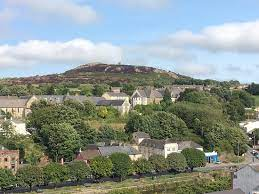
13 June 1798: The Battle of Ballynahinch/Baile na hInse, (town of the isle) was fought on this day. This battle occurred in County Down between the insurgents of the United Irishman under General Henry Munro, who was actually a linen merchant from Lisburn and the forces of Crown under General Nugent. The town had been seized some days previously by local insurgents but on the day before the battle a well-armed force of some 2,000 military under Nugent entered it and set about upending the place. That evening there was a great deal of skirmishing and much of Ballynahinch was ransacked as the soldiers and Yeomanry engaged in drinking and revelry. The insurgents had established themselves on the hills to the south and east of the town and had in all about 5,000 men under arms. However most were armed only with pikes and any attempt to meet the Crown Forces in open battle was bound to be a massacre. The superior firepower along with the discipline and cohesion of the soldiers was bound to tell against the insurgents if the British Army was to march out the next morning in line of battle.

Munro’s officers urged him to launch a night attack upon the town and catch the enemy off guard, as they were audibly not in a coherent state that night anyway to resist a determined assault. But he hesitated to do so as he did not have confidence in his men that they could carry off with any degree of certainty such a risky manoeuvre as a night attack. So the hours of darkness slipped away and with it a substantial number of the men who had gathered under the flag of the United Irishmen. Many of them in turn lacked confidence in Munro’s judgement and his obvious lack of experience. They felt that defeat was all but inevitable if the Crown Forces gained the initiative. It was readily apparent that when Nugent marched his men out the next day that the odds would be stacked against them. Even though the United Irishmen had the numbers the Crown Forces would be able to use their Combined Arms tactics of Infantry, Cavalry and Artillery to devastating effect upon them.

An eyewitness reported:

A mixed and motley multitude met the eye. They wore no uniforms, yet they presented a tolerably decent appearance, being dressed no doubt in their Sunday clothes, some better and some worse. The only thing in which they all concurred was the wearing of the green, almost every individual having a knot of ribbon of that colour, sometimes intermixed with yellow in his hat.

In their arms there was as great a diversity as in their dress. By far the majority of them had pikes, which were truly formidable instruments in close fight, but of no use in distant warfare ... others wore swords, generally of the least efficient kind, and some had merely pitchforks.

At daylight Munro finally decided to attack and launched his men against the enemy inside the town. Bloody hand to hand fighting ensued and the fortunes of war ebbed and flowed amongst the burning buildings of the place. At one stage it looked like Victory lay within the grasp of the United Irishmen as the Crown Forces fell back. But they eventually rallied and counterattacked and broke the back of the pikemens brave charges upon their positions. 

In the meantime Nugent had directed other columns to come round in the rear of the hillside camps of his opponents and turn their positions. A detachment from the garrison in Downpatrick had arrived under Colonel Stapelton and circled the town to attack Montalto, a commanding eminence skirted by a thick wood. This was where Munro had established his HQ some days prior to the battle.

These developments unnerved his men and caught between the obvious superiority now being gained by the military within the town and the imminent closing off of any viable avenue of escape. This led to the collapse of their morale and a precipitate retreat away from Ballynahinch by the survivors of the battle. Munro attempted to rally his men on Ednavady Hill outside the town but all he could muster by that stage was a motley force of about 150 combatants. With the Crown Forces closing in for the kill they decided to make a break for it and scatter, every man for himself. Munro sought refuge nearby and evaded capture for a few days.

 But he was taken through betrayal, brought back to Lisburn and tried and executed within a very short period of time. He was hanged almost within view of his own front door and his head was placed upon display in the Market Square. The town of Ballynahinch itself lay in ruins with almost half the houses within it burned during the engagement and its aftermath.

In the following days and weeks the military spread out across the Countryside, inflicting many atrocities upon those they suspected of being active participants or silent supporters of the Rising.

With the passage of time there grew up a legend around this battle that a young woman of some 20 years or so called Elizabeth ‘Betsy’ Grey was present on the field of battle where she bravely stood with her menfolk & that the County Down heroine rode into battle riding a white pony and "carrying a stand of colours". In the aftermath she was brutally cut down and killed and buried unceremoniously amongst the slain at Ballycreen near Ballynahinch. It is now not possible to verify what is fact or fiction but there is no doubt that she is the personage best remembered today in association with this battle.

 This battle to all intents and purposes ended organised resistance in County Down. In the following days and weeks the military spread out across the Countryside, inflicting many atrocities upon those they suspected of being active participants or silent supporters of the Rising.

 Painting: Battle of Ballynahinch by Thomas Robinson