Monday, 16 May 2016


16 May 1926: The inaugural meeting of the Fianna Fáil Party was held in La Scala theatre in Dublin on this day. Among the founding members were Seán Lemass, Gerry Boland, Countess Markievicz and Frank Aiken. The Party was founded and led by Eamon de Valera - the ex President of the Sinn Fein.

De Valera had led a walkout of his followers from Sinn Féin in the previous March. He was dissatisfied with that Party’s continued adherence to a policy of abstention from the Leinster House parliament in Dublin that was the seat of Government of the Irish Free State. Dev wanted to find a way through the ‘Oath’ that committed all members of the House to take an Oath of Fidelity to the King of England (King George V). He knew he could not do that unless he had full command of his own Party.

His gamble paid off as he led Fianna Fáil into Leinster House the following year by taking the Oath - but denying its moral force! He led it into Government in 1932. Under his continued leadership the Party held power until 1948 and again in 1951-1954 and from 1957-1959. In that year he became President of Ireland until he relinquished that Office in 1973. Known to his loyal followers as ‘the Chief’ he was the most popular yet also the most divisive figure in 20th century Ireland.

Sunday, 15 May 2016


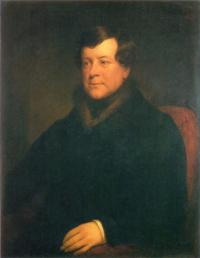
15‭ ‬May‭ ‬1847:‭ ‬Death of Daniel O’Connell‭ ‘‬The Liberator‭’ ‬at Genoa while making his way to the Holy City.‭ ‬His heart was taken on to Rome‭ (‬now lost‭) ‬and his body was returned to Dublin for internment in Dublin’s Glasnevin Cemetery.‭

On May‭ ‬15,‭ ‬1847,‭ ‬Father Miley,‭ ‬O'Connell's companion on his last journey,‭ ‬wrote from Genoa:‭ ‬“The Liberator is not better.‭ ‬He is worse‭ – ‬ill as ill can be.‭ ‬At two o'clock this morning I found it necessary to send for the Viaticum and the holy oil.‭ ‬Though it was the dead of night,‭ ‬the cardinal archbishop‭ (‬he is eighty-eight years old‭)‬,‭ ‬attended by his clerics and several of the faithful,‭ ‬carried the Viaticum with the solemnities customary in Catholic countries,‭ ‬and reposed it in the tabernacle which we had prepared in the chamber of the illustrious sufferer.‭ ‬Though prostrate to the last degree,‭ ‬he was perfectly in possession of his mind whilst receiving the last rites.‭ ‬The adorable name of Jesus,‭ ‬which he had been in the habit of invoking was constantly on his lips with trembling fervour,‭ ‬His thoughts have been entirely absorbed by religion since his illness commenced.‭ ‬For the last forty hours he will not open his lips to speak of anything else.‭ ‬The doctors still say they have hope.‭ ‬I have none.‭ ‬All Genoa is praying for him.‭ ‬I have written to Rome.‭ ‬Be not surprised if I am totally silent as to our own feelings.‭ ‬It is poor Daniel who is to be pitied more than all.‭”
Henry Peel OP

St Martin de Porres Magazine
,‭ ‬a publication of the Irish Dominicans.


Thursday, 12 May 2016


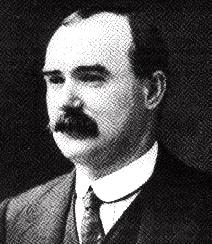
12 May 1916: Seán MacDiarmada and James Connolly were executed on this day. They were the last of the Leaders of the Easter Rising to be executed in Ireland. By this stage public revulsion at the continuing executions was boiling over. When the British Prime Minister Herbert Asquith arrived in Dublin that day he immediately ordered that no more executions were to take place here. But it was a damage limitation exercise as the men shot became modern day heroes in the eyes of many of the Irish People. And they still are.

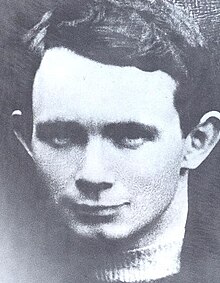
Seán MacDiarmada: Born in 1884 in Leitrim, MacDiarmada emigrated to Glasgow in 1900, and from there to Belfast in 1902. A member of the Gaelic League, he was acquainted with Bulmer Hobson. He joined the Irish Republican Brotherhood in 1906 while still in Belfast, later transferring to Dublin in 1908 where he assumed managerial responsibility for the I. R. B. newspaper Irish Freedom in 1910. Although MacDiarmada was afflicted with polio in 1912, he was appointed as a member of the provisional committee of Irish Volunteers from 1913, and was subsequently drafted onto the military committee of the I. R. B. in 1915. During the Rising MacDiarmada served in the G. P. O. He was executed on 12 May 1916.

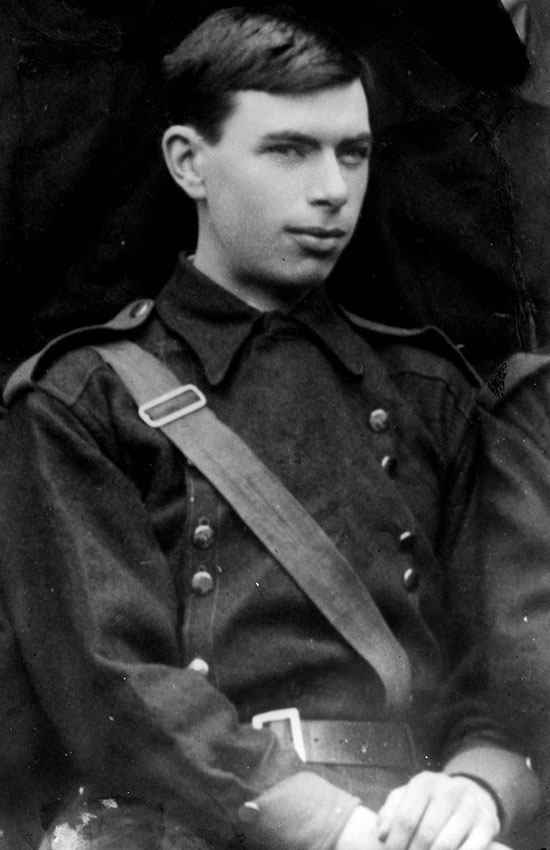
James Connolly (1868-1916): Born in Edinburgh in 1868, Connolly was first introduced to Ireland as a member of the British Army. Despite returning to Scotland, the strong Irish presence in Edinburgh stimulated Connolly’s growing interest in Irish politics in the mid 1890s, leading to his emigration to Dublin in 1896 where he founded the Irish Socialist Republican Party. He spent much of the first decade of the twentieth century in America, he returned to Ireland to campaign for worker’s rights with James Larkin. A firm believer in the perils of sectarian division, Connolly campaigned tirelessly against religious bigotry. In 1913, Connolly was one of the founders of the Irish Citizen Army. During the Easter Rising he was appointed Commandant-General of the Dublin forces, leading the group that occupied the General Post Office. Unable to stand to during his execution due to wounds received during the Rising, Connolly was executed while sitting down on 12 May 1916. He was the last of the leaders to be executed.
- See more at: http://www.taoiseach.gov.


Wednesday, 11 May 2016


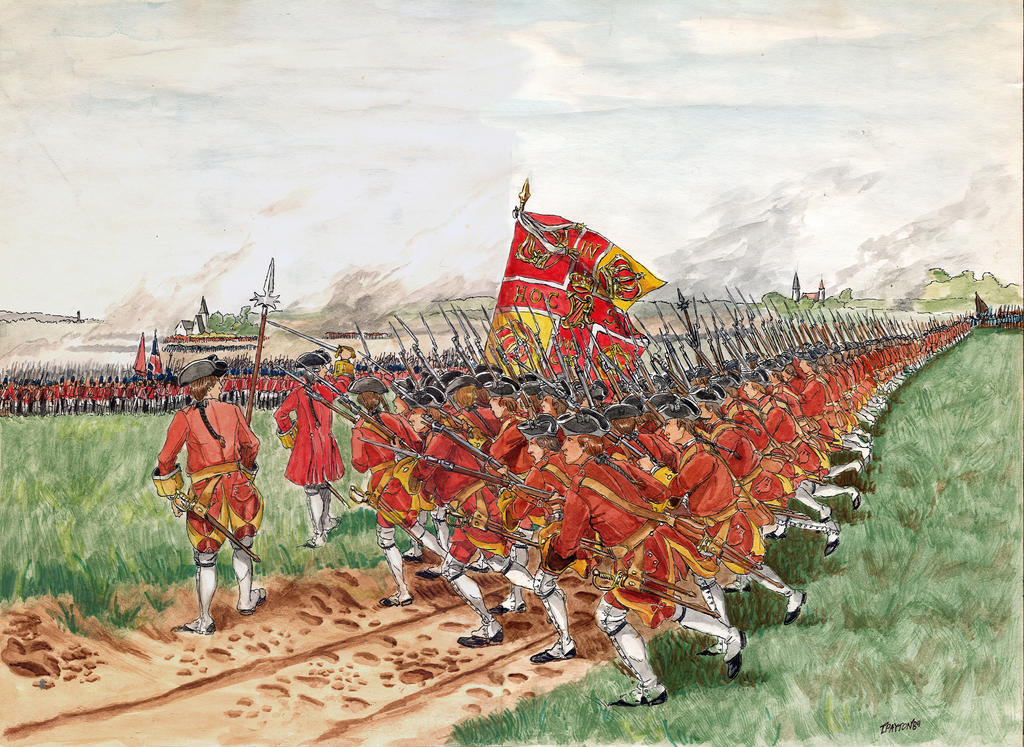
11 May 1745: The battle of Fontenoy was fought on this day. It occurred in what was then part of the Austrian Netherlands but is now in present day Belgium. The French under Marshal De Saxe defeated the British - Dutch Army under the Duke of Cumberland.

The Allied Army was on the advance to relieve the siege of Tournai when they encountered the French under Marshal De Saxe drawn up in prepared positions. In all the French army numbered 93 battalions, 146 squadrons and 80 cannon, some 70,000 troops, of which 27 battalions and 17 squadrons were left to cover Tournai. In support of this position was a reserve of picked infantry and cavalry regiments, including the Irish Brigade, the “Wild Geese’’.

Cumberland reconnoitred the French position on 10th May and decided to pin down the French right wing by attacking with the Austrian and Dutch contingents between Antoing and Fontenoy. While these attacks were being made the British and Hanoverians would advance between Fontenoy and the Bois de Bary across what appeared to be open ground. His so called ‘Pragmatic Army’ comprised 56 battalions of infantry and 87 squadrons of cavalry supported by 80 cannon, in all around 53,000 men

The French Army however put up a formidable defence and the Allies found the advance heavy going, taking many casualties as they attempted to break their opponents line. But Cumberland pressed on and eventually forced his way into the centre of the French position. The troops opposing him began to buckle. It was the critical moment of the battle.


It was at this point that Marshal De Saxe unleashed his reserve who enveloped the flanks of the British Column. The Irish Brigade (approx. 4,000 men) and dressed in Redcoats was in the thick of it, the men fired up by thought of revenge against their Country’s Oppressor. The Irish Regiments advanced upon the British lines to the cry: 'Cuimhnigidh ar Liumneac, agus ar fheile na Sacsanach’ – ‘Remember Limerick and British faith!’


It consisted that day of the regiments of Clare, Lally, Dillon, Berwick, Roth, and Buckley, with Fitzjames' horse. O'Brien, Lord Clare, was in command. Aided by the French regiments of Normandy and Vaisseany, they were ordered to charge upon the flank of the English with fixed bayonets without firing…


The fortune of the field was no longer doubtful. The English were weary with a long day's fighting, cut up by cannon, charge, and musketry, and dispirited by the appearance of the Brigade. Still they gave their fire well and fatally; but they were literally stunned by the shout, and shattered by the Irish charge. They broke before the Irish bayonets, and tumbled down the far side of the hill disorganized, hopeless, and falling by hundreds. The victory was bloody and complete. Louis is said to have ridden down to the Irish bivouac, and personally thanked them…


George the Second, on hearing it, uttered that memorable imprecation on the penal code, 'Cursed be the laws which deprive me of such subjects.' The one English volley and the short struggle on the crest of the hill cost the Irish dear. One-fourth of the officers, including Colonel Dillon, were killed, and one-third of the men. The capture of Ghent, Bruges, Ostend, and Oudenard, followed the victory of Fontenoy."


STORY OF IRELAND


By A. M. Sullivan

It was the Irish Brigade’s most famous Victory - though it came at a high cost, with hundreds of men dead and wounded. The Pragmatic Army lost almost 10,000 men, while the French suffered between 6,000-7,000 casualties.


Tuesday, 10 May 2016


10‭ ‬May‭ ‬1318:‭ ‬The Battle of Dysert O'Dea was fought on this day.‭ ‬It took place near near Corofin,‭ ‬Co Clare.‭ ‬The battle occurred during the Bruce Invasion of Ireland.‭

The Anglo Norman Lord Richard De Clare‭ ( ‬a descendant of Strongbow‭) ‬attacked the Irish chieftain Conor O’Dea,‭ ‬chief of the Cineal Fearmaic and the ally of‭  ‬King‭ ‬Muircheartach O’Brien of Thomond.‭

De Clare made the mistake of dividing his army in three in the face of the enemy and he led the van towards Castle Dysert O’Dea‭ – ‬the home of the Irish Chieftan.‭ ‬O’Dea held them at the ford of Fergus and sent messengers out to bring up reinforcements as De Clare charged at his opponents only to be surrounded and cut down by the axe of Conor O’Dea himself.‭ 

As the rest of the Anglo Norman force came up they waded into the Irish and were on the point of extracting a bloody revenge when‭ ‬Felim O'Connor's troops charged down the hill of Scamhall‭ (‬Scool‭) ‬and cut a path through the English to join the battle.‭ ‬De Clare's son then arrived on the scene and was cut down and killed by Felim O'Connor.‭

As the two forces were locked in this deadly struggle both expected reinforcements to arrive and as King Muircheartach O'Brien’s men galloped onto the scene Conor O’Dea almost lost heart until he heard the Irish war cries and knew the victory was won.‭  ‬Soon Lochlann O'Hehir and the MacNamaras joined the fight and it was all over for the Anglo Normans who went down fighting.‭

The power of one of the great Anglo Norman families was shattered forever.‭ ‬In the wake of this victory King Muircheartach O'Brien advanced upon the environs  of Bunratty Castle,‭ ‬home of the De Clare’s to find much of it it burnt by De Clare’s widow who promptly fled to England.‭ The Castle though held out for a couple of weeks and the Irish completely destroyed it in 1322. ‬The De Clare’s never returned and Thomond west of the Shannon remained under Irish rule until the early‭ ‬17th Century.‭ ‬It was the greatest Gaelic victory of the Bruce War.


Monday, 9 May 2016


9 May 1916: Thomas Kent/ Tomás Ceannt was executed in Cork Detention Barracks on this day: Born in 1865, Kent was arrested at his home in Castlelyons, Co. Cork following a raid by the Royal Irish Constabulary during which his brother Richard was fatally wounded. It had been his intention to travel to Dublin to participate in the Rising, but when the mobilisation order for the Irish Volunteers was cancelled on Easter Sunday he assumed that the Rising had been postponed, leading him to stay at home.  In 1966 the railway station in Cork was renamed Ceannt Station in his honour.
- See more at: http://www.taoiseach.gov.

When the Kent residence was raided they were met with resistance from Thomas and his brothers Richard, David and William. A gunfight lasted for four hours, in which an RIC officer, Head Constable William Rowe, was killed and David Kent was seriously wounded. Eventually the Kents were forced to surrender, although Richard made a last minute dash for freedom and was fatally wounded.

Along with Roger Casement he was the only other person to be executed outside of Dublin for their part in the Easter Rising.

In September 2015 he was given a State funeral  after his remains were identified via DNA genetic testing thanks to samples supplied by Kent family descendants still living in the Castlelyons and Fermoy areas of north Cork. Following the requiem mass, Thomas Kent, who was 50 when he was executed, was buried in his family's crypt alongside the remains of his brothers William, Richard and David.


Sunday, 8 May 2016


8 May 1916: Con Colbert, Michael Mallin and Seán Heuston were all executed by firing squad on this day for their part in the Easter Rising. They were executed in the Stonebreakers Yard of Kilmainham Jail Dublin.

Con Colbert: Born in 1888, Colbert was a native of Limerick. Prior to the Easter Rising he had been an active member of the republican movement, joining both Fianna Éireann and the Irish Volunteers. A dedicated pioneer, Colbert was known not to drink or smoke. As the captain of F Company of the Fourth Battalion, Colbert was in command at the Marrowbone Lane distillery when it was surrendered on Sunday, 30 April 1916.

Michael Mallin: A silk weaver by trade, Mallin was born in Dublin in 1874. Along with Countess Markievicz, he commanded a small contingent of the Irish Citizen Army, of which he was Chief of Staff, taking possession of St. Stephen’s Green and the Royal College of Surgeons.

Seán Heuston: Born in 1891, he was responsible for the organisation of Fianna Éireann in Limerick. Along with Con Colbert, Heuston was involved in the education of the schoolboys at Scoil Éanna, organising drill and musketry exercises. A section of the First Battalion of the Volunteers, under the leadership of Heuston, occupied the Mendicity Institute on south of the Liffey, holding out there for two days. Heuston Railway station in Dublin is named after him.
www.taoiseach.gov.ie

Prior to his execution Heuston was attended by Father Albert, of the Capuchin Order in his final hours. Father Albert wrote an account of those hours up to and including the execution:

“… I had told him in his cell that I would anoint him when he was shot. We now proceeded towards the yard where the execution was to take place; my left arm was linked in his right, while the British soldier who had handcuffed and blindfolded him walked on his left. As we walked slowly along we repeated most of the prayers that we had been saying in the cell... Having reached a second yard I saw there another group of military armed with rifles... A soldier directed Seán and myself to a corner of the yard, a short distance from the outer wall of the prison. Here there was a box (seemingly a soap box) and Sean was told to sit down upon it. He was perfectly calm, and said with me for the last time: ‘My Jesus, mercy.’ I scarcely had moved away a few yards when a volley went off, and this noble soldier of Irish Freedom fell dead. I rushed over to anoint him; his whole face seemed transformed and lit up with a grandeur and brightness that I had never before noticed.”


Father Albert concluded:

“Never did I realise that men could fight so bravely, and die so beautifully, and so fearlessly as did the Heroes of Easter Week. On the morning of Sean Heuston's death I would have given the world to have been in his place, he died in such a noble and sacred cause, and went forth to meet his Divine Saviour with such grand Christian sentiments of trust, confidence and love.


Piaras F. Mac Lochlainn
, Last words : letters and statements of the leaders executed after the rising at Easter 1916, Dublin: Stationery Office.