Wednesday, 8 February 2017


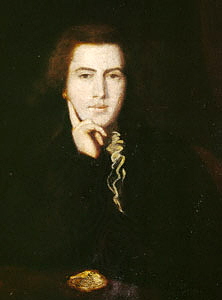
8‭ ‬February‭ ‬1847:‭ ‬Daniel O’Connell’s last speech in the British House of Commons on this day.‭ ‬In his final speech in the House,‭ ‬he predicted that unless more aid was forthcoming from the British Government for Ireland‭ ‘‬one quarter of her population will perish‭’‬.‭ ‬His warning to his fellow MPs came as the full force of the Famine was raging in Ireland.‭ ‬The terrible outcome of the successive failures of the Potato Crop threatened to overwhelm the relief efforts at home to alleviate the worst excesses of hunger and disease that were sweeping across most of the Country at that time.

His valedictory address in the House was almost inaudible and those assembled to hear what would clearly be his last speech before them strained to catch his softly spoken words.‭ ‬Observers reflected that he was but a dim shadow of his former self.‭ ‬He that on so many previous occasions had roused the House to heights and depths of emotions now struggled to exert himself so that his message of appeal could be heard and acted upon.‭ ‬He told the members that he had come to plead for the last time for Ireland.‭ ‬He made an accurate but terrible prophecy and that was:


Ireland is in your hands...‭ ‬your power.‭ ‬If you do not save her she can't save herself...‭ ‬I predict...‭ ‬that one quarter of the population will perish unless you come to her relief.

He stated that if they did not come to help her he solemnly called on them to recollect that he predicted that such a calamity would come to pass.

But O’Connell knew that while he was paid a respectful deference due to reputation and status as a powerful orator and due to his visibly declining health,‭ ‬that the members of the House of Commons had but a limited interest in Irish affairs and that his heartfelt and sincere appeal fell on deaf ears.‭ ‬He remarked some weeks after this noble but doomed appearance that:

How different it would all be if Ireland had her own Parliament.


Daniel O’Connell died in Genoa on the‭ ‬15‭ ‬May on his way to Rome.‭ ‬His heart was sent on to the Holy City [and later disappeared!] and his body returned to Ireland where it was interred in Glasnevin Cemetery,‭ ‬which himself had helped to found.‭


Tuesday, 7 February 2017


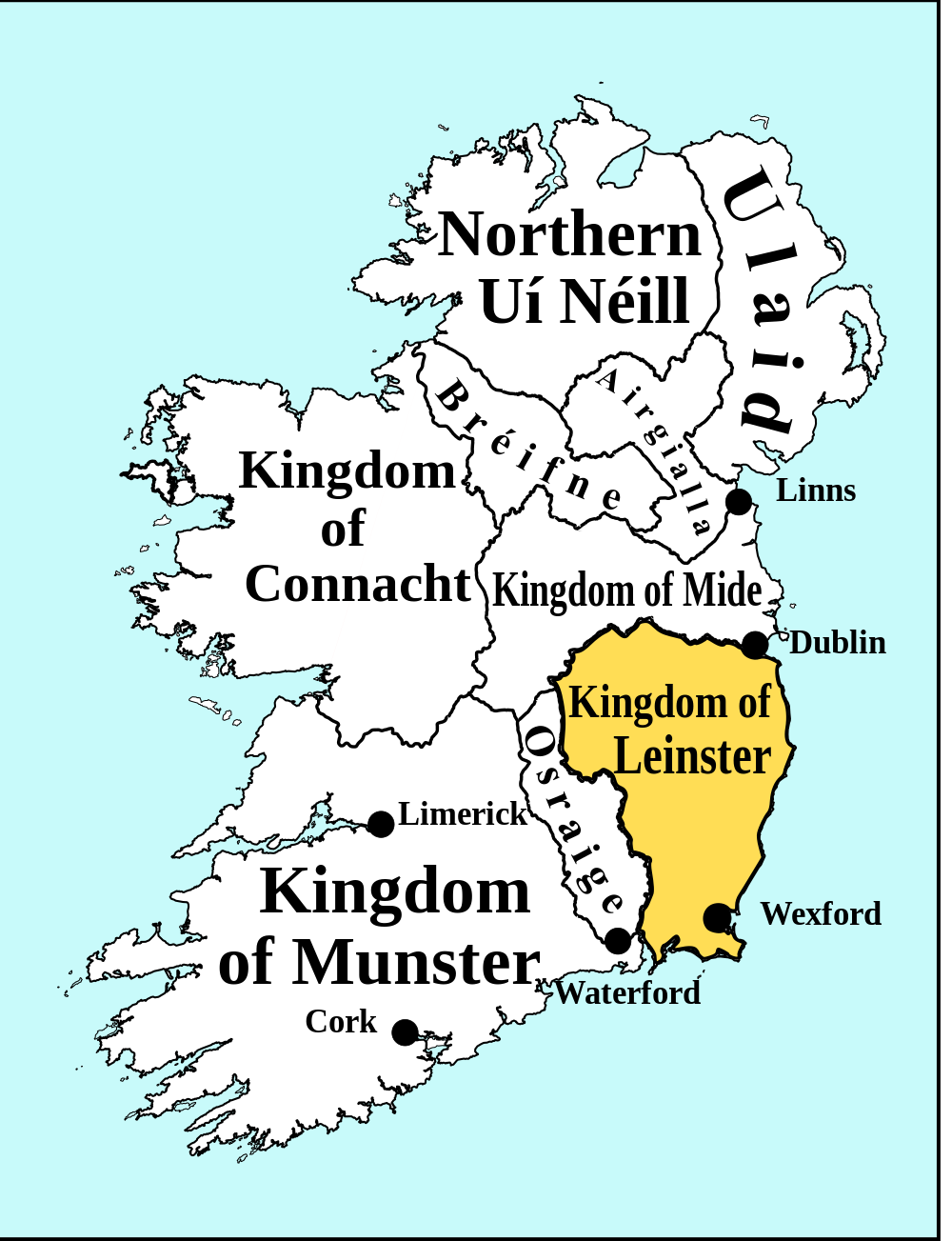
7‭ ‬February‭ ‬1072‭ ‬AD:‭ ‬Diarmait mac Maíl na mBó,‭ ‬king of Laigin [Leinster],‭ ‬died on this day.‭ ‬He was one of the most colourful and dynamic Irish kings of the‭ ‬11th Century and an ambitious ruler of his own province that wished to rule over all of Ireland.‭ ‬While he never achieved that lofty aim it was not for want of trying.‭ ‬He was of the‭ ‬Uí Cheinnselaigh family,‭ ‬who had their base around the monastical centre of Ferns‭  ‬in Co Wexford.‭ ‬His family had long been excluded from the kingship of Laigin and he was the first member of this ancient sept to hold the position in centuries.‭ ‬By the time Diarmait acceded to the kingship in‭ ‬1042‭ ‬his familial domains included sway over the Viking towns of Wexford and Waterford and with it access to Trade and Fleets that enhanced his power and wealth.‭

However his breakthrough into the world of being a serious player in provincial politics and international affairs came in‭ ‬1052‭ ‬when he captured the city of Dublin and declared himself its king‭ – ‬a feat not even Brian Boru had accomplished.‭ ‬The acquisition of one of the main trading‭ ‬entrepots‭ ‬of north western Europe meant that King‭ ‬Diarmait had direct control over a powerful fleet of warships and merchantmen.

These vessels plied their way up and down the Irish Sea and interlinked into a vast trading network that stretched to Spain and North Africa to the south and across to the great rivers of Russia to the East.‭ ‬With this kind of naval power at his disposal he was not averse to using it and after installing his son Murchad as King of Dublin he had his offspring invade the Norse held Isle of Man‭  ‬in‭ ‬1061‭ ‬and put it under his rule.

Diarmait also became involved in the internal politics of Wales and Saxon England.‭ ‬He supported many of the Welsh Princes in their efforts to gain dominance in that Country.‭ ‬He most notably supported the attempts of Cynan ab Iago of Gwynedd to restore himself to power in north Wales,‭ ‬possibly in return for some kind of payoff in trade or‭ ‬suzerainty.‭ ‬In the winter of‭ ‬1051/52‭ ‬he had no less a visitor than Harold Godwinesson,‭ ‬the future King Harold of England, who sought refuge here against his enemies at home.‭ ‬After that King’s defeat and death at the battle Hastings in‭ ‬1066‭ ‬his sons fled here to escape the Norman invaders and King Diarmait provided them with a fleet of sixty six ships to raid the coast of England to try to regain that Country for the Saxons.‭ ‬While they did not prevail the fact that the king of Leinster was where these hapless sons of the late Saxon king turned for help is‭ ‬indicative of his power and prestige at this time.

The King of Leinster was also active in engaging with his royal rivals within Ireland too.‭ ‬He allied with the Ulaid of the North and raided into Connacht and Meath.‭ ‬However it was in Munster he had his greatest success amongst the Gaels.‭ ‬He backed Turlough O’Brien as puppet king of that province,‭ ‬forcing the previous incumbent King Donnach to depart on a pilgrimage to Rome where he died.‭ ‬In‭ ‬1067‭ ‬he led a huge expedition into Connacht consisting of the men of Laigin,‭ ‬the Munstermen under Turlough O’Brien and a contingent from the kingdon of Breffni.‭ ‬A great battle was fought in which fell Aed O’Connor,‭ ‬the most powerful king of the western province.‭ ‬With this Victory there was no doubt that Diarmait mac Maíl na mBó was the most powerful king in Ireland and in effect an‭  ‬Ard‭ ‬Rí na hÉireann - the High King of Ireland.

But while Fortune had favoured Diarmait for most of his life in‭ ‬1070‭ ‬tragedy struck when his beloved son Murchad died in battle against the men of Meath while on a raid.‭ ‬In‭ ‬1072‭ ‬it was Diarmait’s turn to go the way of all flesh when he too fell in battle against the warriors of the middle kingdom of Míde [Meath] in the battle of‭ ‬Odba.‭ ‬His slayer was‭ King ‬Conchobor ua Mael Sechnaill,‭ ‬of the traditional kings of Míde.‭ ‬Ironically his killer was himself treacherously slain the following year by his own nephew in an internal power struggle.

The Annals of the Four Masters recorded Diarmait’s death as follows:

‭"‬Diarmaid,‭ ‬son of Mael-na-mbo,‭ ‬King of Leinster,‭ ‬of the foreigners of Ath-cliath,‭ ‬and of Leath-Mogha-Nuadhat,‭ ‬was slain and beheaded in the battle of Odhbha,‭ ‬on Tuesday,‭ ‬the seventh of the Ides of February,‭ ‬the battle having been gained over him by Conchobhar O'Maeleachlainn,‭ ‬King of Meath.‭ ‬There were also slain many hundreds of the foreigners and Leinstermen,‭ ‬along with Diarmaid,‭ ‬in that battle.‭ ‬In it was killed Gillaphadraig O'Fearghaile,‭ ‬lord of the Fortuatha,‭ &‬c.

It was Diarmait’s career and his relative success that coined the phrase‭ ‬rí Érenn co fressabra‭ ‬that is‭ ‘‬king of Ireland with Opposition‭’ ‬and indeed that is a fair summary of where he stood when he fell beneath the weapons of his enemies.


Sunday, 5 February 2017


5‭ ‬February‭ ‬1820:‭ ‬The death of William Drennan,‭ ‬United Irishman,‭ ‬on this day.‭ ‬He was born in Belfast in‭ ‬1754‭ ‬and educated locally and at Edinburgh University where he graduated as a Medical Doctor in‭ ‬1778.‭ ‬He returned home and practised in Belfast,‭ ‬Newry and later moved to Dublin in the fateful year of‭ ‬1789.‭ ‬He became interested in Politics and Poetry.‭ ‬His family background was Presbyterian but he personally was a non conformist.‭ ‬But he was proud to be the son of a Presbyterian Minister all the same:

I am the son of an honest man‭; ‬a minister of that gospel which breathes peace and goodwill among men‭; ‬a Protestant Dissenting minister,‭ ‬in the town of Belfast‭; ‬who[se‭] ‬spirit I am accustomed to look up,‭ ‬in every trying situation,‭ ‬as my mediator and intercessor with Heaven.

Drennan came to National attention when in‭ ‬1784‭ ‬and‭ ‬1785‭ ‬his‭ ‬Letters of Orellana,‭ ‬an Irish Helot were published.‭ ‬These were the earliest expressions of his support for radical constitutional reform,‭ ‬Catholic Emancipation and civil rights.

However as political events both at home and abroad hotted up in the early‭ ‬1790‭’‬s he dabbled deeper into the burning issues of the day.‭ ‬Along with Theobald Wolfe Tone and Thomas Russell he was instrumental in the foundation of the United Irishmen,‭ ‬at the time an open body with strictly legal aims and methods.‭ ‬It is generally considered that Drennan was the guiding hand in the initial philosophical basis of the new body.‭ ‬He had proposed even before it was established that any such organisation should be:

A benevolent conspiracy—a plot for the people—no Whig Club—no party title—the Brotherhood its name—the rights of man and the greatest happiness of the greatest number its end—its general end,‭ ‬real independence to Ireland and republicanism its particular purpose—its business,‭ ‬every means to accomplish these ends as speedily as the prejudices and bigotry of the land we live in would permit.

In‭ ‬1795‭ ‬he wrote his poem‭ ‘‬Erin‭’ ‬which is credited with the first use of the term‭ ‘‬the Emerald Isle‭’ ‬to describe Ireland:

Nor one feeling of vengeance presume to defile‭
‬The cause,‭ ‬or the men,‭ ‬of the Emerald Isle.‭

However Drennan was not of a sanguinary turn of mind and he recoiled from the prospect of Revolution to bring about the overthrow of the British Regime.‭ ‬Notwithstanding this withdrawal in‭  ‬the year‭ ‬1794‭ ‬he was charged with Sedition and narrowly escaped conviction.‭ ‬At first he wished to address the Court and make a highly charged political statement but his lawyer talked him out of it.‭ ‬If he had done so it was generally considered he would have convinced his accusers of his guilt in their eyes.‭

But his days of danger were now over and as his active political life receded he used his pen to attack Tyranny.‭ ‬His poem‭ ‬The Wake of William Orr in‭ ‬1797‭ ‬stirred passions that were to foment further opposition towards Orr’s executioners and the Government that paid them.‭ ‬However he kept well clear of the terrible events of‭ ‬1798.‭

In‭ ‬1800‭ ‬he married an English Lady,‭ ‬Sarah Swanwick,‭ ‬and spent some years in the north of England moving in the Literary and Social circles there.‭ ‬In‭ ‬1807‭ ‬he gave up Medicine and returned to Belfast.‭ ‬He founded and edited the radical‭ ‬Belfast Monthly Magazine and was a leading supporter of the Belfast Academical Institution,‭ ‬a doomed attempt to bring to Belfast both secondary and higher level education,‭ ‬open to pupils from both sides of the religious divide.

He died on‭ ‬5‭ ‬February‭ ‬1820‭ ‬and was buried in Clifton Street burial-ground in Belfast.‭ ‬His coffin was borne to the grave by three Catholics and three Protestants.

Saturday, 4 February 2017


4 February 1974: The M62 Coach bombing on this day: Eleven people - including eight British soldiers and two young children - were killed, and 12 seriously injured, when the coach they were travelling in was blown up by an IRA bomb in England.

The private coach was carrying more than 50 people and making its way from Manchester, along the M62, towards a British army base in Catterick, North Yorkshire, when an explosive device in the rear of the vehicle detonated. The explosion happened just after midnight on the eastbound carriageway between Chain Bar, near Bradford and Drightlington, south of Leeds. It could be heard over an area of several miles and scattered bodies for 250 yards along the road.


The coach was carrying soldiers and their families who had been on a weekend break; some of the servicemen were travelling to RAF Leeming, near Darlington. A family of four - Cpl Clifford Haughton, his wife Linda, who were both 23, and their two sons, Lee, five, and Robert, three - were among the dead.


An Englishwoman Judith Ward was convicted of this attack and spent 18 years in prison as a result. At the time of her trial Ward's father, Thomas, had said earlier he did not believe his daughter was capable of such "brutal and callous acts". Her brother, Tommy, said none of the family thought Judith had ever been in the IRA. "We don't think she was so heavily involved. There has been a lot of romancing," he said.

That was a point echoed in court by Ward's solicitor, Andrew Rankin QC, who highlighted many improbabilities in her confessions. They included having been married to an IRA man and having borne a child by another.

Her conviction was always suspect but it took 18 years before it was overturned in 1992 and she was released from captivity. It was one of a series of convictions in the British Courts in the 1970s that were seen by many as 'miscarriages of justice' and that further marred Anglo Irish relations at that time.


Friday, 3 February 2017

Image result for north roscommon by election 1917

3 February 1917: Sinn Féin won its first parliamentary election on this day. It was dubbed “The Election of the Snows” due to the inclement weather prevalent at the time. Its candidate Count George Noble Plunkett took the seat by defeating the candidate of the Irish Parliamentary Party. He was the father of Joseph Mary Plunkett who had been shot by the British for being one of the Leaders of the Easter Rising in1916.

It was a contest between three candidates: Thomas Devine who sought to retain the seat for the Irish Parliamentary Party; Count George Noble Plunkett and the local newspaper owner and editor Jasper Tully of the Roscommon Herald who ran as an independent. All three candidates have professed themselves to be confident of success. Count Plunkett was elected with 3,022 votes to Devine’s 1,708 and Tully’s 687.

Amid scenes of jubilation Count Plunkett  announced that Sinn Féin’s policy regarding Westminster was one of abstentionism and said:

My place henceforth will be beside you in your own country, for it is in Ireland, that the battle of Irish liberty will be fought. I recognise no parliament in existence, as having a right over the people of Ireland, just as I deny the right of England to an inch of the soil of Ireland. I do not think I will go further than the old house in College Green to represent you. I am sent by Ireland to represent you in Ireland; to stand by you and to win Ireland’s freedom upon her own soil.

His election sent a clear message that the days of popular support for the old Irish Parliamentary Party were effectively over and a new political movement was abroad - one that would not send its representatives to London but seek to establish an Irish Parliament in Dublin - free from British Rule.  


Thursday, 2 February 2017


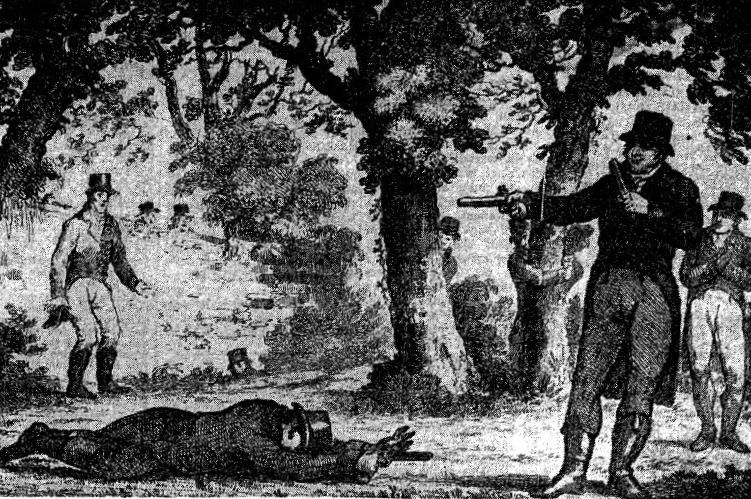
2 February 1815: Daniel O'Connell killed John D'Esterre in a duel at Bishopscourt, near Naas Co Kildare. The encounter came about after D’Esterre [a provision merchant and a member of Dublin Corporation] believed he had been insulted by O’Connell.

The cause of the duel was a political speech made by O’Connell to the Catholic Board on 22nd January, 1815 in which he described the ascendancy-managed Dublin Corporation as beggarly and refusing to apologise for his criticism of Dublin Corporation's neglect of Catholics, . D’Esterre, at the time nearing bankruptcy took this as a personal insult and sent O’Connell a letter demanding a withdrawal of the statement. When this letter went unanswered, he sent a second letter which O’Connell responded to, asking D’Esterre if he wanted to challenge him, why hadn’t he yet done so. D’Esterre set out to provoke O’Connell into a challenge, and at one stage ventured out onto the streets of Dublin looking for him, horsewhip in hand only to be forced into seeking refuge in a sympathetic home, such was the crowd that began to follow him around.


D’Esterre was a man whose luck seemed to have run out. He was facing a disastrous bankruptcy, his marriage was on the rocks if not already over. His wife was pregnant with his second child. He may also have been a victim of circumstances. While it was he who took exception to O’Connell’s remark of “beggarly” on January 24th in relation to Dublin Corporation (in retaliation for its earlier anti-Catholic resolution) and sent his challenge to a man who could not refuse as his personal courage was being publicly questioned of late years.

A duel was thus arranged to settle the matter. The appointed time on the day set was at 3.30 p.m. O’Connell arrived at three and seemed to be most calm and collected, but fell on his backside as he crossed a ditch onto the “pitch”. Undeterred he, and more so his seconds, prepared professionally. D’Esterre arrived at 4pm. It took 40 minutes or so to decide the means, etc. i.e., a case of pistols each, ten paces apart, to fire according to his judgement at the drop of a handkerchief Their last exchange of words meant there was going to be no back-down.

D’Esterre then very honourably stated that he had no animosity towards Catholics whatsoever. At the signal he moved and fired first but missed very badly, his shot falling short. It’s possible this was deliberate as he was an ex Officer in the Royal Marines and a crack shot by all accounts. He may have expected O’Connell to reciprocate in kind. But it was not to be and almost instantly O’Connell (who seems to have been no mean shot himself) fired and hit his target. D’Esterre instantly collapsed shot through the lower spine. Still alive he was carried away clinging to life. In two days he was dead having bled to death.

O’Connell returned in a triumphal cavalcade back to Dublin where his deed earned him respect as a man not be trifled with in Public Life. But O’Connell soon had regrets and he set up a pension for his dead opponent’s daughter and later went to great efforts to conduct legal business for the widow of D’Esterre.


Wednesday, 1 February 2017

Image result for brigid's cross

1‭ ‬February‭ ‬523/25:‭ ‬The death of Saint Brigid/‭ ‬Naomh Bhríde‭ ‬aka‭ ‬‘Mary of the Gael‭’‬ and the‭ ‘‬Fiery Arrow‭’ ‬on this day.‭ ‬Or as the Irish Annals are fond of stating‭ ‘‬according to some‭’‬.‭

1‭ ‬February‭ ‬525‭ ‬AD:‭ ‬Saint Brighit,‭ ‬virgin,‭ ‬Abbess of Cill Dara,‭ ‬died.‭ ‬It was to her Cill Dara was first granted,‭ ‬and by her it was founded.‭ ‬Brighit was she who never turned her mind or attention from the Lord for the space of one hour,‭ ‬but was constantly meditating and thinking of him in her heart and mind,‭ ‬as is evident in her own Life,‭ ‬and in the Life of St.‭ ‬Brenainn,‭ ‬Bishop of Cluain Fearta.‭ ‬She spent her time diligently serving the Lord,‭ ‬performing wonders and miracles,‭ ‬healing every disease and every malady,‭ ‬as her Life relates,‭ ‬until she resigned her spirit to heaven,‭ ‬the first day of the month of February‭; ‬and her body was interred at Dun,‭ ‬in the same tomb with Patrick,‭ ‬with honour and veneration.

Annals of the Four Masters

Though according to another account the key dates in her Life were as follows:

Birth of St.‭ ‬Brigid,‭ ‬on a Wednesday,‭ ‬the‭ ‬8th of the February moon‭; ‬on a
Wednesday,‭ ‬the‭ ‬18th,‭ ‬she received the veil,‭ ‬with eight virgins‭; ‬on a
Wednesday,‭ ‬the‭ ‬28th,‭ ‬she rested.

Chronicon Scotorum‭ ‬439‭ ‬AD

Whatever the true story of Brigid’s Life we are capable of putting together the outlines of her story.‭ ‬She was born to a mother called‭ ‬Brocca,‭ ‬a Christian from Britain who was not married to but subserviant to Dubhthach,‭ ‬a Gaelic Chieftain and the father of‭ ‬Brigid.‭ ‬Her place of birth was at Faughart in what is now north Co Louth.‭ ‬Whether Brocca was merely an attractive slave girl or a trophy mistress taken on a raid is an open question but its possible that Brigid did not know her father well while a child and was more or less raised by her Mother.‭ ‬Her name Brigid was taken from that of a Celtic Goddess and this considered Deity was apparently worshipped in her Father’s Household.‭ ‬This female deity was the goddess of fire,‭ ‬whose manifestations were song,‭ ‬craftsmanship,‭ ‬and poetry,‭ ‬which the Irish considered the flame of knowledge.

As she grew to womanhood she showed signs of piety and generosity to those less fortunate than herself.‭ ‬While the date is not quite certain she was perhaps took the veil in around‭ ‬468‭ ‬AD and was received into Holy Orders by Saint Mel.‭ ‬If this be true she might have already have been a devotee of Brigid and as the daughter of a powerful man who was won over to Christianity she would have been a important convert to the Church.‭

She is believed to have founded her first convent in Clara,‭ ‬County Offaly,‭ ‬other ones followed after her fame grew.‭ ‬But it was to be in Kildare that her major foundation would emerge.‭ ‬Her father seems to have had his base around here and have used his local influence to secure her a good site,‭ ‬perhaps on the locus of an earlier Shrine to Goddess herself.‭ ‬Around‭ ‬470‭ ‬she founded Kildare Abbey,‭ ‬a double monastery,‭ ‬for nuns and monks,‭ ‬on the plains of‭ ‬Cill-Dara,‭ "‬the church of the oak‭"‬,‭ ‬her cell being made under a large oak tree.‭ ‬As Abbess of this sacred place she wielded considerable power.‭ ‬She became famous for her great spiritual powers over men and women and the animals that she encountered.‭ ‬She was also reputed to have powerful gifts of divination and the ability to impose herself on the powers of Nature.‭ ‬Perhaps in a throwback to her earlier devotion she maintained a Sacred Flame at her abbey of Kildare that was never allowed to go out.‭

We are not quite sure of the exact year of Brigit's settlement here‭; ‬but it probably occurred about‭ ‬485,‭ ‬when she was thirty years of age.‭ ‬Hard by the church she also built a dwelling for herself and her community.‭ ‬We are told in the Irish Life of St.‭ ‬Brigit that this first house was built of wood like the houses of the people in general‭; ‬and the little church under the oak was probably of wood also,‭ ‬like most churches of the time.‭ ‬As the number of applicants for admission continued to increase,‭ ‬both church and dwelling had to be enlarged from time to time‭; ‬and the wood was replaced by stone and mortar.‭ ‬Such was the respect in which the good abbess was held,‭ ‬that visitors came from all parts of the country to see her and ask her advice and blessing:‭ ‬and many of them settled down in the place,‭ ‬so that a town gradually grew up near the convent,‭ ‬which was the beginning of the town of Kildare.

From‭ ‘‬The Wonders of Ireland‭’ ‬by P.‭ ‬W.‭ ‬Joyce,‭ ‬1911

But eventually St Brigid went the way of all flesh and on her death her mortal remains were buried beside the High Alter of her beloved Church in Kildare.‭ ‬Years later when the Viking Raids moved inwards her remains were dug up and moved to Downpatrick and eventually interred along with those of Saints Patrick and Columba‭ (‬Columcille‭)‬.‭ ‬Alas we now know not their exact place of burial but it is believed they may be buried underneath or near Downpatrick Cathedral.

In Down,‭ ‬three saints one grave do fill,‭
‬Patrick,‭ ‬Brigid and Columcille
‭ 
After her death the‭ ‬1st February became known in Ireland as Féile Brígíd and it replaced the old Celtic Festival of Imbolc that celebrated the beginnings of Springtime.‭ ‬For nearly‭ ‬1,500‭ ‬years the eve of her day was marked throughout the Country but especially in Leinster with the St Brigid’s Cross,‭ ‬a reworking of the more traditional one and possibly based on an even more ancient design.

Numerous‭ ‘‬Lives‭’ ‬were written about her of which we know the following:

The first of them is contained in a hymn in very ancient Irish,‭ ‬written by St.‭ ‬Broegan Claen,‭ ‬abbot of Rosturk,‭ ‬in Ossory,‭ ‬on‭ “‬The Titles and Miracles of the Saint.‭”
The second‭ ‬Life‭ ‬is by Cogitosus.‭ ‬It is in Latin prose.‭ ‬Most probably he was a monk of the monastery of Kildare that was under the rule of St.‭ ‬Brigid in ancient times,‭ ‬for he describes,‭ ‬in great detail,‭ ‬the architecture,‭ ‬ornaments,‭ ‬and arrangements of the church,‭ ‬as if lie had it before his eyes every day.
The third‭ ‬Life‭ ‬is by St.‭ ‬Ultan,‭ ‬of Ardbraccan,‭ ‬in Meath,‭ ‬the same who induced St.‭ ‬Breogan to write the metrical‭ ‬Life‭ ‬already mentioned.
The‭ ‬4th‭ ‬Life‭ ‬is by Anmchad,‭ ‬Latinized Animosus:‭ ‬it is in Latin metre.‭ ‬Who this Anmchad was‭ — ‬whether he was Bishop of Kildare and died in‭ ‬980,‭ ‬or another‭ — ‬we have not sufficient grounds for saying with anything like certainty.‭ ‬The work seems to be that of one well acquainted with Kildare and its surroundings,‭ ‬and is more detailed than the others already mentioned.
The‭ ‬5th‭ ‬Life‭ ‬is the work of Laurence of Durham,‭ ‬a Benedictine monk,‭ ‬who lived about the year‭ ‬1100.
Lastly,‭ ‬there is the‭ ‬Life‭ ‬by St.‭ ‬Caelan,‭ ‬a monk of Iniscealtra,‭ ‬in the Shannon,‭ ‬near Scariff.‭ ‬It is in Latin hexameters.‭ ‬It was discovered by an Irish Benedictine in the library of the mother-house of the Order,‭ ‬at Monte Cassino.‭ ‬The author lived in the first half of the eighth century.

Saint Brigid of Kildare
By the Rev.‭ ‬Denis Murphy S.J.

http://mysite.verizon.net/cbladey/brigid/saintale.html#The%20Journal%20of