Saturday, 12 August 2023


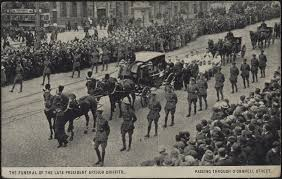
12‭ August 1922: The death of Arthur Griffith in Dublin on this day. He was the Leader of the Provisional Government of the Irish Free State. He was born in the city in 1872 and followed his father into the printing trade and from that developed an interest in Journalism. He was a strong Nationalist with a conservative streak.  His interest in Irish nationalism was reflected in his membership of the Irish Republican Brotherhood (IRB) and the Gaelic League. He went out to South Africa in 1896 and spent a couple of years there where he witnessed the attempts of British Imperialism to dominate the Boer Republics. He returned home and in 1900, he founded Cumann na nGaedheal, a cultural and education association aimed at the reversal of Anglicisation.

In‭ 1905 he founded the Sinn Fein Party as an advanced Nationalist movement that wanted to see Ireland an Independent Country. He was inspired by the settlement reached between Austria and Hungary that resulted in separate political institutions under the Austrian Crown. He proposed that a similar arrangement would be a good solution for Britain and Ireland to follow. His Party was not a great success but not a failure either and it gathered under one banner different strands of Nationalist sentiment that felt that ‘Home Rule’ was not enough.

It was in the aftermath of the Easter‭ 1916 Rising, dubbed by the British ‘The Sinn Fein Rebellion’ that Griffith became a serious player in Revolutionary Politics. Sinn Fein soon mushroomed in size as more radical elements than he were drawn by default towards the Party. In the General Election of 1918 Sinn Fein swept the boards but when the Dáil met in 1919 it was Eamon de Valera who was elected the President and Arthur Griffith was made the Vice President! Griffiths’ role in the War for Independence was entirely political and he helped to undermine British rule by organising a shadow local government structure. This while patchy was a direct challenge to the Crown’s ability to enforce its own system upon the Irish and helped to contradict the notion that the Irish could not run their own affairs.

However it was only after the Truce of‭ 1921 when De Valera chose him to lead the Peace Delegation to London to negotiate directly with the British Government that a rift began to appear. This was between the conflicting approaches to striking a deal with the British. Griffith was eventually persuaded to accept Dominion Status for the 26 Counties and convinced the other plenipotentiaries to sign ‘the Treaty’ as well. He saw it as the best deal that could be obtained from the British at that time.

But when he returned home it was clear that De Valera‭ & a considerable number of his Party colleagues felt that the Delegation had overstepped the mark by not referring the Treaty back to Dublin for full Cabinet consideration before signing.  After a mammoth series of debates aka the ‘Treaty Debates’ the Sinn Fein Party split and De Valera resigned the Presidency of the Dáil and led his followers out. 

The remaining TDs decided to elect Griffith to lead the Provisional Government of the Irish Free State.‭ While he now had a political position of some power Griffith was in many respects a figurehead and more dynamic and calculating members of his rump Party did a lot of the running of the new dispensation. The outbreak of the Civil War in June 1922 further weakened his hold and the strain of the past few months began to take its toll.  Exhausted by his labours, he died of a brain haemorrhage in Dublin on the 12 August 1922 and was buried in Glasnevin Cemetery Dublin after a State funeral.


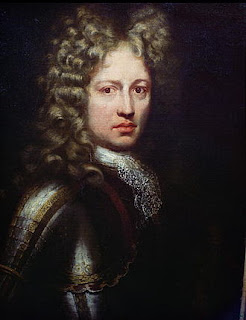




12 August 1822: The death by suicide of Robert Stewart, Lord Castlereagh on this day. Born in Dublin in 1769 to a political family of wealthy Presbyterian stock, Castlereagh’s sympathies – in an era of awakening nationalisms – were for the Irish patriot cause. But a visit to revolutionary France in the early 1790s tempered his thinking. He now warned of the dangers for any nation to be placed “in the hands of experimental philosophers”. Castlereagh was not initially a counter-revolutionary, but a reformist keen on political progress (not least Catholic emancipation). However ambition meant he could never rise in politics with such an approach and the further he rose the more reactionary he became.

As Chief Secretary of Ireland during the 1798 Rising he oversaw its brutal repression and in 1800 was instrumental in ensuring that the old Parliament of Ireland voted itself out of existence by the use of threats, bribery and the use of Government placement to get the result needed. Even 20 years later, political cartoons would depict Castlereagh lurking around Westminster with a cat o’ nine tails behind his back.

But while a cold and calculating man there was no doubting Castlereagh’s great skills of diplomacy and the ability to form alliances against Napoleonic Rule on the European Continent. As chief secretary for Ireland from 1796 to 1800, colonial secretary from 1802 to 1805, war secretary from 1806 to 1809 and foreign secretary from 1812 to 1822 he was on top of his game dealing with those who he viewed as a threat to the established order.

While he took criticism of his politics with aplomb it eventually started to effect his internal stability and that combined with his ‘workaholic’ character led to a gradual and then noticeable decline of his mental faculties. Friends, political colleagues and his own family became ever more concerned for his well being.

He began suffering from paranoia, which could be attributed to the years of abuse by an angry citizenry and press, overwork, or even gout or VD. He imagined himself persecuted from every quarter and became irrational and incoherent. His devoted wife continued sleeping with him but removed pistols and razors from his reach and kept in close contact with her husband's physician, Dr. Bankhead, who had cupped him.

Three days before his death he met with King George IV, who became upset over Castlereagh's mental state, as did the Duke of Wellington, with whom he was close. Knowing that he was losing his mind, Castlereagh left London for Loring Hall, his country estate in Kent. The morning of his death he became intemperate with his wife Emily, accusing her of being in a conspiracy against him. She had already hidden his razors. But unbeknownst to her he had small knife which he had managed to hide. 

On the morning of the day he did away with himself he asked to see Bankhead  his Doctor. He told his wife to stay in the bedroom and was escorted to the dressing room by his long standing domestic servant Mrs Robinson who he promptly dismissed . It was 3 or 4 minutes before Bankhead arrived where he saw Castlereagh with his back to him and both arms raised he cried out :

 For God’s sake my lord what are you doing, what is the matter?  Castlereagh gasped I have done for myself I have opened my neck.  Bankhead rushed forward to catch him but it was too late, as Castlereagh sank to the floor with blood running from his neck and a small pen knife in his hand with which he had cut the the carotid artery in his neck.

Castlereagh: Enlightenment, War and Tyranny  by John Bew

An enigma to some degree though there is no doubt he was the most influential Irishman in the corridors of power in London for over 20 years where he helped to shape Britain’s foreign policy towards making her a formidable nation in the World. He also materially influenced  and helped to defeat the Napoleonic Empire and restore the Balance of Power in Europe after its collapse.

A cold character overall he was feared and loathed by many who did not share his political philosophy. Not many liked him and indeed many hated him including some of England’s greatest poets.

I met Murder on the way

He had a mask like Castlereagh

Very smooth he looked, yet grim; 

Seven bloodhounds followed him… one by one, and two by two, 

 He tossed them human hearts to chew.

All were fat; and well they might

Be in admirable plight,

For one by one, and two by two,

He tossed the human hearts to chew

Which from his wide cloak he drew.

The Masque of Anarchy

Percy Bysshe Shelley


Friday, 11 August 2023


11 August 1690: The raid at Ballyneety on this day. In one of the most dramatic and successful attacks by the Jacobites in the War of the two Kings the dashing Irishman Patrick Sarsfield led a cavalry force that destroyed the siege train of the Dutchman William of Orange as he attempted to besiege the city of Limerick.

The Williamite Army had approached the city at the beginning of August but were not in a position to storm it off the march. While the walls were old and weak there was a substantial Jacobite garrison within who were determined to fight. A direct frontal assault with no artillery support would be a very costly affair and with no guarantee of success. King William realised he would have to wait until his siege train coming from Cashel reached him before any viable attempt to take the city was undertaken. He needed that siege train to conclude that years campaign and cap his great victory at the Boyne before he could return to England in Triumph and turn his attention to ruling over his newly acquired Kingdom of Great Britain.

However word of the approach of the siege train had  reached Limerick by the word of deserters and Patrick Sarsfield pressed for a cavalry force to sally out and locate and destroy this vital convoy that tip the balance against the desperate defenders and grant King William yet another Irish city to add to his conquests.

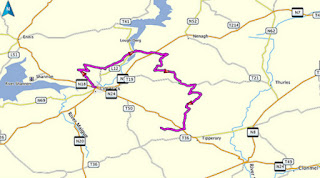
Late on the night of 9 August the raiders slipped out through the north gate, picked up some more troopers and made a dash for Killaloe just below Lough Derg and crossed the river Shannon. They turned south and rode and made their way to a place called Ballyneety situated some 10 miles south east of Limerick. They had to match speed with caution to avoid being discovered by enemy patrols and in this aspect they were fortunate to avoid detection. However they were spotted by local Loyalists who reported to Williams’ officers that a force of mounted Jacobites had crossed the Shannon and were heading south.

Sarsfield and his men must have laid up and rested at some stage as they did not launch their attack until dusk on the evening of the 11th August. The Williamite train had layed up for the night and while they posted guards they were not expecting anything untoward. The password for the night was ironically enough ‘Sarsfield’!

When they struck they struck hard and completely overwhelmed the column, most of whom had bedded down for the night.

Around midnight Sarsfield approached the camp. No attack was expected and it was lightly guarded. As the horsemen stole up a sentry was alerted by the undeadened hoofs and challenged: ‘Who goes there?’ At this, Sarsfield sprang out, his horse rearing and answered: ‘Sarsfield is the word, and Patrick Sarsfield is the man.’ In a flash the intruders overwhelmed the stupefied guards. Standing on their stirrups, they galloped through the camp, cutting down, right and left the half-awakened troopers. There was bedlam as the Jacobites wheeled their horses again and again. Dozens of Orange soldiers were killed and the rest ran like hares in all directions. In the heat of the fray a number of non-combatants, some of whom were women, fell victims to the onslaught. This was a serious blemish on an otherwise daringly executed operation.

Sarsfield must have been pleased with his booty. The siege train contained six twenty-four-pounder cannon; two eighteen-pounders; eight brass ordinances of eighteen inches; 800 balls; 120 barrels of powder; 1,600 barrels of match; 500 hand grenades and numerous other munitions. In all there was 153 wagons (drawn by 400 draft horses). Sarsfield instructed that everything be burnt. The cannons were stuffed with powder and their long barrels stuck into the ground. All the carts, shells, powder, and other explosive material was heaped in a circle and a powder trail laid to the end of the meadow. 

Kevin Haddick Flynn History Ireland Issue 4 Volume 8

Patrick Sarsfield & his men made it back to Limerick in safety even though by then the Williamites had been alerted to the danger to their precious guns but they could not reach the endangered column in time. It was the greatest cavalry raid of the war and a classic of how to stymie an enemy’s ability to besiege a city.


11 August 1861: Catherine Hayes ‘the Swan of Erin’ died on this day. She was probably the most internationally famous Irishwoman of her day. Her fame rested not on her notoriety but on her talents as a First Class singer – notably as an Operatic Soprano - in which role she toured the World.

She was born in Limerick circa 1818. Her parents were of humble origins and the father abandoned the family when Catherine was still a child. But from an early age she displayed great talent as a singer. Her accomplishments were brought to the attention of the Church of Ireland Bishop Knox of Limerick and he arranged that funds were raised to send her to Dublin to study under Antonio Sapio. Her first appearance took place on 3 May 1839 at Sapio's annual concert in the Rotunda, Dublin. Early next year she sang in her native city, and then frequently in Dublin, and soon raised her terms to ten guineas a concert.

Going to Paris in October 1842, studied under Manuel Garcia, who after a tuition of a year and a half advised her to proceed to Italy. At Milan she became the pupil of Felice Ronconi, and through the intervention of Madame Grassini was engaged for the Italian Opera House, Marseilles, where on 10 May 1846 she made her first appearance on the stage as Elvira in I Puritaui,' and was enthusiastically applauded. After her return to Milan she continued her studies under Ronconi, until Morelli, the director of La Scala at Milan. 

She was described as a soprano of the sweetest quality, and of good compass, ascending with ease to D in alt. The upper notes were limpid, and like a well-tuned silver bell up to A. Her lower tones were the most beautiful ever heard in a real soprano, and her trill was remarkably good. She was a touching actress in all her standard parts. She was tall, with a fine figure, and graceful in her movements.

After a tour of the Italian cities, she returned to England in 1849, when Delafield engaged her for the season at a salary of 1,300l. On Tuesday, 10 April, she made her début at Covent Garden in 'Linda di Chamouni,' and was received with much warmth. At the close of the season she sang before Queen Victoria & 500 guests at Buckingham Palace where she daringly sang her signature tune the ‘rebel song’ Kathleen Mavourneen/ Caitlín mo mhúirnín for the Royal audience. On 5 Nov. 1849 she appeared at a concert given by the Dublin Philharmonic Society, and afterwards at the Theatre Royal, Dublin.

At this stage the World outside of Europe beckoned and in September 1851, she left London for New York first singing there on the 23rd of that month. During 1853 she was in California, where fabulous sums were paid for the choice of seats, one ticket selling for 1,150 dollars. She then departed for South America, and after visiting the principal cities embarked for Australia. She gave concerts in the Sandwich Islands, and arrived at Sydney in January 1854. After singing in that city, Melbourne, and Adelaide, she went to India and Batavia; revisited Australia, and returned to England in August 1856, after an absence of five years.

Whether such an attractive and talented woman received the favours of her many male admirers in the course of her career we do not know but on 8 Oct. 1857, at St. George's, Hanover Square, she married a William Avery Bushnell. However the Union was to be short and tragic. He soon fell into ill-health, and died at Biarritz, France, on 2 July 1858, aged thirty five years. Catherine continued to perform but she had bouts of ill health in the past and such a demanding schedule from an early age must have taken their toll. The end came for her in the house of a friend, Henry Lee, at Roccles, Upper Sydenham, London, on 11 August 1861. She was buried in Kensal Green Cemetery on 17 August where her tomb can still be seen. She was just forty three years old.

Picture of her tomb from:
https://en.wikipedia.org/wiki/Catherine_Hayes_(soprano)#/media/File:Catherine_Hayes_grave_Kensal_Green_2014.jpg

Thursday, 10 August 2023


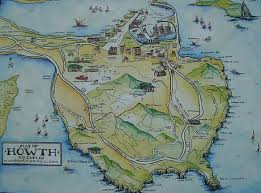
10 August 1177: The Battle of the Bridge of Evora was fought on this day. It was fought between the Anglo-Normans of Dublin & what were probably a band of armed Norsemen who some years previously had been driven from the city by the Anglo Normans and had made camp near Howth in order to make a living through raiding and piracy. While the affair is to some degree lost in the mists of time it is probable that the recent Invaders launched a counter attack on this band of Nordic desperadoes in order to eliminate this threat to the new Colony.

‘A desperate battle was fought at "The Bridge of Evora," which crossed the small river, called "The Bloody Stream," flowing into the sea near the railway station, and, after heavy losses on both sides, the natives were completely defeated. This battle having been fought on 10th August (Feast of St. Laurence, the Spaniard), the Tristram family, in commemoration of the event, thereafter assumed the name of St. Lawrence.

 Tristram was one of the Norman adventurers who came over to Ireland at the time of the Invasion, and had achieved a distinguished record for his prowess on many a hard-fought field. He and Sir John De Courcy sailed to Howth in 1177, accompanied by a chosen band of fighting men, and on landing were opposed by the inhabitants, mostly Danish pirates who had settled in this neighbourhood.

The following extract on the subject is taken from Hanmer's Chronicles of Ireland, but it may be observed that his account rests on no very certain authority, and that the entire circumstances connected with the landing and battle at Evora are involved in considerable obscurity:

  "They landed at Howth and there fought a cruell fight by the side of a bridge, where Sir John De Courcy, being sickly, tarried about the shippe. Sir Armoricus, being chieftaine and generall of the field by land, behaved himselfe most worthily. Many were slaine on both sides, but Sir Armoricus got the victory, with the losse of seven of his owne blood, sonnes, uncles and newphewes; whereupon, for his singular valour, and good service, there performed, that lordship was allotted unto him for his part of the conquest.''

A vague tradition of this battle seems to have lingered in the neighbourhood, and is to some extent corroborated by the discoveries of human bones, antique weapons and armour, which from time to time have been made during excavations for building purposes in the vicinity of the railway station.’

The Neighbourhood of Dublin by Weston St. John Joyce

One puzzle to this account is that John De Courcy spent that year campaigning in the North of Ireland. Why he detoured his desperate battle to carve out a power base in Ulster to sail back to Dublin is a moot point. One possible explanation is that these Norse seafarers were taking supply ships or cutting the arterial roads leading north out Dublin and he felt compelled to return south and deal with them. On the day though he was too poorly to take the field himself.


Wednesday, 9 August 2023


9‭ August 1971: The launch of Operation Demetrius on this day-  Internment without Trial was introduced by the British in the North of Ireland. In early morning raids the British army and the RUC lifted hundreds of men throughout the North in what was a ham fisted operation. Their aim was to catch as many members of the IRA in their homes as they could in one huge swoop.

But the introduction of internment was a logical next move in the escalating War between Irish Republicans and the British. The IRA were already of the opinion that their enemies would once again use this tactic as they had many times in the past & thus most of the key leadership figures had already gone ‘on the run’ by the time the round ups began. In the 1920s, 1930s, 1940s, 1950s and 1960s republican suspects had been imprisoned without trial by the British Government, but this time the exercise was to blow back in their faces.

What the British did not predict was the high level of resistance they encountered in Nationalist areas as men young and old were dragged away by the Crown Forces in full view of their terrified families.‭ There was widespread anger and within hours rioting had broken out in many areas. It quickly became obvious that the exercise was a huge fiasco and one with deadly consequences. 

‭Relying on outdated lists containing 450 names provided by the RUC Special Branch, the British Army swept into nationalist areas and arrested 342 men. Within 48 hours 116 of those arrested were released. The remainder were detained at Crumlin Road Prison and the prison ship 'The Maidstone' in Belfast Harbour. Hundreds were injured in the rioting that followed and 12 people were shot dead that day – 2 British Soldiers, 7 Nationalists and 3 Loyalists.

The British Government had focused the entire strength of their Armed Forces on one community in the North and it was obvious to all as to whose side they were backing‭ – a strategy even they had some qualms about but went along with to placate the Stormont Government of Brian Faulkner.

What they did not include was a single Loyalist.‭ ‬Although the UVF had begun the killing and bombing, this organisation was left untouched, as were other violent Loyalist satellite organisations such as Tara, the Shankill Defenders Association and the Ulster Protestant Volunteers. It is known that Faulkner was urged by the British to include a few 'Protestants' in the trawl but he refused.

The IRA Tim Pat Coogan

The introduction of Internment without trial was a watershed moment in the history of the conflict that drove a large section of the Nationalist population in the North into open revolt and many more into a deep sense of alienation from the British State and it’s Armed Forces.


Tuesday, 8 August 2023


8‭ August 1649: Dubhaltach MacFhirbhisigh, one of the last of the great scribes of Ireland, completed his catalogue of the Kings of Ireland, from Parthalón to Ruaidrí Ua Conchobair, entitled Réim Ríoghraidhe Éireann on this day. This was for inclusion within his masterpiece An Leabhar na nGenealach, or the Book of Genealogies. The work is a compilation of Irish genealogical lore relating to the principal pre Gaelic, Gaelic, Viking and Anglo-Norman families of Ireland and covering the period from pre-Christian times to the mid-17th century collected from a variety of sources. The fact that many of these sources no longer exist adds considerably to the value of Mac Fhirbhisigh's work.

The opening sentence of Leabhar na nGenealach, quoted in 'The Celebrated Antiquary Dubhaltach Mac Fhirbhisigh', goes some way towards describing the contents. It reads

the branches of kinship and branches of genealogy of every invasion which took possession of Ireland from this time up to Adam (except the Fomhóraigh, the Vikings and English, whom we treat of only since they came to our country), together with the history of the saints and the list of the kings of Ireland and finally, an index in which are collected, in alphabetical order, the surnames and famous places mentioned in this book…

This great work stands comparison with‭ The Annals of the Four Masters and is all the more remarkable for being the work of just one man. Preserved over the centuries it was not printed in full until Mayoman Nollaig Ó Muraíle published his comprehensive edition in five volumes (by De Burca books) in 2004. This is one of Ireland’s greatest Literary/Historical Treasures.

Nollaig Ó Muraíle sums up his career as follows:

"... an astonishingly large proportion of the manuscripts we still possess passed through the hands of this one scholar, and it may well be that by that very fact that they have actually survived – thanks to their being passed on (eventually) from Mac Fhirbhisigh to the likes of Edward Lhuyd. Without the great diligence, then, of Dubhaltach Mac Fhirbisigh, as copyist, compiler and translator, and also as collector and transmitter of manuscripts, some quite significant remnants of the civilization that was Gaelic Ireland would have gone into almost certain oblivion. That is his legacy to succeeding generations, and one which merits our undying gratitude."

It might be worth noting that his name is pronounced  “DOOaltach MacIrvishy”. Which was anglicised, incredibly, as “Dudley Forbes”!!!