Thursday, 7 December 2023


 7 December 1688 - The Apprentice Boys of Derry closed the gates against King James' troops on this day. With the advent of King James II to the throne in 1685 religious animosity had grown between the Protestants and Catholics of Ireland. The former resented the growing power of the latter and they in turn suspected their religious opponents of disloyalty to James who was of the Catholic Faith.

Events came to a head when a son was born to the King in June 1688. This meant that if the boy reached maturity he would succeed his father as a Catholic Monarch true to the Old Faith. But on 5 November of that year William of Orange landed in England and set himself in opposition to King James. A War between the Faiths looked inevitable and in Ireland this indeed proved the case. The King had many supporters here amongst the Catholics of Ireland who made up the bulk of the population. In Ulster however the situation was somewhat different as there were many Protestant settlers who would not support him at all and feared for their future under his rule.

So King James wished to secure his position in this Country as at least here he could rely on the most widespread support from the Catholic population. The Catholic Earl of Antrim was ordered to secure the City of Londonderry for King James. The said Earl, Alexander MacDonnell, advanced to Derry with some 1200 men. He sent an advanced party across the river Foyle to enter and take the main gate and hold it until he brought up the bulk of his force.

Just at this moment thirteen young apprentices, most of whom appear, from their names, to have been of Scottish birth or descent, flew to the guard room, armed themselves, seized the keys of the city, rushed to the Ferry Gate, closed it in the face of the King’s officers, and let down the portcullis.

‘History of England’ by Lord Macaulay.

This was a setback for the Royal cause as it galvanised opposition amongst the Protestant population there to resist and await relief from England should (as was most likely) William succeed in his daring enterprise. As it turned out the city was not taken and despite much suffering held out until relieved the following Summer. It was a turning point in Irish History & indeed of British History as this act of defiance has imbued within the Protestant population of the North ever since a notion that loyalty to the Crown was conditional upon the Monarch being not a Catholic but one of their own Faith.


Wednesday, 6 December 2023


6 December 1922: The Foundation of the Irish Free State OTD. It came into existence as a result of the Anglo- Irish Treaty aka ‘the Treaty’ that was signed in London exactly one year previously. It placed the new polity on a full legal footing with the other Dominions within the British Empire, namely Australia, Canada, New Zealand & South Africa. 

It gave the Irish Free State/ (Saorstát Éireann) full international status on the world stage and the ability to [more or less] conduct its own affairs within its territorial boundaries that comprised 26 of Ireland’s 32 counties. However it’s signing caused deep rifts within Nationalist Ireland that led to Civil War that was still raging when it came into final effect.

There is no doubt that the majority of the people in the South did favour accepting the Treaty. It gave them most of what they wanted, basically peace and a large measure of independence. The Catholic Church, the large farmers, the newspapers and the business community were its strongest supporters. The Labour movement was also largely in favour of acceptance. It was incomprehensible to the many supporters of the Treaty as to why it should be rejected. They argued that to all intents and purposes it allowed most of Ireland to manage her own affairs. 

To quite a significant minority though, especially amongst the ranks of the Irish Republican Army, the Treaty was unacceptable. The Irish had signed the agreement under the threat of the immediate renewal of war by the British, if the Irish delegates turned down its terms. It recognised Partition and worst of all an Oath of fidelity to King George V of England would mean a rejection of the Irish Republic, which they had fought for and which many of their comrades had died for.

The flaws within the document were chipped away over the years that followed...

In 1936, against the backdrop of the Abdication Crisis in Britain, de Valera authored a new Constitution stripped of any reference to the British Crown and on 29 December 1937, when Bunreacht na hÉireann came into operation, the Irish Free State was succeeded by Éire (Ireland), a 'sovereign, independent, democratic state' – a republic in all but name. 

https://www.rte.ie/history/irish-free-state/2022/1124/1338099-the-irish-free-state/

An actual Republic was publicly announced in 1948 by An Taoiseach John A. Costello and was signed into law on 21 December 1948. It came into force on 18 April 1949, Easter Monday - the 33rd anniversary of the start of the Easter Rising. That is still the legal position to this day notwithstanding the State being within the EU and the Anglo- Irish Agreement of 1998.


Tuesday, 5 December 2023


5 December 1640: The execution by hanging for the crime of Sodomy of John Atherton  Bishop of Waterford and Lismore in the City of Dublin on this day. He was an Anglican Bishop of the Church of Ireland. An Englishman and the son of a Parson he had risen through the ranks and was appointed to the bishopric in the year our Lord 1636. During that decade he was a protégé of his fellow countryman Thomas Wentworth who King Charles I of England had appointed to be his Lord Lieutenant of Ireland. Both were deeply involved in securing legal title to lands that they believed were rightfully Church and Crown property but whose claims had lapsed with the passage of years. Any success in these matters meant that Tithes & Revenue would flow into the coffers of both Establishments. Such grasping legal methods caused great resentment in Ireland and made them very unpopular with all brands of religious persuasions here. Atherton was thus a man with few friends in this Life or Country. This did not help him when he was faced with such serious charges as incest and sodomy.

His career as a clergyman in England would probably have continued there but though married & with children he was accused of having an affair with his wife’s sister & had to leave for Ireland to escape Scandal. After being here for some years in 1640 he was charged with a number of crimes of which the most serious was Sodomy - that is acts of Buggery with one John Childe his steward and tithe proctor. Both were found Guilty in Cork City and sentenced to death by hanging.

Buggery had not actually been a crime in Ireland but an infamous case of Sodomy in the English Courts revealed that the offence did not apply in this Country. Ironically Atherton was one of those who pressed for it to be made a crime here as well. He  pushed for the enactment of such Laws in Ireland too &  "An Act for the Punishment for the Vice Of Buggery" was passed in 1634, so he was very much instrumental in his own ultimate Downfall. 

 Atherton was transported to Dublin Castle to await his execution and placed in the cells there. The evening before his hanging he saw his wife and children for the last time and comforted them. He spent the night in prayer and in the early hours he believed that God had finally heard him and absolved him of his sins. Before he was taken away by the Sheriff of Dublin he said his goodbyes to his fellow prisoners and prayed with them. He was then bound  by the hands against his will and put in a coach to take him to his place of Execution. Crowds had thronged the route to see him pass but he was hidden behind curtains so it’s unlikely they caught anymore than a glimpse of him on his way through the streets of Dublin. 

The place he was taken to was called Gallows Green  - now long built over where lower Baggot St is situated. He showed both emotion and courage in his final journey and consoled himself that he would be with God that very day. At the foot of the scaffold he recited more prayers and addressed the crowd with some lamentations on both sides. With that done he said:

‘And now I have done ; only give me leave to say some private Prayers, wherein I shall desire you in your 'Thoughts to join me, in praying GOD to assist me at this Instant ; and kneeled for a little Space, as did the Company also : When he arose, he said cheerfully, Now I am ready, and took leave of them that were near him, taking them by the Hand, with the following Speeches, dread not Death, GOD send us a happy Meeting in Heaven, I am but going before you.

As the hangman put the rope around his neck he said Now I am ready, and from that, continued crying. Have Mercy, have Mercy till he was turned off.’

A RELATION OF THE PENITENT DEATH OF BISHOP ATHERTON By N. Barnard, Dean of Ardagh, at the command of the Primate of Ireland [James Ussher]


Monday, 4 December 2023


4 December 1971: McGurk’s Bar in Belfast was blown up on this day. Fifteen innocent people were killed in the explosion and many more were injured. McGurk's family pub was on North Queen Street, one of North Belfast's main thoroughfares, five minute's walk away from the commercial hub of the City. The proprietor Paddy McGurk was a well known figure and the Vice President of the local GAA club, the Ardoyne Kickhams. His wife and daughter died that evening. 

The original target of the Loyalist bombers was a pub called ‘the Gem’ which was frequented by members of a Republican organisation in competition with the Provisional IRA. The gang were under instructions to plant the device there in the hope that the inevitable casualties would lead to violent strife between these rivals. However the Gem was well guarded and the bombers decided that McGurk’s was an easier target. 

Almost immediately in the aftermath of the attack a sinister campaign of disinformation was launched by sources within the Crown Forces that raised suspicions within the Nationalist Community that there was a hidden hand at work. The following day the journalist John Chartres writing in the London Times newspaper devoted a complete article to the debriefing of the British army. He recorded, without heeding any of the witness accounts:

Police and Army Intelligence Officers believe that Ulster's worst outrage, the killing of 15 people including two children and three women was caused by an IRA plan that went wrong.

BBC Radio 4 News reported the afternoon after the blast that RUC sources had confirmed that forensic scientists believed that the bomb exploded inside the building. Other such reports in a similar vein followed that helped cast doubt in the public mind as to who was responsible and a plausible cover story was thus germinated that this was indeed an IRA ‘own goal’ that had gone disastrously wrong for the perpetrators. 

Nobody was ever arrested or questioned, until a U.V.F. gang-member, Robert James Campbell, turned himself in and confessed to his part in the massacre on the 28 July 1977. He admitted that he drove the vehicle used to transport the bomb on that fateful night but the bombers themselves have never been brought to justice. Robert James Campbell was sentenced on the 6 September 1978. He was released on the 9th September 1993 afters serving fifteen years for the murders of fifteen people.

In July 2008, British Secretary of State Shaun Woodward apologised in a letter to Scottish MP Michael Connarty about the role the British Army played in the cover up of who was responsible for the massacre. Mr Connarty’s great uncle was killed in the UVF attack on McGurk’s bar this night 52 years ago.


Sunday, 3 December 2023


3 December 1925: The Boundary Commission, set up under the Treaty to finalise the Border, was scrapped and a financial settlement was agreed between the British and Irish Governments instead covering various aspects of Anglo-Irish affairs. The Commission’s findings had been fatally undermined when the British Morning Post newspaper leaked its results. This clearly showed that only minor adjustments in the Border were to be expected.

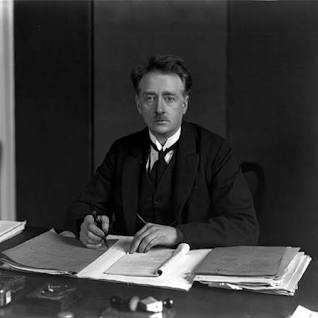
It was in effect a Fiasco and a humiliation for the Irish Free State and for the hopes of the Irish People. Mr W.T. Cosgrave [above], President of the Executive Council of the Irish Free State, could only hope to salvage something from the wreckage in what was in effect a damage limitation exercise. Cosgrave defended his successful negotiation of the abrogation of the debts due to Britain under Article 5 of the Anglo Irish Treaty of 1921 (aka ‘the Treaty’) as a good deal.

That article stated that:

The Irish Free State shall assume liability for the service of the Public Debt of the United Kingdom as existing at the date hereof and towards the payment of war pensions as existing at that date in such proportion as may be fair and equitable, having regard to any just claims on the part of Ireland by way of set-off or counter-claim, the amount of such sums being determined in default of agreement by the arbitration of one or more independent persons being citizens of the British Empire.

This would have been a heavy burden on the State that had not yet even started to make a contribution to the fund. While the British Government of Prime Minister Stanley Baldwin was not willing to budge on the Border been adjusted by any significant concession of territory to the Irish Free State it was prepared to concede on these repayments as a sop to the Irish to stave off political instability here.

In the Debate that followed in Leinster House Cosgrave defended his decision to do a deal that abrogated the State’s obligations to Britain’s Public Debt with the following words:

I had only one figure in my mind and that was a huge nought. That was the figure I strove to get, and I got it.

It was a classic case of Realpolitik as the Irish President was between a rock and a hard place and at least walked away from the negotiations with some thing tangible for his efforts - 1 Big Zero!

He was also of the opinion that any further pressing of territorial claims on the North could inflame the more reactionary elements of Unionism in a situation in which he would be powerless to intervene. Thus ended the one and only attempt at repartition since the Country was split in two.


Saturday, 2 December 2023


2 December 1791: The death of Henry Flood MP on this day. Flood was one of the great advocates of the legislative independence of Ireland during the latter 18th Century. He was a great orator and a man of considerable intelligence and political acumen. He was however primarily concerned with establishing the political dominance of the Ascendancy Class and the maintenance of the Established Church of Ireland free from the interference of the Westminster Parliament.

He was born in 1732, the illegitimate son of Warden Flood, the Anglo-Irish chief justice of the King's Bench in Ireland. Henry Flood entered the Irish Parliament in 1759 as a placeman of the Ponsonby family (the Earls of Bessborough). His outstanding oratorical powers soon enabled him to create an effective opposition inside the Dublin Parliament that agitated for political reforms. They demanded that Irish parliamentary elections should take place every eight years instead of merely at the start of a new British monarch's reign. In 1768 Flood's patriots agitated sufficiently to persuade the Duke of Grafton's government to thus pass the Octennial Act. In 1769 and 1771 they defeated measures to grant funds for the British administration in Ireland. Their long-range goal was legislative independence.

Although Flood was the first independent Irish statesman, he lost his support in 1775 when he accepted the office of vice treasurer under the British viceroy, Lord Harcourt. Henry Grattan, an even greater orator than Flood, replaced him as leader of the patriots. Grattan described Flood as a man "with a metaphor in his mouth and a bribe in his pocket." In 1779 Flood rejoined his old party, and two years later he was dismissed from his government post. Although Flood had lost his following, he helped Grattan to force North's government to renounce its restrictions on Irish trade in 1779 and grant legislative independence to Ireland in 1782, though not the ability to govern the Country.  

Flood then decided to challenge Grattan's leadership. Alleging that Grattan had not gone far enough in his reforms, Flood obtained passage of a measure requiring the London Parliament to renounce all claims to control of Irish legislation. Flood's newly acquired popularity was destroyed upon the defeat of his attempt to reform the Irish Parliament in 1784. From 1783 until his retirement in 1790 he was a member of both the British and the Irish parliaments, though in England he failed to achieve the kind of political successes that he achieved in Ireland. Flood opposed Catholic emancipation and the lifting of the Williamite Penal Laws. 

In his will, he bequeathed his estate to fund the study of Irish at Trinity College, Dublin: this was challenged successfully by a cousin. Flood died on 2 December 1791 at Farmley, County Kilkenny. While considered nowadays to be a ‘Patriot’ his brand of patriotism was of a very limited nature of those it wished to encompass.

http://www.historyhome.co.uk/c-eight/people/flood.htm


Friday, 1 December 2023


1 December 1956: Ronnie Delaney won Gold for Ireland at the Summer Olympics in Melbourne Australia. His triumph in the Antipodes was heard in Ireland at breakfast time that Saturday morning and was a great morale boost for people back home in the midst of Winter. 

Delaney was already an accomplished runner and was one of the few people in the World to have mastered the Four Minute Mile. He trained hard to make it onto Ireland’s Olympic Team and only just made it. The race that gave him his Gold Medal was the 1500 metres held at the Melbourne Cricket Club. 

Local runner John Landy was the big favourite. Delany kept close to Landy until the final lap, when he started a crushing final sprint, winning the race in a new Olympic record. Delany thereby became the first Irishman to win an Olympic title in athletics since Bob Tisdall in 1932. The Irish people learned of its new champion at breakfast time. Delany would be Ireland's last Olympic champion for 36 years, until Michael Carruth won the gold medal in boxing at the Summer Olympics in Barcelona.

Reflecting on his win all those years ago he recalled: "I had this decisiveness. Where did it come from? Well, it came from this quantity of training I had put in, the tutoring I got, the mentoring I got and from the heart. Overall it was built in there from hard work, dedication and desire.
"Tactically, I wanted to win and I raced to win. In the Olympic final, I ran the perfect race."
http://www.rte.ie/sport/athletics/2016/1201/835885-ronnie-delany/

In 2006, Delany was granted the Freedom of the City of Dublin and was also conferred with an honorary Doctor of Laws Degree by University College Dublin in the same year.