Sunday, 12 February 2023


12 February 1976: The Hunger Striker Frank Stagg died after 61 days on hunger strike in Wakefield Prison, Yorkshire, on this day. He had been on hunger strike in protest at the British government's refusal to transfer him to a prison in Ireland. He had been arrested in Coventry in 1973 and had been given a sentence of 10 years for criminal damage and conspiracy to commit arson. He initially went on Hunger Strike in 1974 along with others to gain repatriation to Ireland. In this strike his comrade Michael Gaughan died and Stagg felt a degree of moral responsibility for convincing him to embark upon it.

While other hunger strikers were sent back the British refused to move Stagg and he was incarcerated in Long Lartin Prison. Here he was subjected to prolonged periods of Solitary Confinement for and again went on hunger strike. Eventually the Prison Governor relented and Stagg called off his strike. In 1975 he was transferred to Wakefield Prison where he again refused to do prison work. Just before Christmas that year he and others again embarked on a Hunger strike. Their demand were: An end to Solitary Confinement; No Prison Work and Repatriation to Ireland. He died on 12 February 1976.

When his body was returned to Ireland his coffin was seized by the Government and buried under concrete so that it could not be interred in the Republican Plot in Ballina, Co Mayo. However in November 1976, a group of republicans tunnelled under the concrete to recover the coffin under cover of darkness and reburied it in the Republican plot.


Friday, 10 February 2023


10‭ February 1173: The death of Muiredhach Ua Cobhthaigh [Murtagh O’Coffey], the Bishop of Cenel-Eoghan on this day. He was a respected ecclesiastical figure in the North of Ireland and the focus of his influence was in the land of Tír Eoghan [Tyrone].

 While little is known about him during his time on Earth his eulogy in the Annals makes for interesting reading as to what was expected of an Irish Bishop in the 12th Century. Purity, wisdom and innocence were all prized virtues that Muiredhach practised. He ordained Priests and Deacons. He renovated and consecrated Churches and cemeteries and also built Churches and Monasteries throughout his Diocese. He was a man of great Charity and bestowed food and clothing amongst the wretched and unfortunate of his flock. As his end approached he did penance and made his way on his last pilgrimage to the monastery of Colm Cille at Derry and ‘sent forth his spirit unto heaven’ at this sacred place.

The night of his death coincided with a great astronomical event over the skies of Ireland when what was perhaps a large comet or meteor swept by the Earth at a very close distance overhead:

Now, a great marvel was wrought on the night he died,—the night was illuminated from Nocturne to the call of the cock and the whole world [was] a-blaze and a large mass of fire arose over the place and went south-east and every one arose, it seemed to them it was the day. And it was like that by the sea on the east.
Annals of Ulster 1173 A.D.


Thursday, 9 February 2023


9 February 1815: Ellen Hutchins, Ireland’s first Lady botanist, died on this day. Miss Hutchins was a self effacing girl who kept herself to herself and steered a lonely path through this world. For solace in her life she turned to the study of the Natural World in the shores and creeks of her native Bantry in south west Ireland. Her pioneering work helped lay the foundations of the study of this Country’s Natural Flora and Fauna.

Ellen was born in 1785 at Ballylickey House, Bantry, Co. Cork, one of the six surviving children of Thomas and Elinor Hutchins. Her father was a wealthy protestant tenant of a catholic landowner, Lord Kenmare. But her father died when she was very young and eventually she was packed off the Dublin to stay with a Dr William Stokes and his family at Harcourt Street, Dublin. Dr Stokes was Professor of Medicine at the Royal College of Surgeons from 1800 and he had a keen interest in botany, founding the Botanic Gardens at Trinity in 1806.  It was through Dr Stokes that Ellen met the next of her mentors, James Townsend Mackay, the first curator of Trinity’s Botanic Garden.

‘Ellen’s particular branch was in cryptogamic botany, the study of non-flowering plants (the term ‘cryptogam’ does indeed come from the same root as ‘cryptic’). These algae, mosses, liverworts and seaweeds to which Ellen devoted her keenest attentions, were vastly understudied compared to the more easily observed flowering plants. In addition, Ellen was collecting specimens in the Bantry Bay environs, an area containing an interesting dispersal of rare flora. The combination of very good eyesight and great artistic talent meant that she could render the fine detail of species in exquisite detail.’

‘Her field work was done in the Bantry environs in her early twenties. Between 1809 and 1811, she identified and listed (in Latin) around 1100 plants around Bantry Bay. Her distant cousin and friend Thomas Taylor most likely got her on to collecting shells and she began studying molluscs.’

Source: Charlotte Salter-Townshend @  http://womensmuseumofireland.ie/articles/ellen-hutchins-1785-1815

But alas Ellen’s life was not a happy one. She had been forced to return to the family home in Bantry to look after her aging mother and her brother who was an invalid. Her outings in search of specimens was her only break from a life of drudgery and toil. To make matters worse her elder brother kicked them out of the family home and they had to move away. Ellen herself was sick herself by this stage.  She was consumptive and taking mercury for a liver complaint – the effects of which had reduced the young woman to ‘a mere skeleton’.

Eventually her situation overwhelmed her and it would appear she did away with herself. She was buried in an unmarked site outside the south wall of Garryvurcha Church, Bantry. Her invalid brother Thomas passed away a few months later.

William Henry Harvey was greatly influenced by the work of Ellen Hutchins. Years after her death, wrote in 1847 of her lasting effect on Irish botany in his work Phycologiae Brittanica:

‘[Her] name is held in grateful remembrance by botanists in all parts of the world. To her the botany of Ireland is under many obligations, particularly the cryptogamic branch, in which field until her time little explored. She was particularly fortunate in detecting new and beautiful objects, several of which remain the rarest species to the present day.’

Salter-Townshend

https://ellenhutchins.com/


Wednesday, 8 February 2023


8‭ ‬February 1847: Daniel O’Connell’s last speech in the British House of Commons on this day. In his final speech in the House, he predicted that unless more aid was forthcoming from the British Government for Ireland ‘one quarter of her population will perish’. His warning to his fellow MPs came as the full force of the Famine was raging in his final speech in the House, he predicted that unless more aid was forthcoming from the British Government for Ireland ‘one quarter of her population will perish’.

His warning to his fellow MPs came as the full force of the Famine was raging in Ireland.‭ ‬The terrible outcome of the successive failures of the Potato Crop threatened to overwhelm the relief efforts at home to alleviate the worst excesses of hunger and disease that were sweeping across most of the Country at that time.

His valedictory address in the House was almost inaudible and those assembled to hear what would clearly be his last speech before them strained to catch his softly spoken words.‭ Observers reflected that he was but a dim shadow of his former self. He that on so many previous occasions had roused the House to heights and depths of emotions now struggled to exert himself so that his message of appeal could be heard and acted upon. He told the members that he had come to plead for the last time for Ireland. He made an accurate but terrible prophecy and that was:

Ireland is in your hands...‭ your power. If you do not save her she can't save herself... I predict... that one quarter of the population will perish unless you come to her relief.

He stated that if they did not come to help her he solemnly called on them to recollect that he predicted that such a calamity would come to pass.

But O’Connell knew that while he was paid a respectful deference due to reputation and status as a powerful orator and due to his visibly declining health,‭ ‬that the members of the House of Commons had but a limited interest in Irish affairs and that his heartfelt and sincere appeal fell on deaf ears. He remarked some weeks after this noble but doomed appearance that:

How different it would all be if Ireland had her own Parliament.

Daniel O’Connell died in Genoa on the 15 May on his way to Rome. His heart was sent on to the Holy City [and later disappeared!] and his body returned to Ireland where it was interred in Glasnevin Cemetery Dublin, which he himself had helped to found. 


Tuesday, 7 February 2023


7 February 1072 AD: Diarmait mac Maíl na mBó, king of Leinster, died on this day. He was one of the most colourful and dynamic Irish kings of the 11th Century and an ambitious ruler of his own province that wished to rule over all of Ireland. While he never achieved that lofty aim it was not for want of trying. He was of the Uí Cheinnselaigh, who had their base around the monastical centre of Ferns in Co Wexford. His family had long been excluded from the kingship of the Laigin and he was the first member of this ancient sept to hold the position in centuries. By the time Diarmait acceded to the kingship in 1042 his familial domains included sway over the Viking towns of Wexford and Waterford and with it access to Trade and Fleets that enhanced his power and wealth.

However his breakthrough into the world of being a serious player in provincial politics and international affairs came in 1052 when he captured the city of Dublin and declared himself king – a feat not even Brian Boru had accomplished. The acquisition of one of the main trading entrepots of north western Europe meant that King Diarmait had direct control over a powerful fleet of warships and merchantmen.

These vessels plied their way up and down the Irish Sea and interlinked into a vast trading network that stretched to Spain and North Africa to the south and across to the great rivers of Russia to the East. With this kind of naval power at his disposal he was not averse to using it and after installing his son Murchad as King of Dublin he had his offspring invade the Norse held Isle of Man in 1061 and put it under his rule.

Diarmait also became involved in the internal politics of Wales and Saxon England. He supported many of the Welsh Princes in their efforts to gain dominance in that Country. He most notably supported the attempts of Cynan ab Iago of Gwynedd to restore himself to power in north Wales, possibly in return for some kind of payoff in trade or suzerainty. In the winter of 1051/52 he had no less a visitor than Harold Godwinesson, the future King Harold of England, who sought refuge here against his enemies at home. After that King’s defeat and death at Hastings in 1066 his sons fled here and King Diarmait provided them with a fleet of sixty six ships to raid the coast of England and try to regain their Country for the Saxons. While they did not prevail the fact that the king of Leinster was where these hapless sons of the late king turned for help is indicative of his power and prestige at this time.

The King of Leinster was also active in engaging with his royal rivals within Ireland too. He allied with the Ulaid of the North and raided into Connacht and Meath. However it was in Munster he had his greatest success amongst the Gaels. He backed Turlough O’Brien as puppet king of that province, forcing the previous incumbent King Donnach to depart on a pilgrimage to Rome where he died. In 1067 he led a huge expedition into Connacht consisting of the men of Laigin, the Munstermen under Turlough O’Brien and a contingent from the kingdom of Breffni. A great battle was fought in which fell Aed O’Connor, the most powerful king of the western province. With this Victory there was no doubt that Diarmait mac Maíl na mBó was the most powerful king in Ireland and in effect an Ard Rí na hÉireann.

But while Fortune had favoured Diarmait for most of his life in 1070 tragedy struck when his beloved son Murchad died in battle against the men of Meath while on a raid. In 1072 it was Diarmait’s turn to go the way of all flesh when he too fell in battle against the warriors of the middle kingdom in the battle of Odba. His slayer was Conchobor ua Mael Sechnaill, of the traditional kings of Mide. Ironically his killer was himself treacherously slain the following year by his own nephew in an internal power struggle.

The Annals of the Four Masters records Diarmait’s death as follows:

"Diarmaid, son of Mael-na-mbo, King of Leinster, of the foreigners of Ath-cliath, and of Leath-Mogha-Nuadhat, was slain and beheaded in the battle of Odhbha, on Tuesday, the seventh of the Ides of February, the battle having been gained over him by Conchobhar O'Maeleachlainn, King of Meath. There were also slain many hundreds of the foreigners and Leinstermen, along with Diarmaid, in that battle. In it was killed Gillaphadraig O'Fearghaile, lord of the Fortuatha, &c.''

It was Diarmait’s career and his relative success that coined the phrase rí Érenn co fressabra that is ‘king of Ireland with Opposition’ and indeed that is a fair summary of where he stood when he fell beneath the weapons of his enemies.


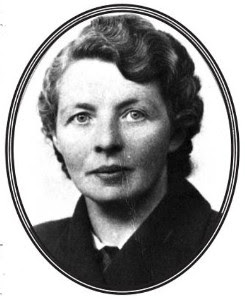
7 February 1988: Nora Herlihy, one of the founders of the modern Irish Credit Union system, died on this day.

Nora Herlihy was born on 27 February 1910 in Ballydesmond, on the Cork-Kerry Border. She attended school in Newcastle West at the Sisters of Mercy Secondary School and trained to become a teacher at Carysfort College, graduating in 1931. She began teaching in Ferrybank and in 1936 was hired by the Irish Sisters of Charity school in Dublin. She was a national school teacher, educating in Dublin during the 1950s. As a teacher she observed the effects of poverty, unemployment and money-lending on her students and their families.

Herlihy was a student of the Liberal Arts Extramural Course at University College Dublin. There she met social economics student Tomas O'Hogain who invited her to a December 1953 meeting with Seamus MacEoin about the co-operative model. In March 1954 she and O'Hogain founded the Dublin Central Co-operative Society with the goal of reducing unemployment and emigration through the formation of worker co-operatives. The United States' Credit Union National Association (CUNA) asked Herlihy to form a subcommittee to examine how the credit union model could be put to use in Ireland. With Sean Forde and O'Hogain she formed the Credit Union Extension Service.

 In 1957, Minister for Industry and Commerce Seán Lemass appointed Herlihy to a legislative advisory committee on non-agricultural co-operatives. The first two Irish credit unions were formed under Herlihy's influence in 1958 and she promoted credit unions throughout Ireland. She was instrumental in the formation of the Civil Service Credit Union and the Irish League of Credit Unions, which was founded in 1960 and run from the living room of her Dublin house.

She served as unpaid secretary for the organisation, teaching full-time and funding the movement's development with her earnings. In 1963 the board of the Credit Union League of Ireland recognized her as having made the greatest individual contribution to the Irish credit union movement. Her efforts aided the passage of the 1966 Credit Union Act and she stood beside President Éamon de Valera as he signed the act into law.

Nora Herlihy died on 7 February 1988, 28 years after the creation of the Irish League of Credit Unions.
https://en.wikipedia.org/wiki/Nora_Herlihy


Monday, 6 February 2023


6 February 1918 - Women in Britain and Ireland gained the right to vote in General Elections for the first time on this day. The Representation of the People Act 1918 was passed into Law by the British Parliament. It gave women over the age of 30 the right to vote and all men over the age of 21. The law said that women over the age of 30 who occupied a house (or were married to someone who did) could now vote.

This meant 8.5 million women now had their say over who was in Parliament - about 2 in every 5 women in the UK. It also said that all men over the age of 21 could vote - regardless of whether or not they owned property - and men in the armed forces could vote from the age of 19. The number of men who could now vote went from 8 million to 21 million. This was a legislative Revolution as it meant that any future Parliament would have a very different profile than the current or previous ones.

The campaign to extend the Franchise to women had been a long and arduous one over many years with women protesting and been sent to prison and even dying to achieve electoral equality with menfolk at the polls. The Suffragettes were led by Emmeline Pankhurst who from 1905 led a militant campaign to change the law. In Ireland too women campaigned holding meetings, smashing windows and generally making a nuisance of themselves to draw attention to their cause. But the various groups here found no sympathy from either John Redmond the Nationalist Leader or Sir Edward Carson the Irish Unionist Leader.

Nevertheless when the ‘Khaki Election’ of December 1918 came round the only woman to win a seat as a Member of Parliament was  the Irish Revolutionary Countess Markievicz who amongst other things was a vocal supporter of the Suffragette Movement. However as an Irish Republican she refused to take her seat in the Westminster Parliament and pledged her allegiance to Dáil Éireann in Dublin instead. Britain had to wait until 1919 for its for its first female MP - one Lady Astor - who was born and raised in the USA.

Curious to note that while women in the United Kingdom had to wait until 1928 for the franchise to be fully extended to all women over the age of 21 in the Irish Free State this discrimination between the sexes was abolished in 1922 putting the Irish State well ahead of the British one in a woman’s Right to Vote.