Saturday, 20 July 2024


20 July 1982: In a devastating double bomb attack the Provisional IRA struck in the heart of the  British Capital in Hyde Park and Regent's Park targeting members of Britain's Crown Forces.

 The Provos exploded two bombs in London, one at Rotten Row, Hyde Park and the other at the Bandstand in Regent's Park, resulting in the deaths of 11 British Soldiers. The first bomb exploded shortly before 11.00am when soldiers of the Blues and Royals were travelling on horseback to change the guard at Horse Guards Parade. Three soldiers were killed instantly and a fourth died of his injuries on 23 July 1982. A number of civilians who had been watching the parade were also injured. One horse was killed in the explosion but a further six had to be shot due to their injuries. The bomb had been left in a car parked along the side of the road and is believed to have been detonated by a member of the IRA who was watching from within Hyde Park.

 The second bomb, which exploded at lunch time, had been planted under the bandstand in Regent's Park. The explosion killed 7 bandsmen of the Royal Green Jackets as they were performing a concert at the open-air bandstand. Approximately two dozen civilians who had been listening to the performance were injured in the explosion. It is thought that the bomb had been triggered by a timing device and may have been planted some time in advance of the concert.

 British public opinion was outraged by the carnage caused by the IRA attacks. Coming weeks after the British Victory over Argentina in the south Atlantic the loss was keenly felt that London itself was not safe from attack from Britain's enemies. Particular disgust was felt at the loss of the horses of the Blues & Royals who did ceremonial duties in London.


ADD: 20 July 1616: The death in the Holy City of Rome of Aodh[Hugh] O’Neill, Earl of Tyrone OTD. He led the most formidable revolt against the English in Ireland since the partial Conquest of the 12th Century.


20 July 1398: The Battle of Kellistown/ An Cath Cell Osnadha was fought on this day. The battle was fought between the forces of the O’Byrnes and O’Tooles, and the English of Leinster led by Roger Mortimer, the 4th Earl of March.

 A battle was given to the English by O'Byrne and O'Toole, in which the Earl of March was slain, and the English were slaughtered.

Annals of the Four Masters

 The O’Byrnes and O’Tooles were surrogates for Art Mac Murrough Cavanagh who was the most powerful Chieftain in Leinster and recognised as a King amongst his own people. He used them to fight a proxy war against the English and thus avoid a complete break with them. Kellistown is situated in County Carlow between the towns of Carlow and Tullow.

  "Here fell the heir presumptive to the English crown, whose premature removal was one of the causes which contributed to the revolution in England a year or two later." 

 Mortimer had been created the King of England’s Lieutenant in Ireland in 1396 and held this position until the Irish killed him. His body was cut to pieces during the battle but whether this as a result of combat or mutilation after his death is not recorded. Curiously enough he had decided to engage in the combat dressed in the Irish style - that is without body armour. There was at least enough of him remaining for his corpse to be brought back home to England where he was interred amongst his own people in Wigmore Abbey, Herefordshire.

 Mortimer was none other than a potential heir to the throne of England then held by the childless king Richard II [above]. He was also dignified with the titles ‘Earl of Ulster’ and ‘Lord Of Connaught’. Ironically he was a direct descendant of Aoife Murchada, whose father Diarmait had let the English way in back in 1169 AD. Thus he was a distant relation of his nemesis Art Mac Murrough Cavanagh! However the unstable & paranoid King Richard II  had ordered his arrest just after this engagement[27 July] but the news had not reached England before his death in battle. With him dead then the primary candidate to succeed the childless Richard became Henry Bolingbroke whom the King had sent into exile.

 Richard was so concerned by the news from Ireland that his Authority had been so flouted and decided to settle matters once and for all by returning to Ireland with an Expedition to make Art Mac Murrough submit to English rule as he had  before when Richard had last campaigned here in 1394. But his departure from his own Country in the following year of 1399 cost him his Kingdom as his domestic enemies took the opportunity to topple him from his throne. On return in the month of August of that year he was compelled to give up his crown and submit to the advances of his cousin, Henry of Bolingbroke [below] who had returned in Richard’s absence and risen in revolt.

 Henry was crowned King Henry IV in Westminster Abbey on 13 October and Richard was now his prisoner. An embarrassment to the new King Henry he was allowed to wither away in captivity in Pontefract Castle in Yorkshire and ‘died’ (probably from deliberate starvation?] in early 1400.

 An Cath Cell Osnadha was thus a battle of great importance in the history of two countries – England and Ireland - as it was a catalyst for a series of events that led to the Downfall of a Monarch who claimed to be both ‘King of England’ and ‘Lord of Ireland’ - claims that at the end of the day he found impossible to maintain.

Friday, 19 July 2024


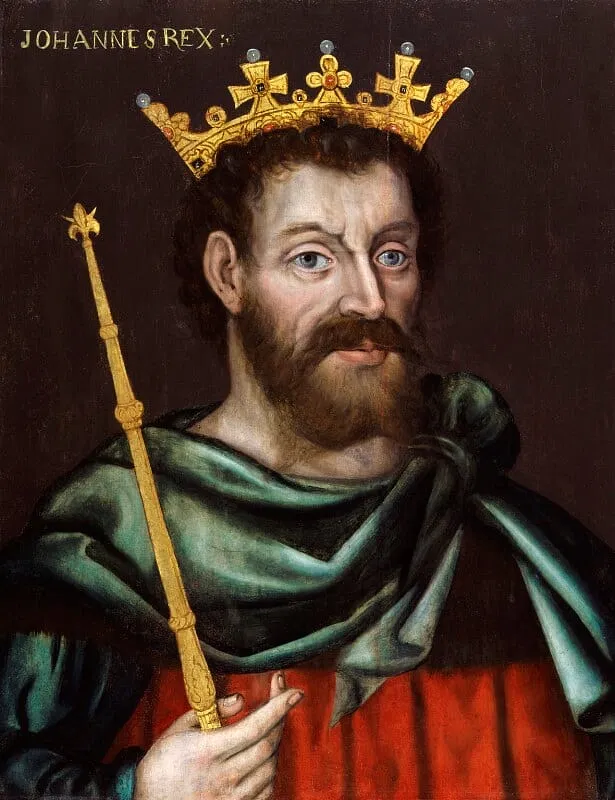
19 July 1210: King John of England arrived before the Castle of Carrickfergus in Ulster and besieged it on this day. It soon fell into his hands and in the days following he received a visit from the king of Tyrone/ Tir Eoghan, Aed Meith O Neill. His visitor brought a large contingent of troops with him, perhaps 2,000 warriors to impress the Anglo-Norman Monarch. The Ulster king agreed to render John service but the two kings drew different conclusions as to what that actually meant.

 The king of Connacht, Cathal ‘Crobhderg’ O’Conner, was also a somewhat reluctant part of King John’s host and actively helped him in suppressing the Anglo-Norman De lacy family that had upset the King of England’s temperament. King John had met up with king Cathal near Ardbraccan, Co Meath. King Cathal recognised him as his Lord in return for being re-assured as the recognised & rightful king of Connacht.

 Johannes, grandson of the Empress, king of the Saxons, came to Erinn, with a great fleet, in this year.

 After arriving he commanded a great hosting of the men of Erinn to Ulidia, to apprehend Hugo de Laci, or to expel him from Erinn, and to capture Carraic-Fergusa.

 Hugo left Erinn, and the persons who were defending the Carraic abandoned it, and came to the king; and the king put men of his own company into it.

 Annals of Loch Cé

 For John this was quite a success as the strongest castle in the north east had fallen without a fight and 30 Knights had surrendered to him. However the primary targets of this expedition into Ulster - the Brothers Hugh & Walter - escaped to France.


Thursday, 18 July 2024


18 July 1938: Douglas Corrigan  -‘Wrong way Corrigan’ - landed at Baldonnel Aerodrome  Co Dublin after flying across the Atlantic solo in his aircraft Sunshine on this day. His arrival was totally unexpected and on being asked from whence he came he answered ‘New York’ - much the incredulity of those who had gathered around him.

 Despite his assertion that he had simply lost his way on take off and instead of turning west for California he had  inadvertently headed east for Ireland no one really believed him. He had started his working life as a mechanic and had caught the Flying Bug when he took a ride up in a plane some years previously. He got his pilots license & took up stunt flying to earn a living. But he always hankered to do something out of the ordinary and settled on Ireland (the Homeland of his ancestors) as a place he would like to fly to.

 He saved up his salary and spent $300 on buying a second hand 1929 Curtiss Robin OX-5 monoplane and flew it home, where he returned to work as an aircraft mechanic and began to modify the Robin for a transatlantic flight. Having installed an engine built from two old Wright Whirlwind J6-5 engines (affording 165 hp (123 kW) instead of the 90 hp (67 kW) of the original) and extra fuel tanks, Corrigan applied to the Bureau of Air Commerce in 1935, seeking permission to make a nonstop flight from New York to Ireland. The application was rejected; his plane was deemed unsound for a nonstop transatlantic trip, although it was certified to the lower standard for cross-country journeys.

 But Corrigan was nothing if not a tryer and on 17 July 1938 he took off at 5:15 in the morning with 320 US gallons (1,200 L) of gasoline and 16 US gallons (61 L) of oil on board. Corrigan headed east from the 4,200-foot (1,300 m) runway of Floyd Bennet Field New York to begin his epic journey. He landed at Baldonnel Aerodrome  on July 18, after a 28-hour, 13-minute flight. His provisions had been just two chocolate bars & two boxes of fig bars, and 25 US gal (94.64 L) of water.

 Corrigan's plane had fuel tanks mounted on the front, allowing him to see only out of the sides. He had no radio and his compass was 20 years old, but somehow he made it. His daring flight alone across the Atlantic Ocean made headlines across the World. Back in the USA he was nicknamed ‘Wrong Way Corrigan’ when he claimed to have flown East instead of West on take off. It was said that his tickertape parade through the streets of New York City outshone that of his great hero Charles Lindbergh - who curiously never acknowledged his achievement.

 The journalist H.R. Knickerbocker who met Corrigan in Ireland after his arrival, wrote in 1941:

 You may say that Corrigan's flight could not be compared to Lindbergh's in its sensational appeal as the first solo flight across the ocean. Yes, but in another way the obscure little Irishman's flight was the more audacious of the two. Lindbergh had a plane specially constructed, the finest money could buy. He had lavish financial backing, friends to help him at every turn. Corrigan had nothing but his own ambition, courage, and ability. His plane, a nine-year-old Curtiss Robin  was the most wretched-looking jalopy.

 As I looked over it at the Dublin airdrome I really marvelled that anyone should have been rash enough even to go in the air with it, much less try to fly the Atlantic. He built it, or rebuilt it, practically as a boy would build a scooter out of a soapbox and a pair of old roller skates. It looked it. The nose of the engine hood was a mass of patches soldered by Corrigan himself into a crazy-quilt design. The door behind which Corrigan crouched for twenty eight hours was fastened together with a piece of baling wire. The reserve gasoline tanks put together by Corrigan, left him so little room that he had to sit hunched forward with his knees cramped, and not enough window space to see the ground when landing.

 The following year, he starred as himself in The Flying Irishman, a movie biography. The $75,000 he earned was the equivalent of 30 years income at his airfield jobs! During the War he flew planes for the US Transport Command and then went back to California where he bought an Orange Farm. He died there in 1995. To the end he never admitted to anything other than flying ‘the wrong way’.


Tuesday, 16 July 2024


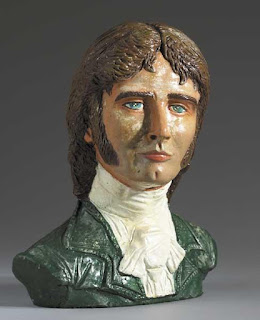
17 July 1798: Henry Joy McCracken, United Irishman, was executed OTD. His ancestors on both sides had come from the Continent to escape religious persecution. His father was a wealthy businessman and when he was twenty-two he was entrusted with the management of a cotton factory. In 1791 he co-operated with Thomas Russell in the formation of the first society of United Irishmen in Belfast and when the society in 1795 assumed its secret and military organization, he became one of the most trusted members of the council in the north.

 In 1796 he was arrested and imprisoned in the notorious Kilmainham Jail in Dublin along with his brother William. After his release he returned to Belfast and renewed the plans to bring about a Revolution in Ireland. He was appointed head of the United Irishmen of Antrim. In June of 1798 he raised the insurgents there to take arms and attack the Crown Forces. He and his followers briefly seized Antrim town but were defeated and dispersed.

 McCracken went to hiding in the vicinity but was betrayed and was taken prisoner. His trial and conviction by court-martial followed. The British offered to spare his life on condition of his giving information concerning other leaders. His aged father encouraged him to spurn the proposition. On 17 July 1798 he was executed by hanging at the Cornmarket in Belfast on the evening of the conclusion of his Trial.

 His sister Mary Ann McCracken [above in old age] accompanied him almost to the last, and wrote:

 At five p.m. he was ordered to the place of execution…. I took his arm, and we walked together to the place of execution, where I was told it was the general's orders I should leave him, which I peremptorily refused. Harry begged I would go. Clasping my hands round him (I did not weep till then) I said I could bear anything but leaving him. Three times he kissed me, and entreated I would go... I suffered myself to be led away... I was told afterwards that poor Harry stood where I left him at the place of execution, and watched me until I was out of sight; that he then attempted to speak to the people, but that the noise of the trampling of the horses was so great that it was impossible he should be heard; that he then resigned himself to his fate.

 The United Irishmen, their Lives and Times, Robert R. Madden


Monday, 15 July 2024


15 July 1927:  Countess Constance Markievicz died on this day. Society Girl, Artist, Revolutionary, Feminist and Socialist there is no doubt that she was a woman who lived Life to the full and gave it her all for Ireland and her People. She was born in London in 1868 to the Artic explorer Sir Henry Gore Booth and Lady Georgina, Lady Gore-Booth. Her father owned a large Estate at Lissadell House in Co Sligo.

 In the 1890s she studied Art in London and Paris where she met her future husband, the Polish Nobleman ‘Count Markievicz’ - and there after she was known as Countess Markievicz! She gave birth to their daughter, Maeve, at Lissadell in November 1901.The family moved to Dublin in 1903 and the Countess moved in the Literary and Art circles of the city, notably in the circle of the famous portrait artist Sarah Purcell. There she met many people who were involved in the politics of the day and from this her interest in Ireland’s future deepened.

 In 1908, she became actively involved in nationalist politics in Ireland and joined Sinn Fein which was the most advanced Nationalist Party of its day. In 1913 Markievicz's husband moved back to Ukraine, and never returned to live in Ireland. However, they did correspond and he was by her side when she died.

 When the 1916 Rising broke out she played an active part in it and was rumoured to have shot dead a DMP policeman while trying to storm Dublin Castle. She was part of the Stephens Green garrison that later withdrew to the Royal College of Surgeons on the Green. When the Rising was over she was taken prisoner, held in solitary confinement and sentenced to Death. Much to her disappointment the sentenced was commuted to Life Imprisonment. However she was released in 1917 after having served her time in an English Prison.

 In the British General Election of December 1918 she was elected for a Dublin Constituency taking 66% of the vote, thus becoming the first woman  ever elected an MP - but refused to take her seat in the London Parliament. When the 1st Dáil met in January the Countess was back in an English Prison and when the roll call was taken her absence was noted by the words - fé ghlas ag Gallaibh -"imprisoned by the foreign enemy". She was made the Minister for Labour and held that position until January 1922. She also sat in the Cabinet of the Irish Republic from April 1919 till August 1919 - thus making her the First Woman Cabinet Minister in Irish History.

 She left the government in January 1922 along with Eamon De Valera and others in opposition to the Treaty. She fought actively for the Republican cause in the Irish Civil War helping to defend Moran's Hotel in Dublin. After the War she toured the United States. However, her staunch republican views led her to being sent to jail again. In prison, she and 92 other female prisoners went on hunger strike. Within a month, she was released.

 She joined the new Fianna Fáil on its foundation in 1926, chairing the inaugural meeting of the new party in La Scala Theatre. In the June 1927 Election she was re-elected to the Dáil as a candidate for the new party, which was pledged to return but died only five weeks later, before she could take up her seat.

 Constance Markievicz died at the age of 59 on 15 July 1927, of complications related to appendicitis. She had given away the last of her wealth, and died in a public ward "among the poor where she wanted to be". One of the doctors attending her was her revolutionary colleague Kathleen Lynn. Also at her bedside were Casimir and Stanislas Markievicz, Eamon de Valera & others came by to pay their last respects. Refused a state funeral by the Free State government, she was buried Glasnevin Cemetery  Dublin, and Eamon de Valera gave the funeral oration. Sean O’Casey said of her: 

One thing she had in abundance—physical courage; with that she was clothed as with a garment.


Sunday, 14 July 2024


14 July 1798: The Patriot brothers John and Henry Sheares were executed on this day. They were both members of the Legal Profession and had joined the United Irishmen to fight tyranny and free Ireland from English rule. They were the sons of a wealthy banker who sat as a member of the Parliament in Dublin. In 1792 they had visited Revolutionary France and had caught the Spirit of the times there. They soon joined the United Irishmen on their return.

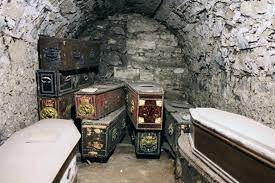
 However they trusted others without caution and were led into revealing details of the conspiracy to overthrow the Ascendancy. A Spy, one Captain John Armstrong who had befriended them in order to betray them, revealed their intentions to Dublin Castle. They were arrested on 21 May 1798. Found guilty of treason, they were publicly hung, drawn & quartered outside Newgate Prison [Green Street] in Dublin. Both were buried in the vaults of St. Michan's Church in Dublin City where their perfectly preserved coffins [above] are still on display.

 At midday on Saturday, July 14th, the hapless men were removed to the room adjoining the place of execution, where they exchanged a last embrace. They were then pinioned, the black caps put over their brows, and holding each other by the hand, they tottered out on the platform. The elder brother was somewhat moved by the terrors of his situation, but the younger bore his fate with unflinching firmness. They were launched together into eternity--the same moment saw them dangling lifeless corpses before the prison walls. They had lived in affectionate unity, inspired by the same motives, labouring for the same cause, and death did not dissolve the tie. "They died hand in hand, like true brothers."

`Speeches from the Dock'

By D. S. Sullivan