Thursday, 7 February 2019


7 February 1988: Nora Herlihy, one of the founders of the modern Irish Credit Union system, died on this day.
Nora Herlihy was born on 27 February 1910 in Ballydesmond, on the Cork-Kerry Border. She attended school in Newcastle West at the Sisters of Mercy Secondary School and trained to become a teacher at Carysfort College, graduating in 1931. She began teaching in Ferrybank and in 1936 was hired by the Irish Sisters of Charity school in Dublin. She was a national school teacher, educating in Dublin during the 1950s. As a teacher she observed the effects of poverty, unemployment and money-lending on her students and their families.

Herlihy was a student of the Liberal Arts Extramural Course at University College Dublin. There she met social economics student Tomas O'Hogain who invited her to a December 1953 meeting with Seamus MacEoin about the co-operative model. In March 1954 she and O'Hogain founded the Dublin Central Co-operative Society with the goal of reducing unemployment and emigration through the formation of worker co-operatives. The United States' Credit Union National Association (CUNA) asked Herlihy to form a subcommittee to examine how the credit union model could be put to use in Ireland. With Sean Forde and O'Hogain she formed the Credit Union Extension Service.

 In 1957, Minister for Industry and Commerce Seán Lemass appointed Herlihy to a legislative advisory committee on non-agricultural co-operatives. The first two Irish credit unions were formed under Herlihy's influence in 1958 and she promoted credit unions throughout Ireland. She was instrumental in the formation of the Civil Service Credit Union and the Irish League of Credit Unions, which was founded in 1960 and run from the living room of her Dublin house.
She served as unpaid secretary for the organisation, teaching full-time and funding the movement's development with her earnings. In 1963 the board of the Credit Union League of Ireland recognized her as having made the greatest individual contribution to the Irish credit union movement. Her efforts aided the passage of the 1966 Credit Union Act and she stood beside President Éamon de Valera as he signed the act into law.

Nora Herlihy died on 7 February 1988, 28 years after the creation of the Irish League of Credit Unions.
https://en.wikipedia.org/wiki/Nora_Herlihy


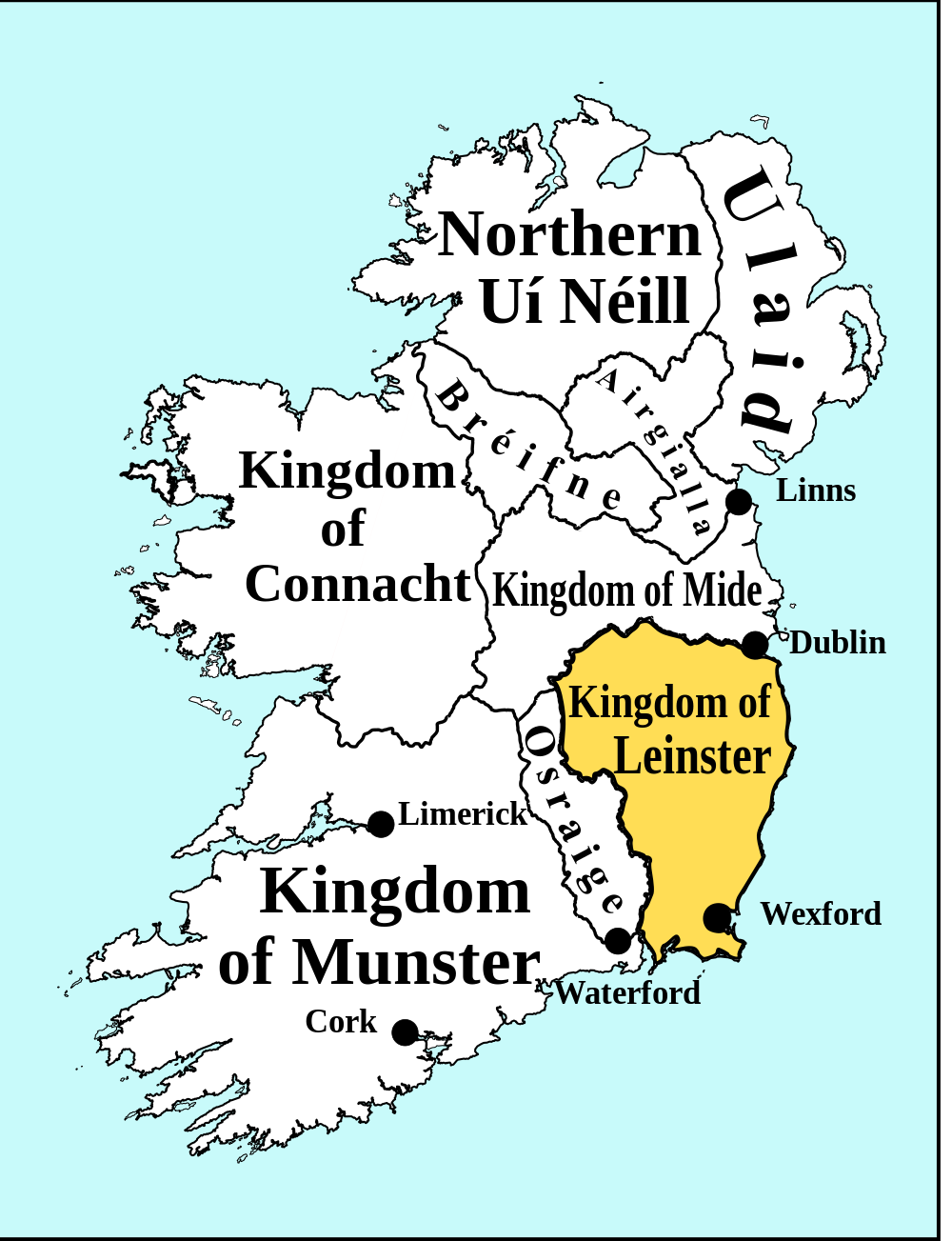
7‭ ‬February‭ ‬1072‭ ‬AD:‭ ‬Diarmait mac Maíl na mBó,‭ ‬king of Laigin [Leinster],‭ ‬died on this day.‭ ‬He was one of the most colourful and dynamic Irish kings of the‭ ‬11th Century and an ambitious ruler of his own province that wished to rule over all of Ireland.‭ ‬While he never achieved that lofty aim it was not for want of trying.‭ ‬He was of the‭ ‬Uí Cheinnselaigh family,‭ ‬who had their base around the monastical centre of Ferns‭  ‬in Co Wexford.‭ ‬His family had long been excluded from the kingship of Laigin and he was the first member of this ancient sept to hold the position in centuries.‭ ‬By the time Diarmait acceded to the kingship in‭ ‬1042 his familial domains included sway over the Viking towns of Wexford and Waterford and with it access to Trade and Fleets that enhanced his power and wealth.
However his breakthrough into the world of being a serious player in provincial politics and international affairs came in‭ 1052 when he captured the city of Dublin and declared himself its king – a feat not even Brian Boru had accomplished. The acquisition of one of the main trading entrepots of north western Europe meant that King Diarmait had direct control over a powerful fleet of warships and merchantmen.

These vessels plied their way up and down the Irish Sea and interlinked into a vast trading network that stretched to Spain and North Africa to the south and across to the great rivers of Russia to the East.‭ ‬With this kind of naval power at his disposal he was not averse to using it and after installing his son Murchad as King of Dublin he had his offspring invade the Norse held Isle of Man  in 1061 and put it under his rule.

Diarmait also became involved in the internal politics of Wales and Saxon England.‭ ‬He supported many of the Welsh Princes in their efforts to gain dominance in that Country.‭ ‬He most notably supported the attempts of Cynan ab Iago of Gwynedd to restore himself to power in north Wales, possibly in return for some kind of payoff in trade or suzerainty. In the winter of 1051/52 he had no less a visitor than Harold Godwinesson, the future King Harold of England, who sought refuge here against his enemies at home. After that King’s defeat and death at the battle Hastings in 1066 his sons fled here to escape the Norman invaders and King Diarmait provided them with a fleet of sixty six ships to raid the coast of England to try to regain that Country for the Saxons. While they did not prevail the fact that the king of Leinster was where these hapless sons of the late Saxon king turned for help is indicative of his power and prestige at this time.‭ 

The King of Leinster was also active in engaging with his royal rivals within Ireland too.‭ ‬He allied with the Ulaid of the North and raided into Connacht and Meath.‭ ‬However it was in Munster he had his greatest success amongst the Gaels.‭ ‬He backed Turlough O’Brien as puppet king of that province,‭ ‬forcing the previous incumbent King Donnach to depart on a pilgrimage to Rome where he died. In 1067 he led a huge expedition into Connacht consisting of the men of Laigin, the Munstermen under Turlough O’Brien and a contingent from the kingdon of Breffni. A great battle was fought in which fell Aed O’Connor, the most powerful king of the western province. With this Victory there was no doubt that Diarmait mac Maíl na mBó was the most powerful king in Ireland and in effect an  Ard Rí na hÉireann - the High King of Ireland.

But while Fortune had favoured Diarmait for most of his life in‭ 1070 tragedy struck when his beloved son Murchad died in battle against the men of Meath while on a raid. In 1072 it was Diarmait’s turn to go the way of all flesh when he too fell in battle against the warriors of the middle kingdom of Míde [Meath] in the battle of Odba. His slayer was King Conchobor ua Mael Sechnaill, of the traditional kings of Míde. Ironically his killer was himself treacherously slain the following year by his own nephew in an internal power struggle.

The Annals of the Four Masters recorded Diarmait’s death as follows:
"‬Diarmaid,‭ ‬son of Mael-na-mbo,‭ ‬King of Leinster, of the foreigners of Ath-cliath, and of Leath-Mogha-Nuadhat, was slain and beheaded in the battle of Odhbha, on Tuesday, the seventh of the Ides of February, the battle having been gained over him by Conchobhar O'Maeleachlainn, King of Meath. There were also slain many hundreds of the foreigners and Leinstermen, along with Diarmaid, in that battle. In it was killed Gillaphadraig O'Fearghaile, lord of the Fortuatha, &c.

It was Diarmait’s career and his relative success that coined the phrase‭ rí Érenn co fressabra that is ‘king of Ireland with Opposition’ ‬and indeed that is a fair summary of where he stood when he fell beneath the weapons of his enemies.


Image result for female emancipation 1918

6 February 1918 - Women in Britain and Ireland gained the right to vote in General Elections for the first time on this day. The Representation of the People Act 1918 was passed into Law by the British Parliament. It gave women over the age of 30 the right to vote and all men over the age of 21. The law said that women over the age of 30 who occupied a house (or were married to someone who did) could now vote. 

This meant 8.5 million women now had their say over who was in Parliament - about 2 in every 5 women in the UK. It also said that all men over the age of 21 could vote - regardless of whether or not they owned property - and men in the armed forces could vote from the age of 19. The number of men who could now vote went from 8 million to 21 million. This was a legislative Revolution as it meant that any future Parliament would have a very different profile than the current or previous ones.

The campaign to extend the Franchise to women had been a long and arduous one over many years with women protesting and been sent to prison and even dying to achieve electoral equality with menfolk at the polls. The Suffragettes were led by Emmeline Pankhurst who from 1905 led a militant campaign to change the law. In Ireland too women campaigned holding meetings, smashing windows and generally making a nuisance of themselves to draw attention to their cause. But the various groups here found no sympathy from either John Redmond the Nationalist Leader or Sir Edward Carson the Irish Unionist Leader.

Nevertheless when the ‘Khaki Election’ of December 1918 came round the only woman to win a seat as a Member of Parliament was  the Irish Revolutionary Countess Markievicz who amongst other things was a vocal supporter of the Suffragette Movement. However as an Irish Republican she refused to take her seat in the Westminster Parliament and pledged her allegiance to Dáil Éireann in Dublin instead. Britain had to wait until 1919 for its for its first female MP - one Lady Astor - who was born and raised in the USA.

Curious to note that while women in the United Kingdom had to wait until 1928 for the franchise to be fully extended to all women over the age of 21 in the Irish Free State this discrimination between the sexes was abolished in 1922 putting the Irish State well ahead of the British one in a woman’s Right to Vote.


Tuesday, 5 February 2019


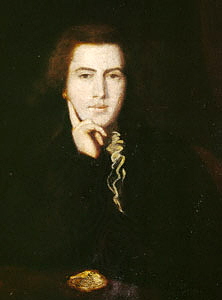
5‭ ‬February 1820: The death of William Drennan, United Irishman, on this day. He was born in Belfast in 1754 and educated locally and at Edinburgh University where he graduated as a Medical Doctor in 1778. He returned home and practised in Belfast, Newry and later moved to Dublin in the fateful year of 1789. He became interested in Politics and Poetry. His family background was Presbyterian but he personally was a non conformist. But he was proud to be the son of a Presbyterian Minister all the same:

I am the son of an honest man‭; ‬a minister of that gospel which breathes peace and goodwill among men‭; a Protestant Dissenting minister, in the town of Belfast; who[se] spirit I am accustomed to look up, in every trying situation, as my mediator and intercessor with Heaven.

Drennan came to National attention when in‭ ‬1784 and 1785 his Letters of Orellana, an Irish Helot were published. These were the earliest expressions of his support for radical constitutional reform, Catholic Emancipation and civil rights.

However as political events both at home and abroad hotted up in the early‭ ‬1790’s he dabbled deeper into the burning issues of the day. Along with Theobald Wolfe Tone and Thomas Russell he was instrumental in the foundation of the United Irishmen, at the time an open body with strictly legal aims and methods. It is generally considered that Drennan was the guiding hand in the initial philosophical basis of the new body. He had proposed even before it was established that any such organisation should be:

A benevolent conspiracy—a plot for the people—no Whig Club—no party title—the Brotherhood its name—the rights of man and the greatest happiness of the greatest number its end—its general end,‭ ‬real independence to Ireland and republicanism its particular purpose—its business, every means to accomplish these ends as speedily as the prejudices and bigotry of the land we live in would permit.

In‭ ‬1795‭ ‬he wrote his poem ‘Erin’ which is credited with the first use of the term ‘the Emerald Isle’ to describe Ireland:

Nor one feeling of vengeance presume to defile‭ 
The cause,‭ or the men, of the Emerald Isle. 

However Drennan was not of a sanguinary turn of mind and he recoiled from the prospect of Revolution to bring about the overthrow of the British Regime.‭ ‬Notwithstanding this withdrawal in  the year 1794 he was charged with Sedition and narrowly escaped conviction. At first he wished to address the Court and make a highly charged political statement but his lawyer talked him out of it. If he had done so it was generally considered he would have convinced his accusers of his guilt in their eyes. 

But his days of danger were now over and as his active political life receded he used his pen to attack Tyranny.‭ ‬His poem‭ ‬The Wake of William Orr in 1797‭ ‬stirred passions that were to foment further opposition towards Orr’s executioners and the Government that paid them. However he kept well clear of the terrible events of 1798.‭ 

In‭ ‬1800 he married an English Lady, Sarah Swanwick, and spent some years in the north of England moving in the Literary and Social circles there. In 1807 he gave up Medicine and returned to Belfast. He founded and edited the radical Belfast Monthly Magazine and was a leading supporter of the Belfast Academical Institution, a doomed attempt to bring to Belfast both secondary and higher level education, open to pupils from both sides of the religious divide.

He died on‭ ‬5 February‭ ‬1820‭ ‬and was buried in Clifton Street burial-ground in Belfast.‭ ‬His coffin was borne to the grave by three Catholics and three Protestants.‭


Monday, 4 February 2019

Image resultImage result for constance markievicz


4 February 1868:  Countess Constance Markievicz was born on this day. Society Girl, Artist, Revolutionary, Feminist and Socialist there is no doubt that she was a woman who lived Life to the full and gave it her all for Ireland and her People. Her parents were the Artic explorer Sir Henry Gore Booth and Lady Georgina, Lady Gore-Booth. Her father owned a large Estate at Lissadell House in Co Sligo.

In the 1890s she studied Art in London and Paris where she met her future husband, the Polish Nobleman ‘Count Markievicz’ - and there after she was known as Countess Markievicz! She gave birth to their daughter, Maeve, at Lissadell in November 1901.The family moved to Dublin in 1903 and the Countess moved in the Literary and Art circles of the city, notably in the circle of the famous portrait artist Sarah Purcell. There she met many people who were involved in the politics of the day and from this her interest in Ireland’s future deepened. In 1908, she became actively involved in nationalist politics in Ireland and joined Sinn Fein which was the most advanced Nationalist Party of its day. In 1913 Markievicz's husband moved back to Ukraine, and never returned to live in Ireland. However, they did correspond and he was by her side when she died.

When the 1916 Rising broke out she played an active part in it and was rumoured to have shot dead a DMP policeman while trying to storm Dublin Castle. She was part of the Stephens Green garrison that later withdrew to the Royal College of Surgeons on the Green. When the Rising was over she was taken prisoner, held in solitary confinement and sentenced to Death. Much to her disappointment the sentenced was commuted to Life Imprisonment. However she was released in 1917 after having served her time in an English Prison.

In the British General Election of December 1918 she was elected for a Dublin Constituency taking 66% of the vote but refused to take her seat in a London Parliament. When the 1st Dáil met in January the Countess was back in an English Prison and when the roll call was taken her absence was noted by the words - fé ghlas ag Gallaibh -"imprisoned by the foreign enemy". She was made the Minister for Labour and held that position until January 1922. She also sat in the Cabinet of the Irish Republic from April 1919 till August 1919 - thus making her the First Woman Cabinet Minister in Irish History.

She left the government in January 1922 along with Eamon De Valera and others in opposition to the Treaty. She fought actively for the Republican cause in the Irish Civil War helping to defend Moran's Hotel in Dublin. After the War she toured the United States. However, her staunch republican views led her to being sent to jail again. In prison, she and 92 other female prisoners went on hunger strike. Within a month, she was released. She joined the new Fianna Fáil on its foundation in 1926, chairing the inaugural meeting of the new party in La Scala Theatre. In the June 1927 Election she was re-elected to the Dáil as a candidate for the new party, which was pledged to return but died only five weeks later, before she could take up her seat.

Constance Markievicz died at the age of 59 on 15 July 1927, of complications related to appendicitis. She had given away the last of her wealth, and died in a public ward "among the poor where she wanted to be". One of the doctors attending her was her revolutionary colleague Kathleen Lynn. Also at her bedside were Casimir and her step-son Stanislas Markievicz, Eamon de Valera & others came by to pay their last respects. Refused a state funeral by the Free State government, she was buried Glasnevin Cemetery  Dublin, and Eamon de Valera gave the funeral oration. Sean O’Casey said of her: One thing she had in abundance—physical courage; with that she was clothed as with a garment.


4 February 1974: The M62 Coach bombing on this day: Eleven people - including eight British soldiers and two young children - were killed, and 12 seriously injured, when the coach they were travelling in was blown up by an IRA bomb in England. 

The private coach was carrying more than 50 people and making its way from Manchester, along the M62, towards a British army base in Catterick, North Yorkshire, when an explosive device in the rear of the vehicle detonated. The explosion happened just after midnight on the eastbound carriageway between Chain Bar, near Bradford and Drightlington, south of Leeds. It could be heard over an area of several miles and scattered bodies for 250 yards along the road. 

The coach was carrying soldiers and their families who had been on a weekend break; some of the servicemen were travelling to RAF Leeming, near Darlington. A family of four - Cpl Clifford Haughton, his wife Linda, who were both 23, and their two sons, Lee, five, and Robert, three - were among the dead. 

An Englishwoman Judith Ward was convicted of this attack and spent 18 years in prison as a result. At the time of her trial Ward's father, Thomas, had said earlier he did not believe his daughter was capable of such "brutal and callous acts". Her brother, Tommy, said none of the family thought Judith had ever been in the IRA. "We don't think she was so heavily involved. There has been a lot of romancing," he said. 

That was a point echoed in court by Ward's solicitor, Andrew Rankin QC, who highlighted many improbabilities in her confessions. They included having been married to an IRA man and having borne a child by another. Her conviction was always suspect but it took 18 years before it was overturned in 1992 and she was released from captivity. It was one of a series of convictions in the British Courts in the 1970s that were seen by many as 'miscarriages of justice' and that further marred Anglo Irish relations at that time.


Sunday, 3 February 2019

Image result for north roscommon by election 1917


3 February 1917: Sinn Féin won its first parliamentary election on this day. It was dubbed “The Election of the Snows” due to the inclement weather prevalent at the time. Its candidate Count George Noble Plunkett took the seat by defeating the candidate of the Irish Parliamentary Party. He was the father of Joseph Mary Plunkett who had been shot by the British for being one of the Leaders of the Easter Rising in1916.

It was a contest between three candidates: Thomas Devine who sought to retain the seat for the Irish Parliamentary Party; Count George Noble Plunkett and the local newspaper owner and editor Jasper Tully of the Roscommon Herald who ran as an independent. All three candidates have professed themselves to be confident of success. Count Plunkett was elected with 3,022 votes to Devine’s 1,708 and Tully’s 687.

Amid scenes of jubilation Count Plunkett  announced that Sinn Féin’s policy regarding Westminster was one of abstentionism and said:
My place henceforth will be beside you in your own country, for it is in Ireland, that the battle of Irish liberty will be fought. I recognise no parliament in existence, as having a right over the people of Ireland, just as I deny the right of England to an inch of the soil of Ireland. I do not think I will go further than the old house in College Green to represent you. I am sent by Ireland to represent you in Ireland; to stand by you and to win Ireland’s freedom upon her own soil.

His election sent a clear message that the days of popular support for the old Irish Parliamentary Party were effectively over and a new political movement was abroad - one that would not send its representatives to London but seek to establish an Irish Parliament in Dublin - free from British Rule.