Saturday, 5 September 2020

 Image result for Dromcollogher tragedy


5 September 1926. The Drumcollogher/ Drom Collachair Cinema Tragedy on this day. The village of Dromcollogher is nine miles south-west of the town of Charleville, Co Cork but situated just to the north of the Limerick/ Cork border in the County of Limerick. On the night in question 48 people lost their lives when a candle overturned and caused film to ignite during a showing of The Ten Commandments. A room in the centre of the town, which was being used as a temporary cinema in Dromcollogher, caught fire when the candle ignited a reel of film carelessly left nearby.

'This was on the upper floor of a building used for storing hardware and access to it was by an external timber ladder, fixed to the wall to form a stairs. The hall, which had been used for meetings and entertainments for a number of years, was a rectangular room with a separate small dressing room area in the right-hand rear corner. The show began about 9.15pm after Benediction had finished in the local church, at which many of the audience had been present.

Estimates of the attendance varied but it appears that at least 150 people crowded into the hall, many of them children. At around 10.00 pm as the second film was showing, one of the reels, which lay unprotected on a table near the door, went on fire when a candle on the table overturned and set it alight. The people immediately rushed to the single narrow door from which the ladder/stairs descended. Those seated nearest the exit escaped as the fire spread rapidly. Others fled to the rear of the hall where the two windows were located and crowded into the small dressing room area. Some got out through the window here but unfortunately it was blocked when a woman became trapped in it. Within minutes the floor of the hall collapsed and the victims were hurtled to the ground where they died from the combination of burns, asphyxiation and shock. Forty six people were dead within 15 minutes. Two survivors later died from their injuries.'

https://sites.google.com/site/dromcollogher/cinemadisaster


The fire spread rapidly resulting in the deaths of 46 people, which included a family of six, with two more dying later in hospital. The 46 original victims of the tragedy—often referred to locally as ‘the Dromcollogher Burning’— are buried in a large grave in the grounds of the local church. The bodies of the victims were buried in a communal grave. A large Celtic cross was erected as a memorial to the victims of this tragedy.


Friday, 4 September 2020


4 September 1828: The Annaghdown/Anach Cuain Boat Tragedy. Eleven men and eight women were drowned on the river Corrib aboard an old and decrepit boat the Caisleán Nua. The tragedy was the subject of a poem by Anthony O’Rafferty Anach Cuain. On September 4th, 1828 the boat left Annaghdown Pier bound for a fair at Galway City. On board were some sheep, which were for auction at the fair, and some thirty men and women who had intended to make a holiday out of the visit to Galway. Some two miles from the city on the river Corrib tragedy struck.

It is not quite certain what caused the boat to sink, but the story is told that one of the sheep on board got restless and poked his hoof through the floor of the boat. One of the men on board tried to stuff the hole with a piece of clothing but only succeeded in knocking a plank out of the boat which caused the water to pour in. Nineteen men and women on board drowned in the ensuing panic and scarcely a family in the village of Annaghdown remained unaffected by the tragedy.

The boat and passengers proceeded without obstruction until they arrived opposite Bushypark, within two miles of the town, when she suddenly went down and all on board perished except twelve persons who were fortunately rescued from their perilous situation by another boat. 

Galway Advertiser 

6 September 1828


One man on board was named John Cosgrave who was a strong swimmer. He saved several people and went back to save the woman he was shortly to marry. Some desperate people clung to him in a desperate bid to save themselves but only succeeded in drowning him also.


The recovered bodies of those who drowned were brought ashore near Menlo/Mionnloch Castle, [above] itself the scene of a tragic fire in 1910. It is now a ruin.


Thursday, 3 September 2020

 Image result for eamon de valera


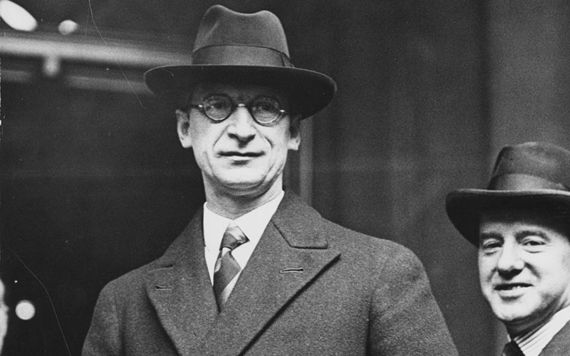
3 September 1939: The Irish Free State enacted a State of Emergency and declared herself Neutral in the Second World War.

Early on the morning of Sunday 3rd September 1939 a marathon session of Dáil Éireann was wound up that gave the Government of Mr Eamon DeValera [President of the Executive Council of the Irish Free State] draconian rights under the Emergency Powers Act to rule the State with an Iron Hand.

 The Constitution had the previous day been amended so that Article 28.3.3° now read as follows [with the addenda highlighted in black]:

Nothing in this Constitution shall be invoked to invalidate any law enacted by the Oireachtas which is expressed to be for the purpose of securing the public safety and the preservation of the State in time of war or armed rebellion, or to nullify any act done or purporting to be done in pursuance of any such law. In this sub-section "time of war" includes a time when there is taking place an armed conflict in which the State is not a participant but in respect of which each of the Houses of the Oireachtas shall have resolved that, arising out of such armed conflict, a national emergency exists affecting the vital interests of the State.

‘A time of War’ was therefore officially declared to exist and thus the EPA could be triggered to respond to the rapidly developing situation that now confronted the State. 

The Emergency Powers Act empowered the government to:

make provisions for securing the public safety and the preservation of the state in time of war and, in particular, to make provision for the maintenance of public order and for the provision and control of supplies and services essential to the life of the community, and to provide for divers and other matters (including the charging of fees on certain licences and other documents) connected with the matters aforesaid. 

This was done as Europe tethered on the brink of widespread War following Nazi Germany’s invasion of Poland. It was expected that a Declaration of War by Britain and France on Germany would shortly be announced. It was a Conflict in which the State could well be embroiled with or without its consent. Dev had already let it be known as early as February that he would remain Neutral and that we would not allow either side to use our territory to be used to attack any belligerent.

As the morning rolled on tension mounted as it became known that the British Prime Minister Neville Chamberlain was due to make an announcement on BBC Radio. As expected he issued a Declaration of War on Germany*. Dev who listened to the speech at home with two of his sons declared that ‘life will never be the same again’.

His day though was far from over. He too had to take to the airwaves and publicly explain where the State stood in relation to these dramatic and dangerous developments that threatened the Peace of Europe. He needed to let the World know that we were Neutral and also reassure the Irish People here that we could see our way through this impending Crises and survive the experience.

He went on Radio Éireann at 10.45 pm that night and declared:

We have decided to keep out of this war; but this will not save us from many of the consequences of the conflict. If it lasts for a long period, it is going to effect everyone of us in our daily lives...But there is no reason why we should be unduly anxious. United and disciplined, we have nothing to fear.

The Irish Free State was far from alone in declaring her Neutrality at this time but she was the only Dominion within the British Commonwealth to do so - much to the chagrin of many in Britain. But it was a policy that had the overwhelming support of the citizens of the State. While the War was to hold many perils & pitfalls it turned out that against the odds and with some deft compromising DeValera managed to keep the State out of it right till the Wars’ end in 1945. The only other sizeable European states that kept their territories intact from invasion start to finish were Sweden, Switzerland, Spain and Portugal.

* France declared later that afternoon.


Wednesday, 2 September 2020


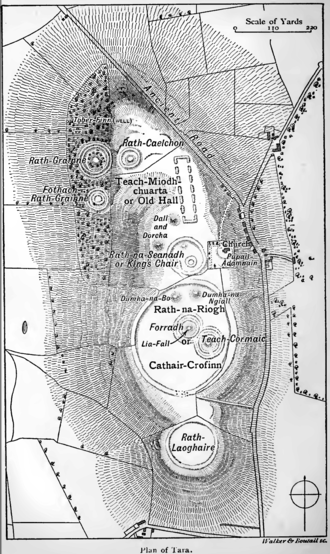
2 September 1022 AD: The death of the King of Mide & High King of Ireland, Máel Sechnaill mac Domnaill, on this day. His passing marked the end of an era in Irish History. Since the Battle of Ocha in circa 483 AD the southern and northern O’Neill’s had shared the title of King of Temair (Tara) [above] between them on a more or less continual basis. This made the holder of the title the most influential king in Ireland - if he had the wherewithal to make use of the status the title gave him.

For it was believed that in ancient times Ireland had been ruled from the Royal seat of Tara. The O’Neills believed that any man who held that hallowed ground was the heir to a lost Kingdom. However Brian Boru of Munster in 1002 had pushed aside King Máel and had himself recognised as the superior king in his stead.

It was only with the death of King Brian at the Battle of Clontarf in 1014 that Máel Sechnaill had regained his position. But by then he was an old man and Ireland had changed greatly since his predecessors had established their dual kingdoms all those centuries before. After him Mide(Meath) would no longer be the force it was in Irish Wars and Politics.

Mael Sechnaill son of Domnall son of Donnchad, overlord of Ireland, pillar of the dignity and nobility of the western world, died in the 43rd year of his reign and the 73rd of his age on Sunday the fourth of the Nones 2nd of September, the second of the moon.

 Annals of Ulster 1022 AD

Mael Sechnaill son of Domnall, son of Donnchad, overking of Ireland, the

flood of honour of the western world, died in Cró-inis of Loch Aininne in

the forty-third year of his reign on the 4th of the Nones 2nd of September,

that is, on Sunday, the second day of the moon, the one thousandth and

twenty-second year after the Lord's Incarnation, and died penitent and at

peace, with the successors of venerable saints Pátraic and Colum Cille and

Ciarán present and assisting him.

Chronicon Scotorum


Tuesday, 1 September 2020


1 September 1701: The Irish Brigade in the service of France fought in the Battle of Chiari [above]*on this day. This clash of arms took place in Lombardy in northern Italy during the War of the Spanish Succession. The French Army was under the command of Marshal Villeroy who was opposed by Prince Eugene of Savoy in the service of the Austrian Empire. Villeroy decided to attack the town of Chiari as he felt it was his duty to fight for King Louis rather than just observe the enemy.

Villeroy ignored the warnings of his subordinate Marshal Catinat that Eugene was in a strong position, remarking his deputy that the King had not sent so many brave men there just to look at the enemy through their spy glasses!

The attack was however a fiasco as the French were cut down in droves. Amongst the regiments leading the attack was the Irish regiment of Galmoy (Its Colonel was Pierce Butler, 3rd Viscount Galmoy), which suffered heavily in the assault. Eventually the attempt was called off and the surviving troops were told to retire. The French losses were over 2,000 men killed or wounded while their enemies sustained a loss in the low hundreds. The most prominent Irish casualty was Dominick Sarsfield, 4th Lord Killmallock who was killed at the head of his men in the attack.

Some of the Irishmen who survived were badly wounded. Felix MacNamee, aged 35, a native of Armagh, had had his left arm taken off by a cannon ball and, put out of service, was admitted into the military hospital of Les Invalides in Paris, dying at Arras in 1726. The ensign of the Colonel’s company, Terence Sweeny, aged 33, was hit in the right thigh by cannon shot and across the body by a musket ball. He too, was admitted to Les Invalides and survived until 1750. Also hit by a cannon shot in the right leg was the reformed Lieutenant Thomas Meade, aged 31, a native of Kilmallock, who survived until 1736. John Conor, aged 31, a Kerryman and the sergeant of grenadiers, lost his right arm through a musket ball but lived until 1721.

* Battle of Chiari, by Jan van Huchtenburg


Monday, 31 August 2020

 Lindisfarne is located in Northumberland

31‭ August 651 AD: the death of St Aiden of Lindisfarne on this day. Today the name of Saint Aiden is little remembered outside of being a popular name for Irish boys. But in his day and the years following his death his name was held in some reverence - none more so than amongst the English of Northhumbria - that is the part of England that lies to the north of the river Humber.

Once the people of Roman Britain had been mainly Christian, but in the years following the withdrawal of the last of the Empire’s Legions in the early 5th century the island lay open to Invasion. Soon barbarians flooded in from the north west coast of Europe, none more so than the Angles, Saxons and Jutes - commonly called today the ‘Anglo Saxons’. At the time though what later became the Kingdom of England was divided into warring States each with its own king and separate and conflicting interests.

In 563AD Saint Columba had crossed the sea between Ireland and Scotland and set up a Mission on the tiny island of Iona. From here he sent out missionaries to convert the people of Scotland to the Faith. Given the great success that was achieved there inevitably attention turned  to those who lived in the English kingdoms as to how they would be converted. Missionaries from Canterbury in southern England had already had some success in Northumbria. The big breakthrough came 633 AD when King Oswald became the ruler of Bernicia in northern Northhumbria. Oswald had been in exile on Iona and was much impressed with the piety and determination of the monks there to spread the Faith amongst the pagans of England.

‘He gave Aiden a commanding outcrop on the North Sea coast called ‘Lindisfarne’ aka ‘Holy Island’. Initially, Aidan concentrated his missionary work to Oswald’s kingdom, with Oswald himself often acting as Aidan’s interpreter. Later Aidan founded churches and monasteries, freeing slave boys and training them to serve in the Church. He encouraged the laity to follow monastic practices such as fasting and meditation on the Gospels and lived himself in poverty. With Oswald’s death in 642 AD, Aidan became friends with Oswin, the king of the southern Northumbrian kingdom of Deira.

Aidan died on 31 August 651 AD at Bamburgh. His body was taken to Lindisfarne and buried in the cemetery. Some time later, his bones were removed to the monastery church. Lindisfarne was sacked by the Vikings in 793 AD, after which Aidan’s reputation diminished somewhat.’

However, St Bede thought very highly of Aidan, perhaps more than of any other saint, and wrote of him: “He neither sought nor loved anything of this world, but delighted in distributing immediately to the poor whatever was given to him by kings or rich men of the world. He traversed both town and country on foot, never on horseback, unless compelled by some urgent necessity. Wherever on his way he saw any, either rich or poor, he invited them, if pagans, to embrace the mystery of the faith; or if they were believers, he sought to strengthen them in their faith and stir them up by words and actions to alms and good works.”

http://www.st-aidans-parish.org.uk/st_aidan.htm


He is known as the Apostle of Northumbria and is recognised as a saint by the Orthodox Church, the Roman Catholic Church, the Anglican Communion and others.


Sunday, 30 August 2020


30 August 1855: The Death of Feargus Edward O'Connor , Chartist Leader on this day. He was the son of Roger O'Connor, a United Irishman, and was born in 1796 in County Cork. When Feargus O'Connor was twenty-four he inherited an estate there. Although a Protestant, O'Connor was a reforming landlord and denounced the religious Tithes & the power of the Established Church. Daniel O’Connell soon spotted his potential and secured a candidacy for him in the General Election of 1832 in which he was returned as an MP for County Cork. But O’Connor rashly decided to try and unseat the Great Dan as Leader of the Irish MPs in the House of Commons and the two fell out.

O’Connor thereafter focused his attentions on Radical English Politics, moving to Manchester where he published the highly successful Northern Star newspaper. He became a leading light in the Chartist Movement, dedicated to Universal Suffrage and Annual parliaments. Here again though his maverick personality and impatience with pacific political activity led him into trouble with him advocating the threat of violence to achieve political Reform. O'Connor responded to criticism by forming a new Chartist organisation, the East London Democratic Association.

He was found guilty of sedition in 1839 and sentenced to eighteen months imprisonment. O'Connor continued to edit the Northern Star newspaper from his prison cell and upset the other Chartist leaders when he told his readers that from "September 1835 to February 1839 I led you single-handed and alone."

In 1845 O'Connor launched his Chartist Land Plan. His objective was to raise money to buy a large estate that would be divided into plots of three and four acres. Subscribers would then draw lots and the winners would obtain a cottage and some land. O'Connor promised that his Land Scheme would "change the whole face of society in twelve months" and would "make a paradise of England in less than five years".

But the scheme backfired and the estate went bankrupt before too long. Some of the tenants ended up being evicted and the whole disastrous enterprise badly damaged O’Connor’s credibility with the English Working Class. The stress and effort involved took its toll on O’Connor’s mental health. In 1847, O'Connor was elected MP for Nottingham, becoming the first and only Chartist MP.

His finest moment should have been the Great Demonstration he organised to assemble in Kensington London in 10 April 1848 that was to march on the Houses of Parliament. 200,000 people were expected to attend and this projected assembly put the wind up the British Establishment. The Duke of Wellington was put in charge of the Military and tens of thousands of citizens were made temporary 'policemen' to control the situation.

In the event it proved a damp squib as only about 25,000 people turned up in a heavy downpour to hear O’Connor make outlandish claims that proved to be untrue- namely that over five million people had signed his Petition on workers rights when it was really about two million. Even then on examination it was discovered that many were clearly forgeries including those of the Queen and the Iron Duke, who appeared to have endorsed the petition no fewer than seventeen times! It was all over by 2 O'clock that afternoon and the Establishment could breath again.

After 1848 Chartism went into sharp decline. From 1851, O'Connor's behaviour became increasingly irrational, possibly as a result of syphilis. In 1852 he was declared insane and sent to an asylum in Chiswick. He died on 30 August 1855.

A charismatic and talented actor on the stage of politics O’Connor at his best was a man to be watched. He claimed Royal descent from the last King of Ireland - Rory O’Connor of Connacht. He always supported the Repeal of the Union even though it must have cost him support amongst the English People. He was though dogged by personal problems and sometimes allowed his temperament to get the better of him. But whatever his faults he helped to raise the English Working Class up out of their misery enough to know that together and organised they could challenge the Establishment to at least listen to their demands to be treated fairly and with Justice.